Fridge Cooling Diagnostic Tool
Select the symptom that best describes your fridge issue. The tool will guide you through specific checks and potential fixes.
Completely Silent
Light is on, but no humming or sounds from the fridge
Clicking Sound
Hear a click every few minutes followed by silence
Humming But Warm
Compressor hums steadily but fridge stays warm
Freezer Cold, Fridge Warm
Freezer works fine but refrigerator section is warm
It is a specific kind of panic. You open your refrigerator to grab lunch, and you feel warm air hitting your face. The food inside looks suspicious. But when you look up, the interior light is shining brightly, proving that the unit has power. It feels like a contradiction. If the fridge has electricity, why isn't it working?
This scenario is one of the most common appliance issues homeowners face. The fact that the light is on tells us something crucial: the problem is not with your home’s electrical supply or the wall outlet. The issue lies within the refrigeration system itself. Before you call a technician and pay for a service call, you can likely diagnose-and possibly fix-the issue yourself.
The Quick Checklist: What to Check First
Before diving into complex components, rule out the simple stuff. Sometimes the answer is embarrassingly easy. Check these three things immediately:
- The Thermostat Setting: Did someone bump the dial? Ensure the temperature is set to a cold enough level (usually between 35°F and 38°F for the fridge section).
- The Door Seal: Close the door on a piece of paper. If you can pull the paper out easily without resistance, your gasket is worn. Warm air is leaking in, forcing the compressor to run constantly but failing to keep up.
- Ventilation Space: Is the fridge pushed too tight against the wall? It needs airflow at the back and sides to dissipate heat. If it’s suffocated, it cannot cool.
If those are fine, we need to listen to the machine. Turn off the radio or TV. Stand near the fridge. Do you hear a low hum? Do you hear a click followed by silence? Or is it completely silent? Your ears will tell you which component has failed.
Silent Fridge: The Compressor Isn’t Starting
If the light is on, but the fridge is silent and warm, the compressor is not running. The compressor is the heart of the refrigeration cycle; it pumps the refrigerant through the system. Without it, there is no cooling. However, the compressor doesn’t start on its own. It relies on two small but critical helpers: the start relay and the overload protector.
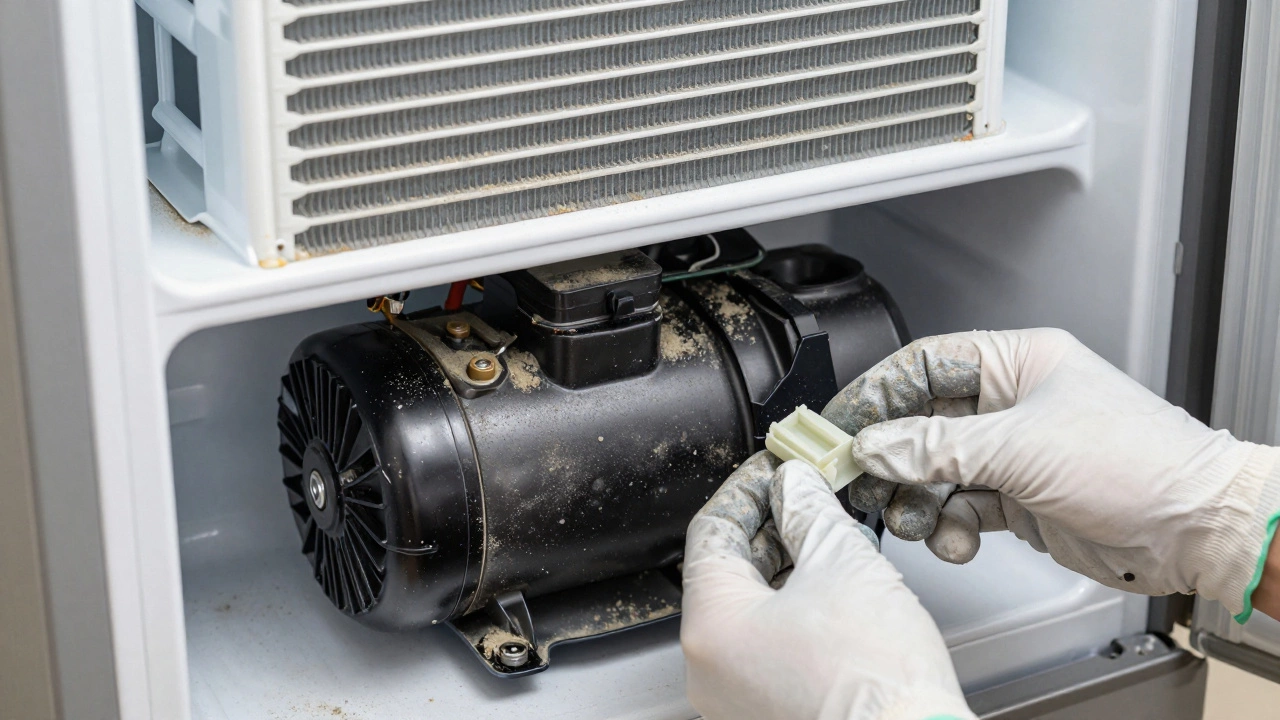
The start relay is a small plastic box attached to the side of the compressor (located at the bottom rear of the fridge). Its job is to give the compressor motor the initial jolt of energy needed to spin up. These relays are cheap, high-wear parts. They often fail due to heat buildup or age. When they break, the compressor receives power (so the light stays on), but it never kicks in.
How to test it: Unplug the fridge. Locate the compressor at the back bottom. Find the start relay (it usually has three prongs). Shake it. If you hear rattling inside, it is broken. You can also remove it and check for burn marks. Replacement costs less than $20 and takes five minutes with a screwdriver.
If the relay is fine, check the overload protector. This safety device cuts power to the compressor if it gets too hot. If it trips and sticks, the compressor won’t start. Tap it gently; sometimes this resets it temporarily, but if it fails again, replace it.
The Clicking Sound: A Sign of Failure
Do you hear a loud *click*, then silence, repeated every few minutes? That is the sound of the start relay trying to engage the compressor, failing, and resetting. This is a classic symptom of a bad start relay or a seized compressor. If replacing the relay doesn’t stop the clicking, the compressor motor itself may be burned out. This is a more expensive repair, often costing as much as a new fridge, so weigh your options carefully here.
Fan Issues: Air Isn’t Moving
If the compressor is humming steadily but the fridge is still warm, the issue might be airflow. Modern refrigerators use fans to circulate cold air. There are two main fans to check: the evaporator fan motor and the condenser fan motor.
| Fan Type | Location | Symptom of Failure | Fix Difficulty |
|---|---|---|---|
| Evaporator Fan | Inside the freezer compartment (behind panel) | Freezer is cold, but fridge section is warm. No air coming from vents. | Medium (requires removing ice trays and panels) |
| Condenser Fan | Bottom rear, near the compressor | Compressor runs hot and shuts off frequently. Both sections warm up. | Easy (accessible from the back or bottom kickplate) |
Testing the Evaporator Fan: Open the freezer door. Use the defrost timer override method (if your model has one) or simply prop the door open slightly while the fridge is running. Listen closely. You should hear a whirring sound. If it’s silent, the fan motor is dead, or ice is blocking the blades. Ice blockage points to a defrost system failure, discussed below.
Testing the Condenser Fan: Pull the fridge away from the wall. Look at the bottom rear. When the compressor is running, this fan should be spinning. If it’s stopped, check for debris (pet hair, dust bunnies) wrapped around the shaft. Clear the obstruction. If it spins freely by hand but doesn’t turn on with power, the motor capacitor or the motor itself is faulty.
The Defrost System: Ice Buildup
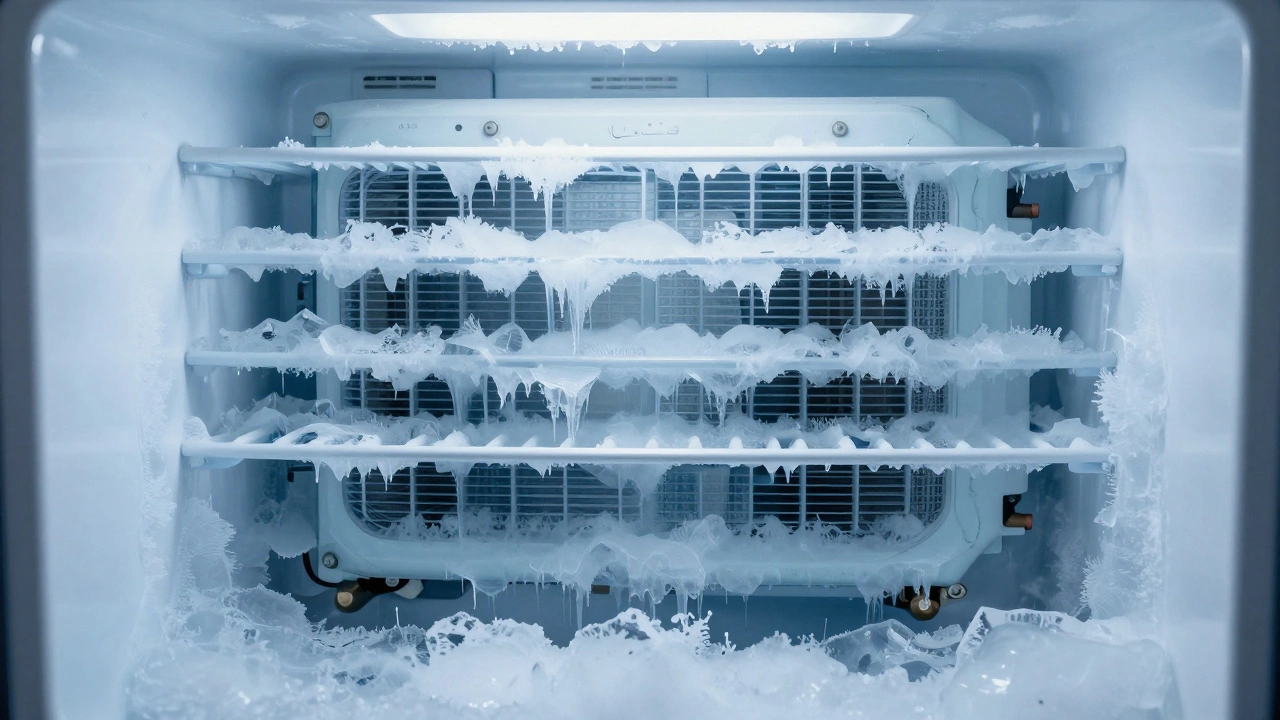
If your freezer is cold but the fridge section is warm, or if both sections are slowly warming up over days, you likely have an ice blockage. Frost builds up on the evaporator coils during normal operation. To prevent it from becoming an insulator, the fridge runs a defrost cycle periodically.
This cycle involves three parts: the defrost heater, the defrost thermostat, and the defrost control board. If any of these fail, ice accumulates on the coils until they are completely encased. Cold air cannot pass through the ice, so the fridge warms up.
The Visual Test: Unplug the fridge. Remove the back panel inside the freezer. If you see a solid block of ice covering the metal fins, you have a defrost failure. Manually thaw the ice (you can use a hair dryer on low setting, keeping it moving to avoid melting plastic). Plug the fridge back in. If it cools normally for 24-48 hours and then stops again, you need to replace the failed defrost component. The defrost heater is the most common culprit.
Dusty Coils: The Silent Killer
Even if all mechanical parts are working, your fridge might struggle if the condenser coils are dirty. These coils are located either on the back of the fridge or behind the bottom kickplate. Their job is to release heat absorbed from the inside of the fridge into the room.
If these coils are clogged with dust, pet hair, and grime, the heat cannot escape. The compressor works harder and longer to maintain temperature, eventually overheating and shutting down. This is a maintenance issue, not a repair. Grab a coil brush or a vacuum cleaner with a hose attachment. Clean the coils thoroughly. You might be surprised by how much dirt accumulates. Do this twice a year to extend the life of your appliance.
When to Call a Professional
You should stop DIY repairs and call a technician if:
- The compressor is making grinding or screeching noises (internal mechanical failure).
- You suspect a refrigerant leak (oily residue on lines, hissing sound). Refrigerant handling requires EPA certification.
- The control board is displaying error codes you cannot resolve.
- You are uncomfortable working with electrical components or removing heavy panels.
Remember, a fridge that isn’t cooling wastes energy and risks spoiling your food. Addressing the issue quickly saves money on groceries and electricity bills.
Is it worth repairing a fridge that is not cooling?
If the repair cost is less than half the price of a new unit and the fridge is under 10 years old, it is usually worth fixing. Simple fixes like a start relay or dirty coils cost very little. However, if the compressor or sealed system needs repair, the cost often exceeds the value of the appliance, making replacement the smarter financial choice.
How long does it take for a fridge to cool down after being unplugged?
After plugging a fridge back in, it typically takes 24 hours to reach the optimal temperature of 37°F. During this time, avoid putting large amounts of warm food inside. Keep the door closed as much as possible to help the compressor work efficiently.
Can a tripped breaker cause the light to stay on but the fridge to not cool?
No. If the circuit breaker tripped, the entire unit would lose power, including the light. Since the light is on, the electrical supply is intact. The issue is isolated to the internal components of the refrigeration cycle, such as the compressor, fans, or defrost system.
What causes the evaporator fan to stop working?
The most common cause is ice buildup jamming the fan blades. Other causes include a worn-out motor bearing or a failed motor capacitor. If the fan is physically obstructed by ice, the root cause is likely a failure in the defrost heater or defrost timer.
How do I know if my start relay is bad?
Signs include a humming noise from the compressor that doesn't lead to cooling, or a clicking sound every few minutes. Visually, the relay may show burn marks or cracks. Shaking the relay and hearing loose parts inside confirms it is damaged. Testing with a multimeter for continuity is the definitive method.