Oven Troubleshooting Assistant
What's happening with your oven?
Troubleshooting Steps
Your Oven Issue
Estimated repair cost:
DIY level:
Important: If you're uncomfortable with electrical work, call a professional technician.
If your electric oven suddenly stopped working, you’re not alone. Thousands of homeowners in Auckland and beyond face this problem every year-often right before a big meal or holiday gathering. The good news? Most of the time, it’s not a full replacement job. A few simple checks can save you hundreds of dollars and get your oven back on in under an hour.
Your oven isn’t dead-it’s just confused
Electric ovens are simple machines: power flows in, a thermostat tells the heating elements when to turn on, and the oven heats up. When something breaks, it’s almost always one of three things: power, the thermostat, or the heating element. Before you call a technician, start with the basics.
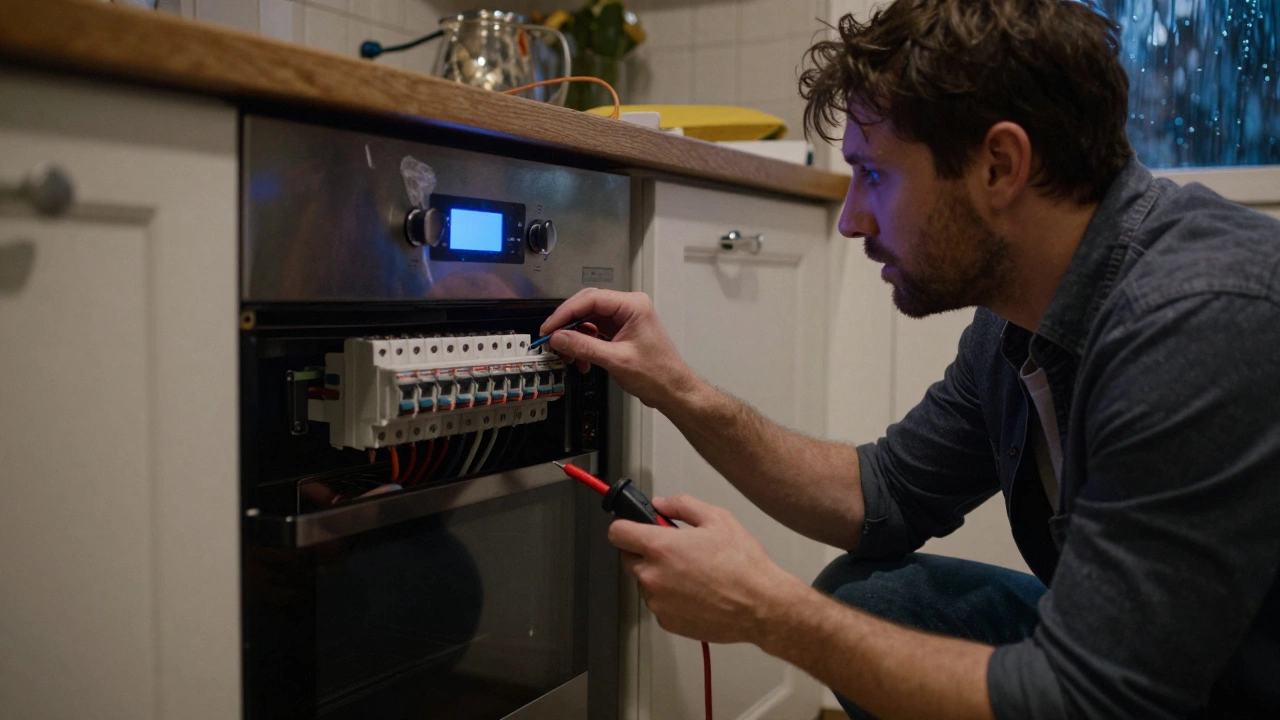
First, check the power supply. Many people assume the oven is broken when it’s just not getting electricity. Look at your home’s circuit breaker panel. If the breaker for the oven has tripped, reset it. If it trips again right away, there’s a short circuit somewhere-don’t keep resetting it. That’s a sign you need professional help.
Also, make sure the oven is plugged in. Yes, that sounds silly-but some built-in ovens have a hidden power switch behind the lower panel or under the cooktop. If your oven has a digital display that’s completely blank, no lights, no beeps, that’s usually a power issue.
Is the heating element broken?
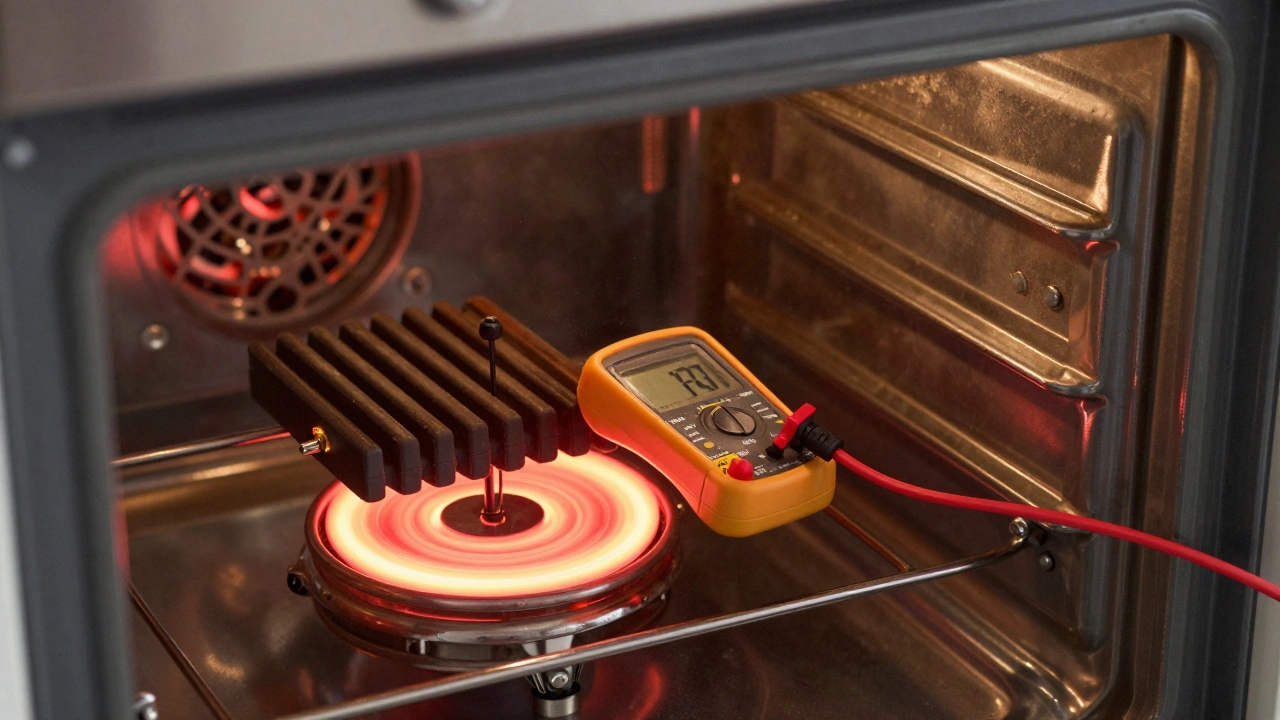
Most electric ovens have two heating elements: one on top for broiling, one on the bottom for baking. If the oven doesn’t heat at all, the bottom element is the likely culprit. If it heats unevenly-burning food on top but leaving the bottom cold-the top element might be failing.
To check, turn the oven on to 350°F and watch through the window. If you don’t see the bottom element glowing red after 10 minutes, it’s probably dead. You can also turn off the power, pull the oven out slightly, and unplug the element to test it with a multimeter. A working element should read between 15 and 30 ohms. If it reads infinite resistance (OL), it’s blown.
Replacing a heating element is one of the easiest DIY oven repairs. They cost between $30 and $80, depending on your model. Just make sure you match the part number exactly. Most manufacturers stamp it on the element itself or inside the oven cavity.
The thermostat could be lying to you
Thermostats don’t just control temperature-they’re the brain of your oven. If it’s faulty, your oven might think it’s hot when it’s not, or vice versa. A bad thermostat can cause the oven to not heat at all, or to overheat and shut off as a safety feature.
There’s no easy visual test for a broken thermostat. But if the oven heats up fine for a few minutes, then shuts off completely, and won’t come back on until it cools down, that’s a classic sign. You can test it with a multimeter too. Disconnect the wires from the thermostat and set your meter to ohms. A working thermostat should show continuity (a low reading) when cold and open (infinite resistance) when heated to its set point.
Thermostats usually cost $50 to $120. Replacing one requires removing the control panel and rewiring. If you’re not comfortable with that, call a technician. But if you’ve got basic tools and patience, it’s doable.
What about the oven control board?
The control board is the computer inside your oven. It manages the thermostat, timing, display, and power to the elements. If everything else checks out-the power is fine, the elements glow, the thermostat tests good-but the oven still won’t heat, the control board is likely to blame.
Control boards fail because of voltage spikes, moisture, or age. If your oven is over 10 years old and you’ve had power surges in your home (common in Auckland during storms), this is a real possibility.
Replacing a control board is trickier. They’re expensive-$150 to $300-and often model-specific. You’ll need the exact part number, which you can find on the old board or in your oven’s manual. If you’re not confident wiring it up, this is where you stop DIY and call a pro.
Why is my oven heating but not cooking evenly?
Some people think their oven is broken because food cooks unevenly. But that’s not always a fault. A fan oven (convection) should circulate heat evenly, but if the fan isn’t spinning, you’ll get hot spots. Check if the fan blade turns freely. If it’s stuck or making grinding noises, the fan motor might be failing.
Also, make sure the oven racks are in the right position. Placing a dish too close to the top element can cause burning. Use the middle rack for most baking.
What to do if nothing works
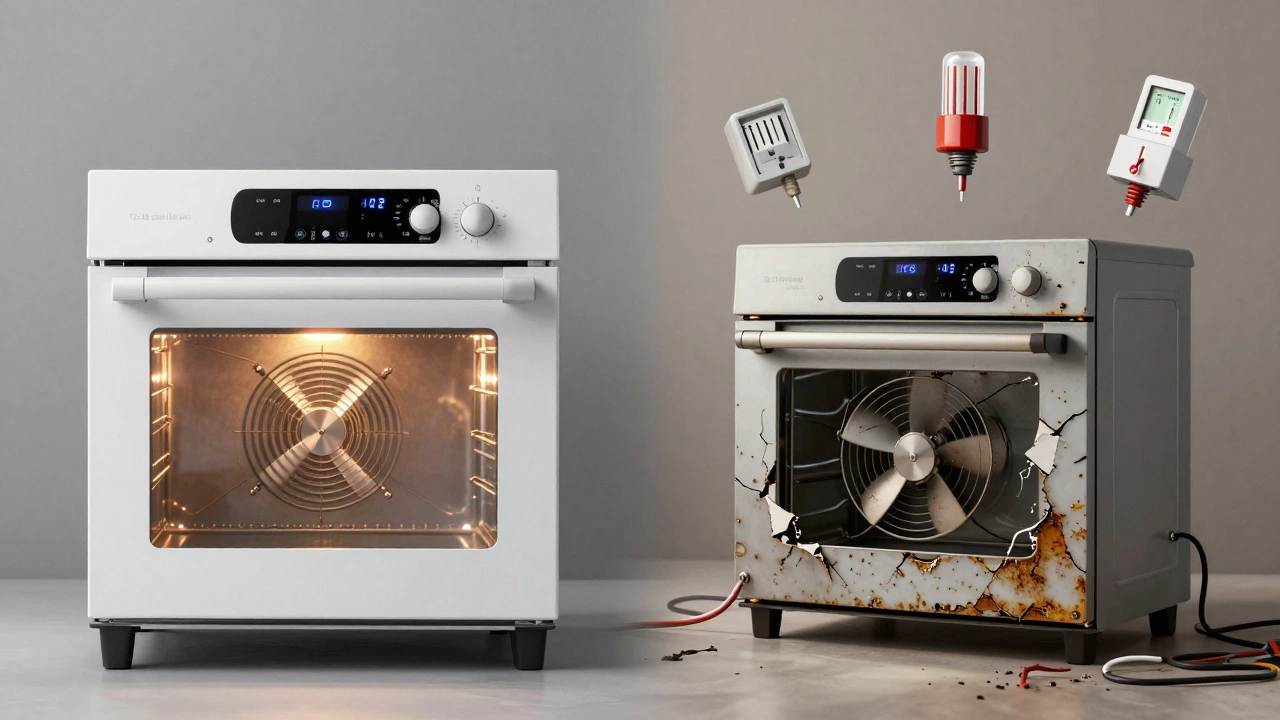
If you’ve checked the breaker, tested the elements, and confirmed the thermostat is working, but the oven still won’t heat, it’s time to consider professional help. A certified appliance technician can test voltage at the terminal block, inspect wiring for fraying, and verify if the control board is receiving signals.
Don’t try to force it. If the oven makes a clicking noise but doesn’t turn on, or if you smell burning plastic or ozone, turn it off and unplug it. Those are signs of serious electrical trouble.
Prevention tips to avoid future breakdowns
- Always clean spills immediately. Built-up grease can cause overheating and damage wiring.
- Use oven-safe cookware. Aluminum foil touching heating elements can cause shorts.
- Install a surge protector for major appliances. Power spikes from storms or faulty wiring are a leading cause of control board failure.
- Calibrate your oven every 6 months. Place an oven thermometer inside and compare it to the display. If it’s off by more than 25°F, the thermostat is drifting.
Most electric ovens last 12 to 15 years. If yours is older than that and you’re replacing parts frequently, it might be time to consider a new one. But for now, most sudden failures are fixable without a full replacement.
Why is my electric oven completely dead with no display?
If your oven has no display, no lights, and no sound, it’s likely not getting power. Check the circuit breaker first. If the breaker is fine, the issue could be a blown thermal fuse, a faulty power cord, or a damaged control board. Most homes in New Zealand have 240V circuits for ovens-verify the outlet is live with a voltage tester. If you’re unsure, don’t touch the wiring-call a licensed electrician.
Can a tripped breaker damage my oven?
A single trip usually doesn’t damage the oven, but repeated tripping can. Each time the breaker trips, it causes a power surge that can stress the control board or other electronics. If the breaker trips every time you use the oven, there’s an underlying issue-like a shorted heating element or a failing thermostat. Keep using it without fixing the root cause could lead to permanent damage.
Is it worth repairing an old electric oven?
If your oven is under 8 years old and the repair cost is less than half the price of a new one, yes-it’s worth fixing. For older models, consider efficiency. New ovens use 15-20% less energy and have better temperature control. If you’re replacing a heating element or thermostat more than once in two years, it’s a sign the oven is wearing out. Look for energy-star-rated models with convection fans and smart features if you’re upgrading.
Why does my oven heat up slowly?
Slow heating usually means one of the elements isn’t working properly. In dual-element ovens, if the top element is working but the bottom one is weak, the oven will take longer to reach temperature. A dirty element or loose wiring can also reduce efficiency. Clean the element with a soft brush and check the connections. If it still heats slowly, the element may need replacing.
Can I use my oven if the self-cleaning function isn’t working?
Yes. The self-cleaning function is separate from the heating system. It uses higher temperatures and a locked door to burn off residue. If it’s broken, your oven can still bake and broil normally. Just clean manually with baking soda and vinegar. Avoid using harsh chemical cleaners-they can damage the interior coating and affect future heating performance.