Fridge Compressor Failure Checker
Check the most common signs of compressor failure in your fridge. This tool helps determine if you should call a technician or consider replacement.
Diagnosis
If your fridge isn’t cooling like it used to, and your food is starting to spoil faster than usual, you might be wondering: is it the compressor? It’s one of the most common questions we get in Auckland, especially during summer when the heat makes every appliance work harder. The compressor is the heart of your fridge. If it dies, nothing else matters. But before you call a technician or start shopping for a new fridge, there are clear signs you can check yourself - no tools needed.
Is the fridge completely silent?
A working compressor doesn’t make a loud noise, but it shouldn’t be silent either. You should hear a low hum, like a gentle motor running in the background. If you stand right next to your fridge for a full minute and hear absolutely nothing - no clicking, no buzzing, no hum - that’s a red flag. The compressor might be dead, or the start relay could be faulty. But if you hear nothing at all, and the light inside still turns on when you open the door, the power is getting to the fridge. That means the issue is likely internal.
Is the back of the fridge hot?
Feel the back panel of your fridge, near the bottom. If it’s warm or even hot to the touch, that’s normal. The compressor releases heat as it works. But if the entire back is cold - completely cool, like room temperature - that’s not right. A working compressor generates heat while running. If there’s no warmth at all, it’s probably not running. This is especially telling if your fridge has been plugged in for hours and the interior is still warm.
Does the fridge run constantly?
Some fridges run more than others, but if yours is running non-stop - even when it’s not full or the door has been left open - the compressor might be struggling. You’ll notice it because the motor keeps clicking on, then off, then back on again. It doesn’t cycle normally anymore. It just keeps trying to cool, but never reaches the right temperature. This is called compressor overload. The motor is burning out from working too hard without actually cooling the interior. You might even smell a faint burning odor near the back or bottom of the unit.
Is your food warm, but the freezer still works?
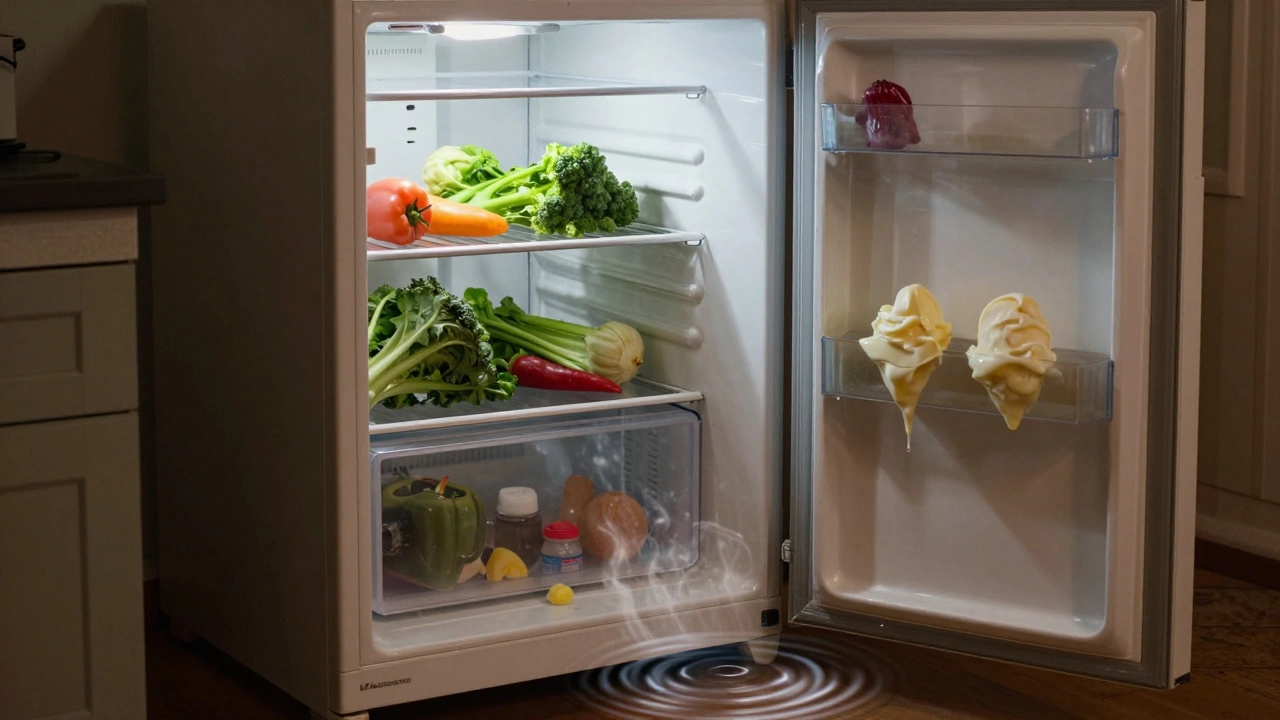
This one’s tricky. If your freezer is freezing fine but the fridge section is warm, it’s usually not the compressor. That’s more likely a damper or evaporator fan issue. But if both the fridge and freezer are warming up - and your ice cream is soft, your milk is lumpy, and your veggies are wilting - then the compressor is the prime suspect. The compressor cools both compartments. If it’s failing, both sides suffer together.
Are you hearing clicking or buzzing but no cooling?
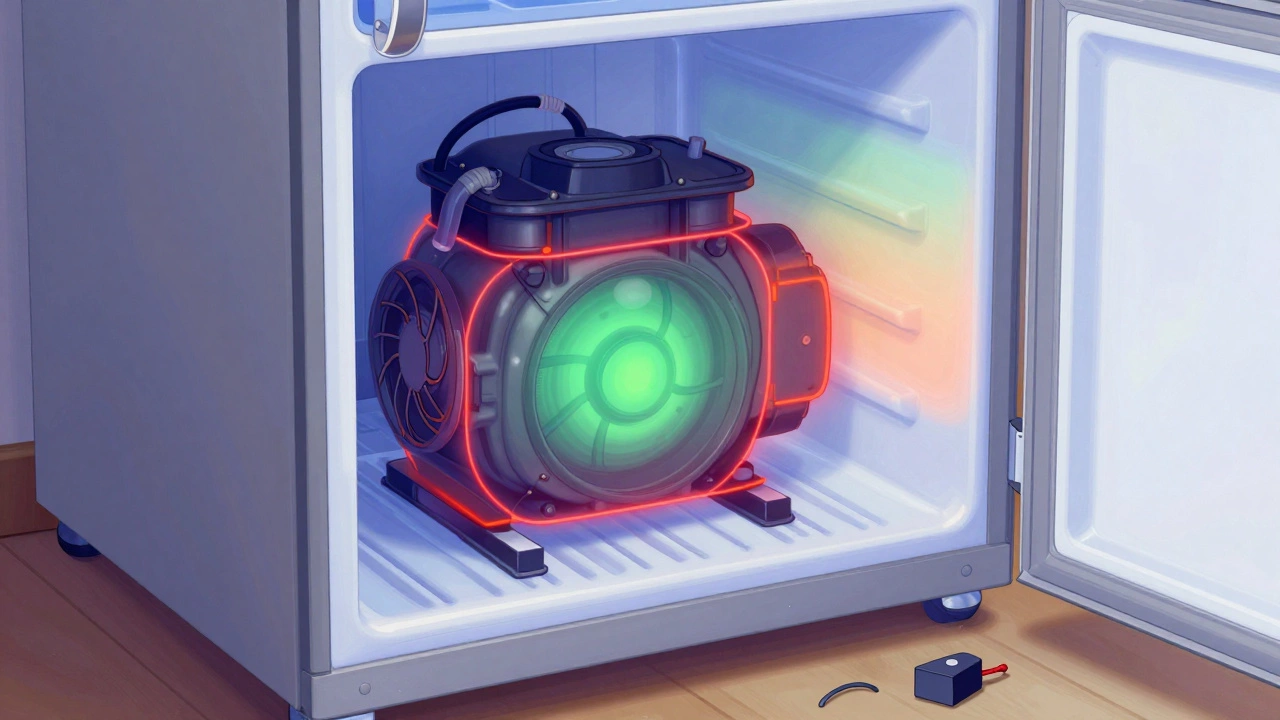
Some people hear a clicking sound every few seconds - like a switch turning on and off - but the fridge stays warm. That’s often a bad start relay. It’s a small, cheap part that helps the compressor kick in. Replacing it costs under $20 and takes 10 minutes. But if you’ve replaced the relay and the compressor still won’t start, the compressor itself is likely done. You can test this by unplugging the fridge, waiting 10 minutes, then plugging it back in. If you hear a loud hum for two seconds and then silence - that’s the compressor trying and failing to start. It’s a classic death rattle.
What about the thermostat?
It’s easy to blame the thermostat, especially if your fridge has an old dial or digital display. But if the thermostat were broken, the compressor wouldn’t run at all - or it would run non-stop. Neither of those situations matches what you’re seeing if the compressor is failing. A bad thermostat usually causes erratic behavior: sometimes it cools, sometimes it doesn’t. A bad compressor just… stops. It doesn’t play games.
Can you hear the compressor trying to start?
Get down on your knees and listen closely to the bottom back of the fridge. You might hear a faint buzz, then a click, then silence. That’s the compressor’s internal overload protector kicking in to stop it from burning up. If you hear that sequence repeat every 5 to 10 minutes, the compressor is in its final stages. It’s not going to fix itself. It’s overheating, shutting down, cooling off, then trying again - until it gives up for good.
How old is your fridge?
Most fridge compressors last between 10 and 15 years. If your unit is older than 12 years and you’re seeing these symptoms, the compressor is probably worn out. Newer models use more efficient compressors, but they’re also more complex. Older fridges had simpler parts - and if they survived past 15 years, they were built like tanks. If yours is from the early 2010s or earlier, and it’s acting up, replacement is often smarter than repair.
What does a new compressor cost?
A new compressor for a standard fridge runs between $300 and $600, depending on the brand and model. But labor adds another $200 to $400. That means you’re looking at $500 to $1,000 to fix it. Most fridges under $800 new aren’t worth repairing. If your fridge is mid-range or older, and you’re facing this kind of bill, it’s usually better to replace it. You’ll get better energy efficiency, quieter operation, and fewer headaches down the road.
What should you do next?
If you’ve checked all the signs - silence, no heat on the back, constant running, warm food, clicking sounds - and you’re confident the compressor is gone, here’s what to do:
- Unplug the fridge. Don’t leave it running if it’s overheating.
- Empty it. Move food to a cooler with ice packs.
- Call a technician if you’re unsure. Some issues look like compressor failure but aren’t - like a refrigerant leak or blocked capillary tube.
- If the tech confirms the compressor is dead, ask for a quote on replacement vs. a new fridge.
- If replacement is cheaper, start shopping. Look for ENERGY STAR-rated models - they’ll save you money on your power bill over time.
There’s no magic trick to bring a dead compressor back to life. Once it’s gone, it’s gone. Trying to patch it with temporary fixes just delays the inevitable - and might even damage other parts of the fridge. The sooner you make the call, the less food you lose, and the less you pay in emergency repair fees.