Boiler Troubleshooting Assistant
Select the symptoms you are experiencing with your boiler below. This tool will provide likely causes and recommended next steps based on standard diagnostic procedures.
Recommended Actions:
You wake up on a cold Auckland morning, the house feels like an icebox, and your boiler is making that weird gurgling noise again. Before you panic or call for expensive emergency repairs, take a breath. Most boiler problems aren't catastrophic failures; they are often simple glitches that you can identify yourself. Knowing how to diagnose a boiler problem saves you money, time, and the hassle of explaining vague symptoms to a technician who charges by the hour.
This guide walks you through the most common signs of trouble, what they actually mean, and when you should stop poking around and call in the pros. We’re focusing on gas and electric boilers common in New Zealand homes, keeping things practical and jargon-free.
Key Takeaways
- Check the basics first: Power supply, gas valve status, and thermostat settings resolve about 30% of reported "broken" boilers.
- Listen to your boiler: Different noises (kettling, whistling, banging) point to specific issues like limescale buildup or airlocks.
- Pressure matters: Ideal pressure is usually between 1 and 1.5 bar. Too low means no heat; too high triggers safety valves.
- Safety first: If you smell gas or see soot, evacuate and call a licensed gasfitter immediately. Do not try DIY fixes for combustion issues.
- Error codes are clues: Modern boilers display alphanumeric codes. Look these up in your manual before assuming the worst.
The First Five Minutes: Check These Basics
Before you assume your heating system has died, check the obvious stuff. It sounds too simple to be true, but technicians report that a significant number of service calls end with them simply turning a switch back on or resetting a tripped circuit breaker.
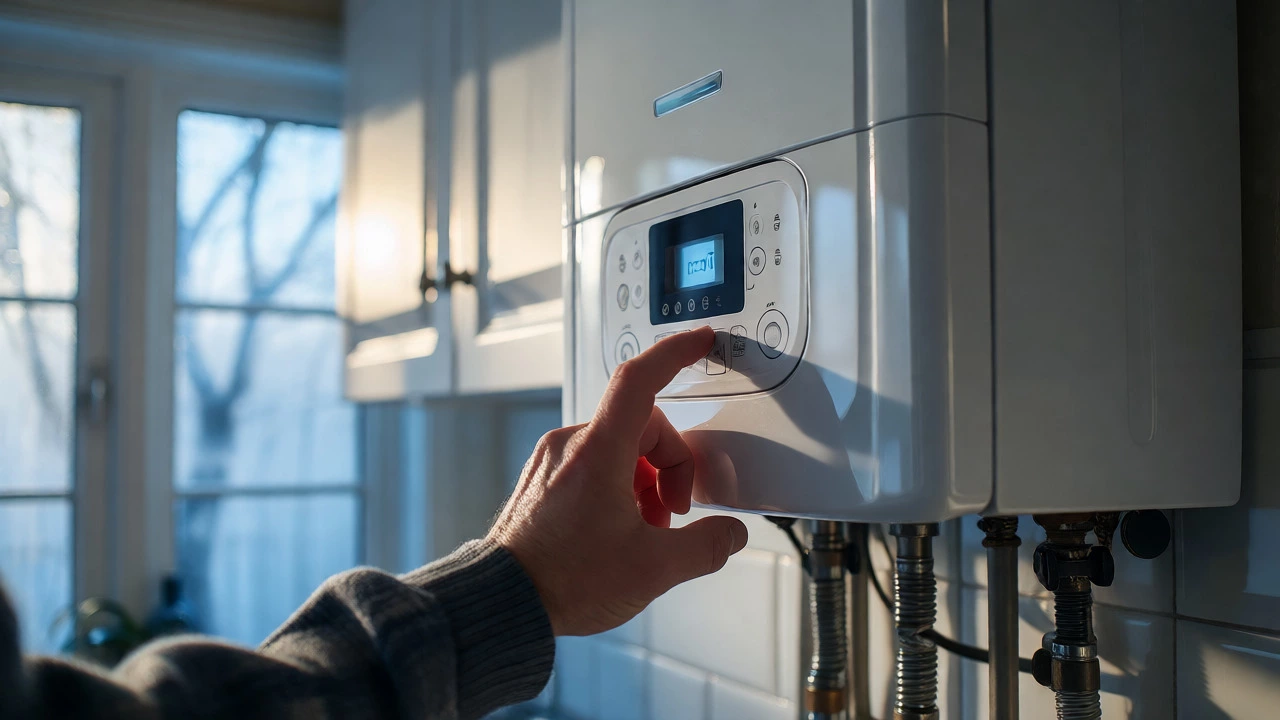
Start with the power. Is the boiler display lit? If it’s completely dark, check your fuse box. A tripped RCD (Residual Current Device) is common if there’s been a storm or a minor electrical surge. Next, look at the thermostat. Did someone bump it down while cleaning? Or maybe the batteries in your wireless thermostat have died? This happens more often than you’d think, especially with older smart-home setups.
If the boiler has power but won’t fire up, check the gas supply. Ensure the gas valve leading to the boiler is fully open. Sometimes, after a gas outage or maintenance work, this valve gets left in the wrong position. Also, verify that other gas appliances in your home are working. If the stove works but the boiler doesn’t, the issue is isolated to the boiler unit itself.
Decoding Noises: What Your Boiler Is Trying to Tell You
Your boiler talks to you through sound. Learning to distinguish between normal operation and distress signals is key to accurate diagnosis. Here is a breakdown of common noises and their likely causes.
| Noise Type | Likely Cause | Severity Level |
|---|---|---|
| Kettling (Rumbling) | Limescale buildup on the heat exchanger or trapped air. | Moderate - Needs descaling soon. |
| Whistling | High water pressure or a faulty pump bearing. | Moderate - Check pressure gauge. |
| Banging/Claanging | Water hammer (rapid valve closure) or loose pipes. | Low to Moderate - Secure pipe clips. |
| Gurgling | Air trapped in the system or sludge buildup. | Low - Bleed radiators. |
| Humming/Vibrating | Faulty fan motor or worn-out pump bearings. | Moderate - Professional inspection needed. |
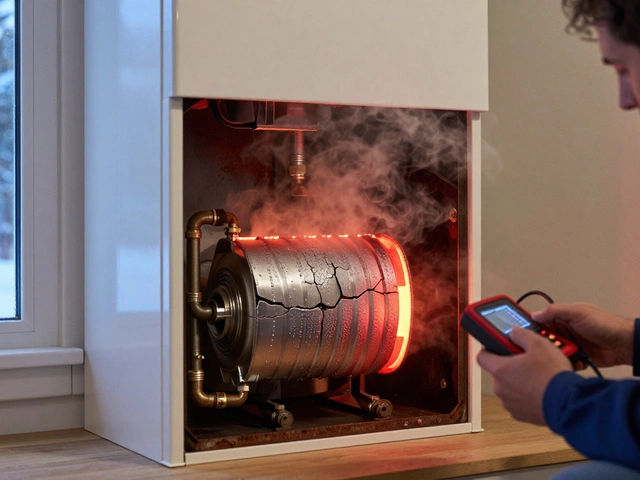
Kettling is the most frequent complaint in hard water areas like parts of Auckland. The rumbling sound happens when water boils locally due to scale insulation on the heat exchanger. If you ignore this, efficiency drops, and the heat exchanger can eventually crack. Gurgling, on the other hand, is often just air in the pipework. Try bleeding your radiators. If the noise persists, it might indicate a failing diverter valve or pump.
Pressure Problems: The Gauge Doesn’t Lie
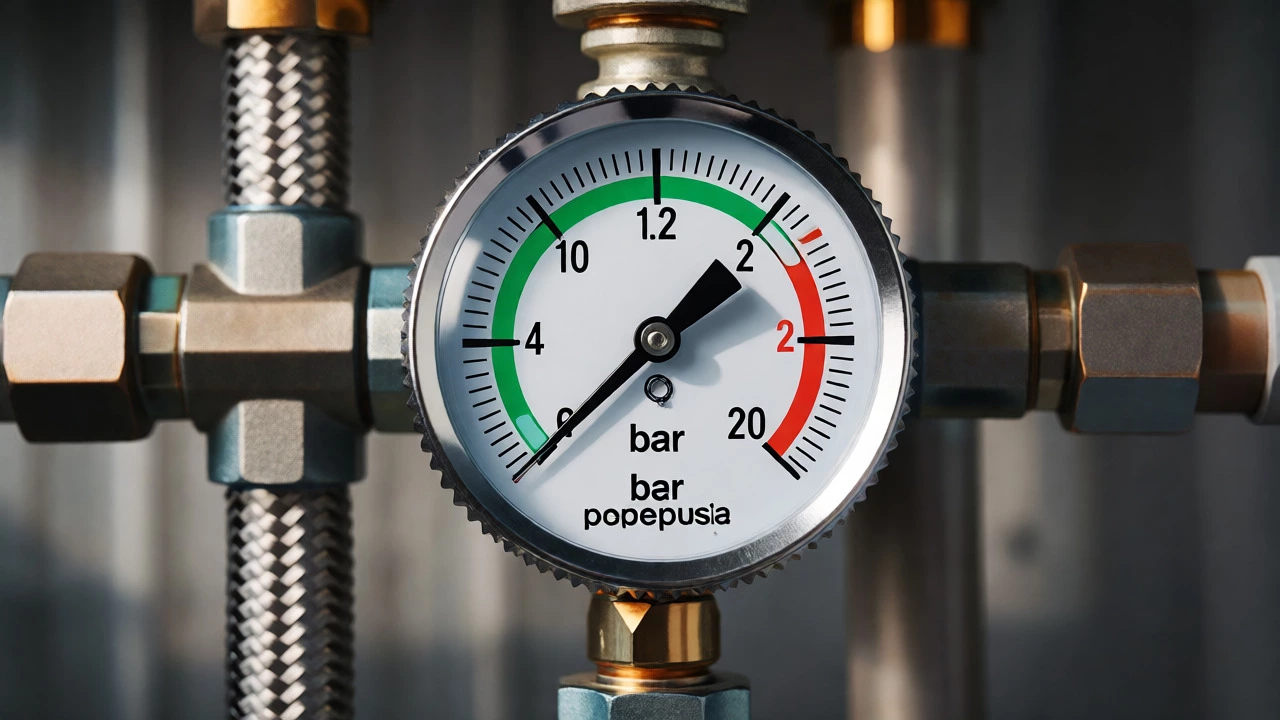
Every modern combi or system boiler has a pressure gauge. For most residential units, the healthy range is between 1.0 and 1.5 bar when the system is cold. If you fall outside this window, your boiler will struggle to produce hot water or heating.
Low Pressure (Below 1.0 bar): This is the most common reason for a boiler lockout. If the pressure is too low, the boiler’s sensor prevents ignition to protect the pump from running dry. You can usually fix this yourself by topping up the system via the filling loop. Watch the gauge closely as you do this-stop exactly at 1.2 bar. Overfilling is worse than underfilling because it triggers the pressure relief valve.
High Pressure (Above 2.5 bar): If the needle is deep in the red zone, your expansion vessel might be faulty. This component absorbs excess water volume as it heats up. If it fails, pressure spikes every time you turn on the heating. You might also notice water leaking from the pressure relief valve pipe outside your house. While you can bleed a radiator to temporarily lower pressure, a persistent high-pressure issue requires a professional to recharge or replace the expansion vessel.
Hot Water Issues vs. Heating Failures
Does the boiler provide hot water but no heating? Or vice versa? This distinction helps narrow down the faulty component.
If you have hot water but no heating, the culprit is likely the diverter valve. This part switches flow between the domestic hot water coil and the central heating circuit. If it gets stuck in the "hot water" position, your radiators stay cold even though the tap runs warm. In some cases, a blocked pipe or closed valve on the heating circuit could also be the cause, so check that all radiator valves are open.
If you have heating but no hot water, the issue is often related to the plate heat exchanger (in combi boilers) or the immersion heater element (in system boilers). Scale buildup here blocks heat transfer efficiently. Alternatively, a faulty thermistor might be misreading the temperature, telling the boiler that the water is already hot when it isn’t. This is a tricky diagnosis because the symptoms mimic other faults, so checking the error code is vital here.
Understanding Error Codes
Modern digital boilers don’t just break; they complain. When something goes wrong, the display flashes an error code. Instead of guessing, write down the code and consult your user manual. Manufacturers like Vaillant, Worcester Bosch, and Baxi use different coding systems, but many follow similar logic patterns.
For example, a code starting with "F" often indicates a fault, while "E" might stand for error. Common generic codes involve ignition failure (the flame didn’t light) or overheat protection (the boiler got too hot and shut down). Ignition failures are frequently caused by a dirty electrode or a weak spark. If the boiler tries to light three times and fails, it locks out. You can usually reset it once. If it locks out again immediately, stop trying. Repeated forced resets can damage the gas valve.
When to Call a Professional
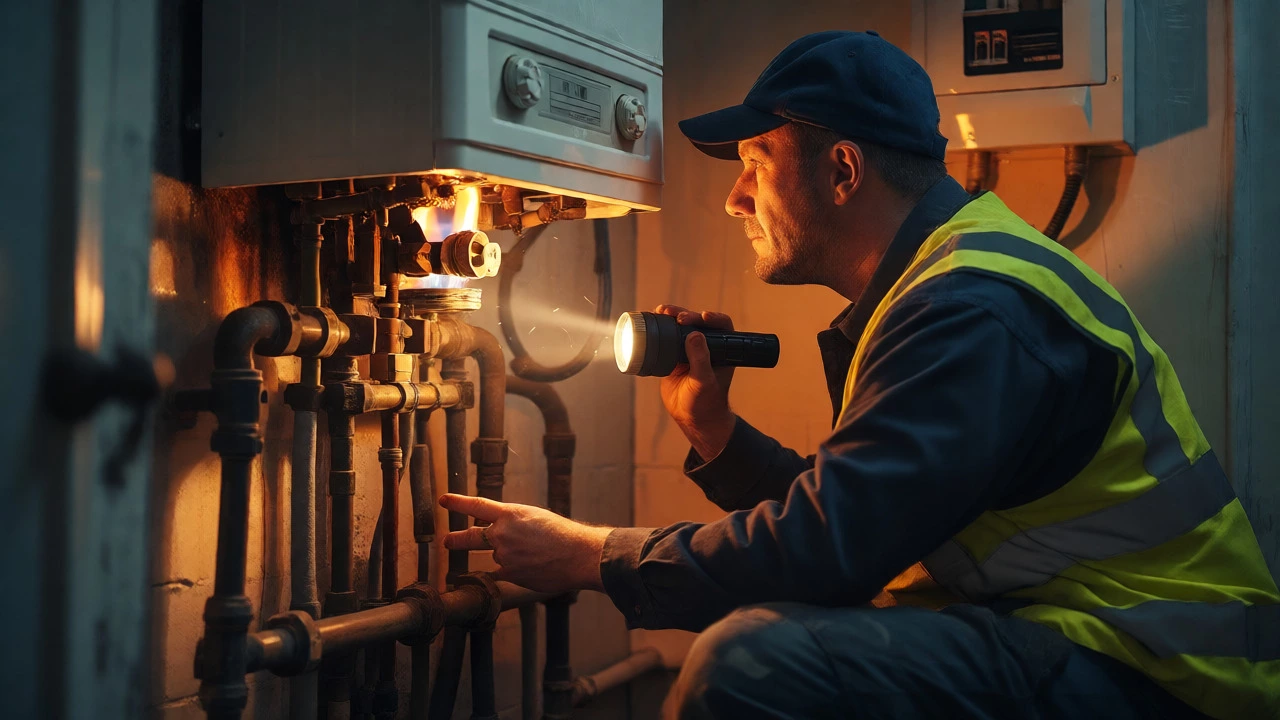
DIY diagnosis is great for saving money on simple fixes, but some jobs are strictly for licensed professionals. In New Zealand, gas work must be performed by a registered gasfitter. Never attempt to open the gas valve assembly or remove the burner unless you are qualified.
Call a pro if:
- You smell gas or suspect a leak. Evacuate and call your gas supplier first.
- You see soot or yellow flames instead of blue ones. This indicates incomplete combustion and potential carbon monoxide risk.
- The boiler loses pressure repeatedly despite topping it up. This suggests a hidden leak in the pipework or a cracked heat exchanger.
- Electrical components seem fried or the control board is unresponsive.
- The boiler is over 10 years old and needs major component replacement. Sometimes, upgrading to a newer, condensing model is cheaper than repairing an ancient one.
Preventive Maintenance Tips
Diagnosing problems is easier when you prevent them. Annual servicing is non-negotiable for safety and warranty validity. However, you can do monthly checks to keep things running smoothly.
Keep the area around the boiler clear of clutter. Dust and lint can clog the air intake filters on some models. Check your pressure gauge once a month. If it drops slowly, you might have a tiny leak in a radiator valve or a weeping seal. Catching this early prevents massive water bills and structural dampness. Finally, run your heating for a few minutes during summer months. This keeps the pumps moving and prevents seals from drying out and cracking.
Frequently Asked Questions
Why does my boiler keep losing pressure?
A slow drop in pressure is usually due to a small leak in the pipework, a faulty radiator valve, or a malfunctioning expansion vessel. If the pressure drops rapidly, check for visible water leaks around the boiler and radiators. If no visible leaks are found, the expansion vessel may need recharging or replacement by a professional.
Can I top up the boiler pressure myself?
Yes, most homeowners can top up the pressure using the filling loop. Locate the two flexible hoses underneath the boiler, open the valves slowly until the gauge reads between 1.0 and 1.5 bar, then close them tightly. Always refer to your specific model's manual for instructions, as mechanisms vary.
What does kettling sound like?
Kettling sounds like a loud rumbling or boiling noise, similar to an electric kettle coming to a boil. It occurs when limescale builds up on the heat exchanger, causing localized overheating and steam bubbles. It’s a sign that your boiler needs a power flush or chemical clean.
Is it safe to reset my boiler multiple times?
You can typically reset a boiler once or twice to clear a temporary glitch. However, repeated resetting can strain the gas valve and ignition electrodes. If the boiler locks out again immediately after a reset, stop attempting to fix it and call a technician, as there is likely a persistent mechanical or electrical fault.
Why is my hot water lukewarm?
Lukewarm hot water is often caused by a faulty diverter valve, a scaled-up plate heat exchanger, or incorrect thermostat settings. If the flow rate is very slow, it might be a blockage in the mains inlet filter. Checking the error code and ensuring the domestic hot water setting is high enough are good first steps.