Oven Repair vs Replacement Calculator
Make Your Decision
Input your oven details to see if repair or replacement is the smarter choice
Recouped in months
Every time your oven stops working, you face the same question: fix it or buy new? It’s not just about money-it’s about time, hassle, and whether your current oven still has life left in it. In Auckland, where gas and electricity prices keep climbing, this decision can hit your budget hard. So let’s cut through the noise and lay out exactly what you need to know.
How much does oven repair usually cost?
Most oven repairs in New Zealand fall between $150 and $400. That includes the call-out fee, parts, and labour. Common fixes? A broken heating element (about $120 to replace), a faulty thermostat ($180), or a damaged door seal ($90). If the control board is fried-that’s usually $300 to $400. But here’s the catch: if your oven is over 10 years old, those repairs might not last. Parts for older models are harder to find, and even if you fix one thing, another part might fail next month.
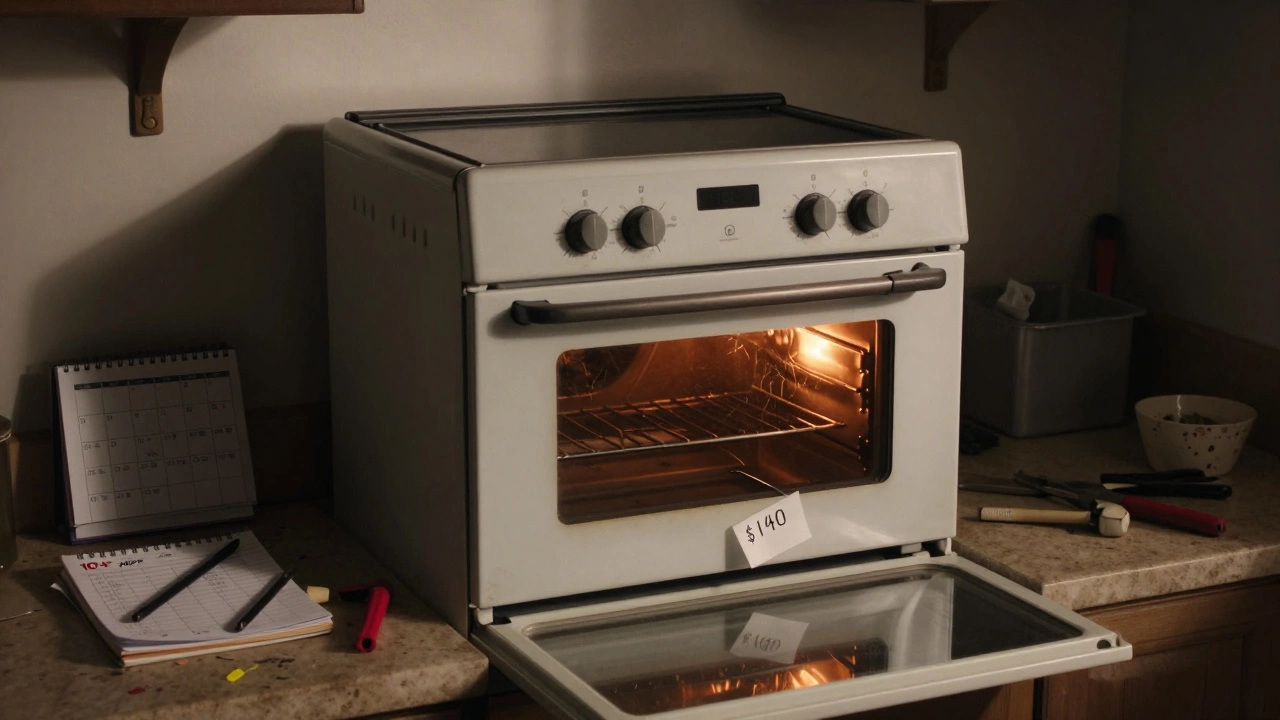
A real example: a homeowner in Mt Roskill had their oven stop heating. The technician found the element was burnt out. Replacement cost $140. Two months later, the timer stopped working. Another $190. That’s $330 in repairs on a 12-year-old oven. At that point, they were already halfway to buying a new one.
How much does a new oven cost?
New ovens range from $500 for a basic electric model to $2,500 for a high-end gas or dual-fuel unit with smart features. But you don’t need to spend big. For most households, a solid mid-range oven costs between $800 and $1,300. That includes installation. If you’re replacing a built-in oven, you’ll also need to factor in cabinetry adjustments. That can add $200 to $500 if the cut-out size doesn’t match.
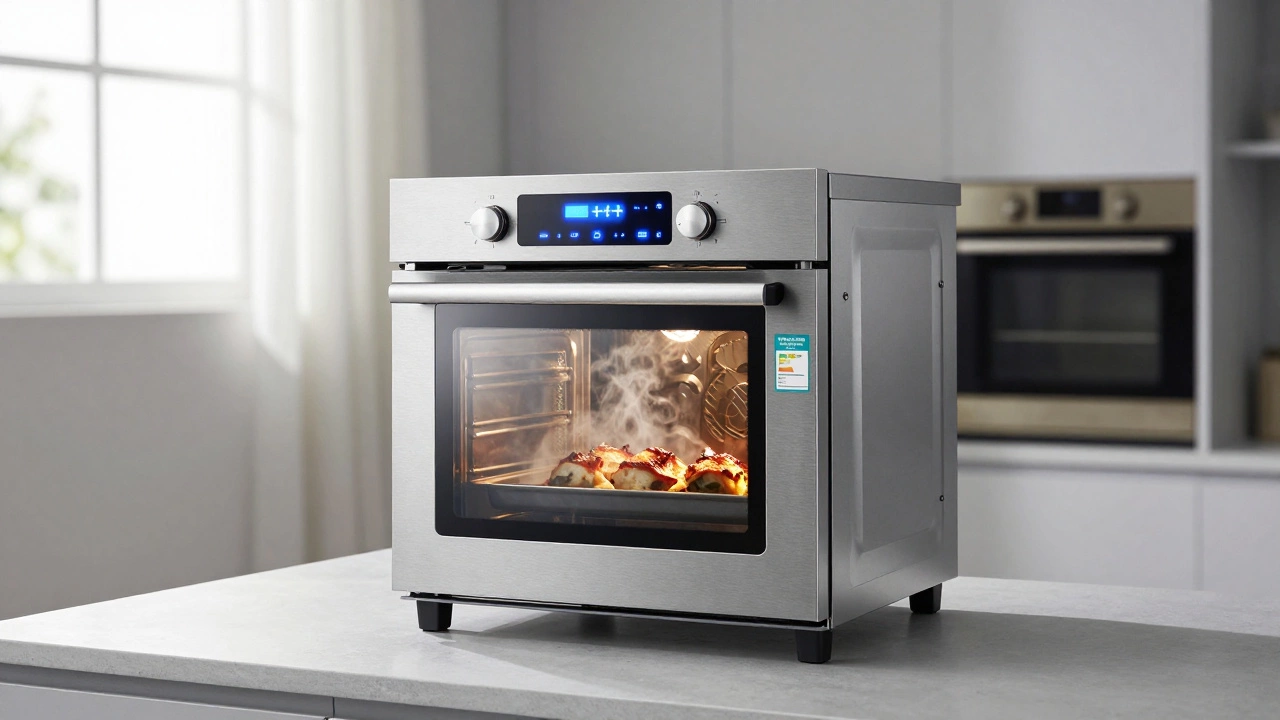
Here’s what you get with a new oven: a 12-month warranty, energy efficiency ratings (A+++ models use 30% less power), and modern features like self-cleaning, Wi-Fi control, and even air frying. Older ovens? They’re often energy hogs. A 15-year-old model might cost you $150 extra per year in electricity compared to a new one.
When repair makes sense
Repairing is the smart move if:
- Your oven is under 8 years old
- The repair cost is less than 50% of a new oven’s price
- The issue is a single, simple part (element, thermostat, door latch)
- You’re happy with the oven’s size, layout, and performance
For example, if your 5-year-old oven has a broken light bulb or a stuck fan, that’s an easy $80 fix. No reason to replace it. Even if the control panel is glitchy, replacing it might be cheaper than buying new-especially if you’re not ready to upgrade your kitchen.
When replacement is the better choice
Replace your oven if:
- It’s 10+ years old
- You’ve already spent over $300 on repairs in the last year
- The oven doesn’t heat evenly or takes too long to preheat
- It’s using more electricity than your meter shows it should
- You’re planning to sell your home-new appliances add value
One family in Ponsonby replaced their 14-year-old oven after three repairs in 18 months. The total repair cost? $670. They bought a new 70cm electric oven for $1,100, installed for $150. Total outlay: $820. But now, their energy bill dropped $18 a month. They’ll recoup the cost in under 14 months. And they don’t have to worry about another breakdown.
What about extended warranties?
Extended warranties on ovens? Usually not worth it. Most cover only parts, not labour. And they often exclude common failures like heating elements or thermostats. You’re better off saving $50 a year into a “replacement fund.” After three years, you’ll have $150-enough to cover a big repair or help with a down payment on a new oven.
Energy savings matter
A 2025 Energy Efficiency and Conservation Authority (EECA) report found that households with ovens older than 10 years spent 42% more on cooking energy than those with models under 5 years old. That’s not just a number-it’s $150 to $250 extra per year. Over five years, that’s $750 to $1,250. If you’re paying that every year, replacing your oven isn’t just about convenience. It’s a financial decision.

Environmental impact
Throwing out a working oven isn’t great for the planet. But keeping an inefficient one isn’t either. A new A+++ oven uses less energy, which means fewer emissions over its lifetime. Plus, many retailers in Auckland now take back old appliances for recycling. Some even give you a $50 discount on a new model if you trade in your old one.
What to check before deciding
Before you pick repair or replace, do this:
- Check the model number and find out how old it is. Look up the manufacture date online.
- Call two repairers. Ask for a quote that includes parts and labour. Get it in writing.
- Visit a local appliance store. See what’s available in your size and budget. Ask about energy ratings.
- Calculate how much you’ve spent on repairs in the last two years.
- Check if your electricity bill has jumped recently-especially during cooking hours.
If the repair cost is more than half the price of a new oven, and your oven is over 8 years old, replacement is almost always the smarter long-term play.
Final rule of thumb
Here’s the simplest way to decide:
- Repair if: repair cost < 50% of new oven price AND oven is < 8 years old
- Replace if: repair cost > 50% of new oven price OR oven is > 10 years old
That’s it. No guesswork. No sales pitches. Just clear math.
Is it worth repairing a 15-year-old oven?
Generally, no. Ovens older than 10 years are near the end of their lifespan. Even if a repair works, other parts are likely to fail soon. A 15-year-old oven is also less energy-efficient, meaning higher electricity bills. Replacing it often saves more money in the long run.
Can I install a new oven myself?
If it’s a plug-in electric oven, maybe. But built-in ovens require hardwiring, gas line connections, or ventilation adjustments. In New Zealand, electrical and gas work must be done by a licensed professional. DIY installations can void warranties and create safety hazards. Always hire a certified technician.
Do all ovens use the same amount of electricity?
No. Energy ratings vary widely. An A+++ oven uses up to 40% less power than an old D-rated model. A modern oven with good insulation and convection fans heats faster and uses less energy overall. Check the Energy Rating label-it’s required on all new ovens sold in NZ.
What’s the average lifespan of an oven?
Most ovens last between 10 and 15 years with normal use. Gas ovens tend to last a bit longer than electric ones. But frequent use, poor ventilation, or lack of cleaning can shorten that lifespan. If you use your oven daily, expect to replace it closer to the 10-year mark.
Are there government rebates for replacing old ovens?
As of 2026, New Zealand doesn’t offer direct rebates for oven replacements. But some electricity retailers offer discounts if you upgrade to an energy-efficient model. Check with your provider. Also, many appliance stores run seasonal promotions with trade-in deals-sometimes $50 to $150 off.