Oven Repair vs. Replace Calculator
Assess Your Situation
Result
You’re staring at your oven. It’s been in the kitchen since before you had a smartphone, maybe even before some of your kids were born. It heats up, it browns the chicken, but something feels off. The temperature is inconsistent, or the door seal has finally given up the ghost. The big question isn’t just "what’s wrong," but "is this thing worth saving?"
Here is the short answer: Yes, a 20-year-old oven can almost always be repaired. But should you? That depends entirely on what broke, how much the part costs, and whether the rest of the unit is still holding its own. In Auckland, we see plenty of these units-often European brands like Miele, Bosch, or older local favorites-that are built like tanks. Unlike modern appliances designed with planned obsolescence, ovens from the early 2000s were engineered for longevity. The challenge today isn’t usually finding someone who can fix it; it’s finding the specific parts without paying a fortune.
The Economics of Saving an Ancient Appliance
Let’s talk money. This is where most people get stuck. If your repair quote comes back at $450 NZD, and a new basic electric oven costs $800 NZD, does it make sense to spend more than half the price of a new unit on a repair? Sometimes, yes. Here is why:
- Build Quality: Older ovens often use heavier steel and simpler mechanical timers that last decades. Newer mid-range models might have plastic components that fail in five years.
- Disposal Costs: Getting rid of an old oven isn’t free. You need to book a council pickup or pay a removalist. That’s another $50-$100 out of pocket.
- Installation Fees: Plugging in a new oven isn’t always plug-and-play. If the electrical requirements have changed (like moving from a standard outlet to a dedicated circuit), you’re looking at an electrician’s bill on top of the appliance cost.
If the repair keeps the total cost under 30% of a comparable new model’s price, you’re usually in safe territory. But if the repair hits 50%, you’re gambling that the next component won’t fail within six months.
Common Failures in Two-Decade-Old Ovens
Not all breakdowns are created equal. Some are cheap fixes; others are death sentences. Here is what typically goes wrong after twenty years of service.
Thermostats are often the first casualty. These mechanical devices regulate temperature. Over time, the bimetallic strip inside loses its tension. Your oven says 180°C, but it’s actually running at 150°C or 210°C. Replacing a thermostat is rarely expensive, often between $100 and $200 including labor. It’s a high-value repair because it restores cooking accuracy without touching the core structure.
Door Seals degrade due to heat cycling. After 20,000 hours of baking, rubber becomes brittle. You’ll feel hot air escaping around the edges. This wastes energy and messes up convection cooking. Good news: seals are universal-ish and cheap. A replacement usually costs less than $150. Bad news: if the door glass itself has cracked or the hinges are sagging, the alignment issues might require a full door assembly, which gets pricey fast.
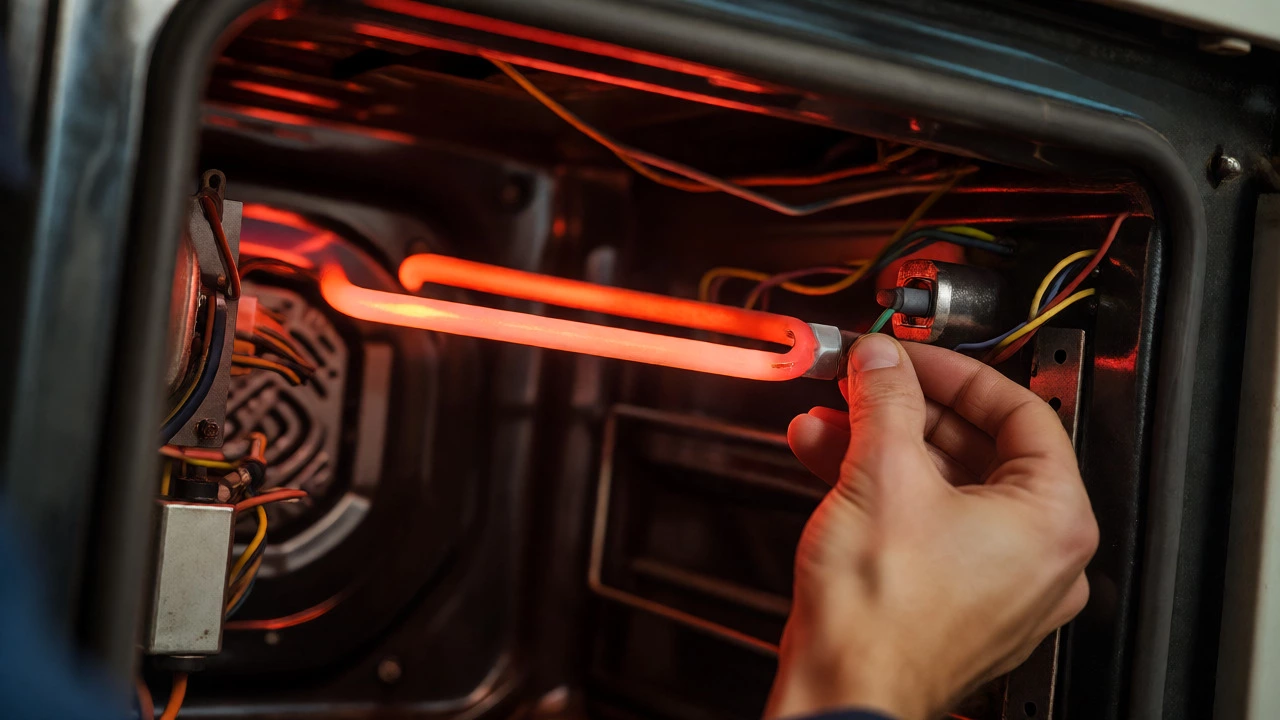
Heating Elements burn out eventually. Whether it’s the bake element at the bottom or the grill element at the top, these are consumable parts. They glow red until they don’t. Replacement elements are widely available and relatively inexpensive ($50-$150 for the part). However, if the element failed because of a faulty relay board behind it, the cost jumps significantly. Always ask the technician to check the control board before swapping the element.
Control Boards are the nightmare scenario. Modern digital interfaces didn’t exist in the same way 20 years ago, but electromechanical relays and timer motors do fail. If the main controller dies, finding a compatible part for a discontinued model can take weeks. And when you find it, it might cost as much as a second-hand oven. If your oven is fully digital with a touchscreen, assume the board failure is a terminal diagnosis unless you have deep pockets.
Finding Parts for Discontinued Models
This is the biggest hurdle. Manufacturers stop stocking parts for many models after 7-10 years. So how do you fix a 2006 oven in 2026?
- Check the Model Number Plate: It’s usually hidden inside the door frame or under the top panel. Write down the exact model number. Do not guess based on the brand logo.
- Search Specialist Suppliers: In New Zealand, companies like Sparex or specialized appliance part distributors often keep stock of "legacy" parts. They cater specifically to older machines.
- Look for Universal Alternatives: Heating elements and thermostats often have universal equivalents. A skilled technician can adapt a generic part to fit your old housing. This saves hundreds of dollars compared to OEM (Original Equipment Manufacturer) parts.
- E-Bay and Salvage Yards: For cosmetic parts like knobs or handles, used markets are gold mines. Just ensure the internal electronics aren’t being sourced from a donor machine with unknown health.
If a technician tells you "we can’t get the part," ask them to search for a compatible cross-reference. Many brands share internal components. Your obscure local brand might use the same motor as a popular international one.
When to Pull the Trigger on Replacement
Sometimes, stubbornness costs more than wisdom. Here are clear signs that your 20-year-old oven has reached retirement age.
| Scenario | Recommendation | Reasoning |
|---|---|---|
| Single mechanical failure (thermostat, element) | Repair | High success rate, low cost, extends life by 5+ years. |
| Electronic control board failure | Replace | Parts scarce/expensive; other electronics likely near end-of-life. |
| Rust inside cavity affecting insulation | Replace | Structural integrity compromised; poor efficiency. |
| Cabinet exterior severely damaged | Replace | Aesthetic mismatch; potential safety hazard with exposed wiring. |
| Repair cost > 40% of new unit price | Replace | Diminishing returns; risk of cascading failures. |
Also consider energy efficiency. An oven from 2006 might lack the tight insulation of a 2026 model. While ovens don’t consume massive amounts of electricity compared to heaters, a leaky seal or inefficient element adds up over thousands of cooking sessions. If your power bills seem mysteriously high, upgrading might pay for itself faster than you think.
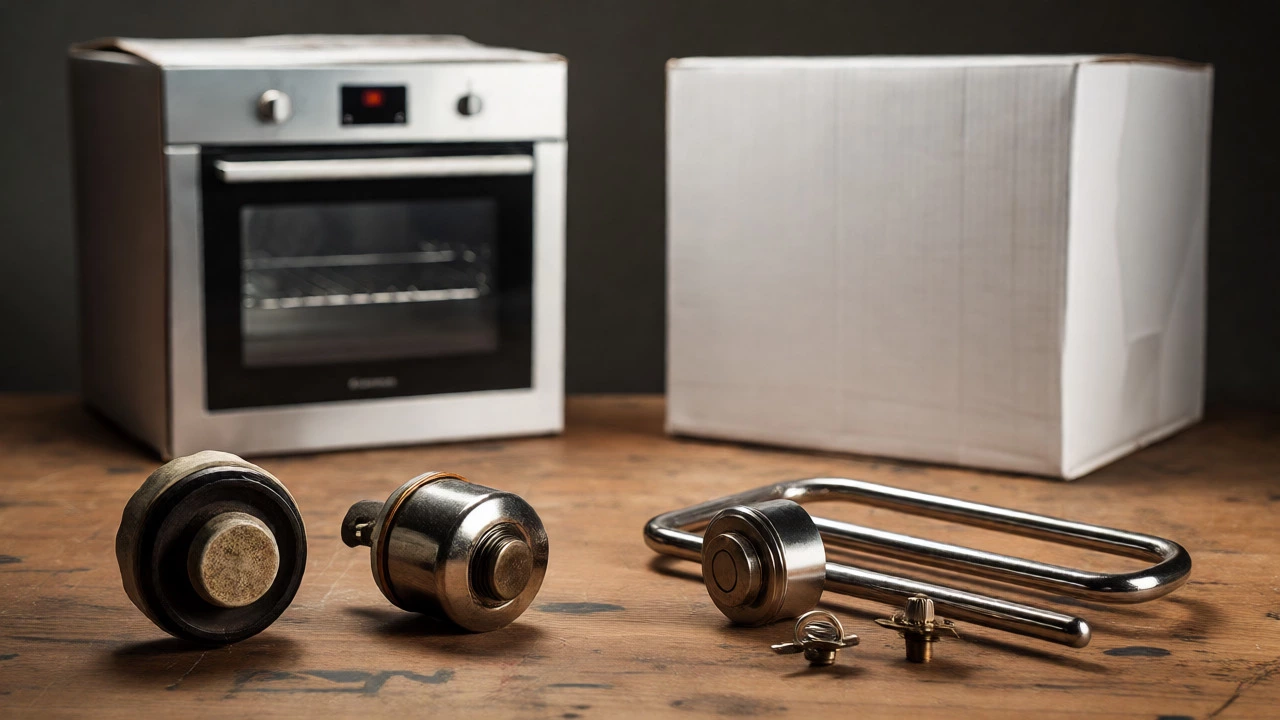
Safety First: Don’t Ignore These Red Flags
Before you decide to repair, inspect the unit for safety hazards. No amount of sentimental value is worth a house fire.
- Exposed Wiring: If the enamel coating on wires has melted or cracked, stop using the oven immediately. Heat degrades insulation over two decades.
- Gas Smell (if applicable): Even electric ovens sometimes sit near gas hobs. But if you have a dual-fuel unit, check for leaks. Old gaskets on gas valves can stiffen and leak.
- Sparkling Sounds: If you hear crackling or popping when turning the oven on, there may be arcing inside the switch or element terminals. This is a fire risk.
- Unstable Door: If the door drops suddenly or doesn’t latch securely, the hinges are shot. Glass doors under stress can shatter unexpectedly.
If any of these apply, call a professional immediately. Do not attempt DIY repairs on gas lines or high-voltage mains connections unless you are qualified.
The Verdict: Keep It or Bin It?
Your 20-year-old oven is likely a survivor. If it’s a reputable brand, mechanically simple, and suffering from a single isolated fault like a bad thermostat or element, repair it. You’ll save money, reduce landfill waste, and keep a reliable workhorse in your kitchen.
However, if the brain of the oven-the electronic control system-is dead, or if multiple components fail simultaneously, let it go. The market for second-hand parts is drying up, and labor rates are rising. In those cases, investing in a modern, energy-efficient model is the smarter financial move.
Start by getting a diagnostic quote. Ask the technician explicitly: "Is this a common failure for this model?" and "Do you have the part in stock?" Their answers will tell you everything you need to know.
How long do electric ovens usually last?
The average lifespan of an electric oven is 10 to 15 years. However, well-maintained units from premium manufacturers often exceed 20 years. Regular cleaning and prompt attention to minor faults like loose seals can significantly extend this timeline.
Is it cheaper to repair or replace an old oven?
It depends on the fault. Mechanical repairs (elements, thermostats) are usually cheaper than replacement. Electronic repairs (control boards) are often more expensive than buying a new mid-range oven. If the repair cost exceeds 40-50% of the price of a new equivalent model, replacement is generally recommended.
Where can I find parts for a 20-year-old oven?
Specialized appliance part suppliers, online marketplaces like eBay, and salvage yards are your best bets. Many technicians also source universal parts that can be adapted to fit older models, which is often cheaper and easier than finding original equipment manufacturer (OEM) parts.
What are the signs my oven needs replacing instead of repairing?
Key signs include rust compromising the inner cavity, repeated electronic glitches, severe damage to the outer cabinet, or if the cost of parts plus labor approaches the price of a new unit. Safety issues like exposed wiring or unstable doors are also strong indicators for replacement.
Can I replace the heating element myself?
Yes, if you are handy and confident with tools. You must disconnect the power supply completely before starting. Most elements are held in place by screws and connected via spade terminals. However, if you are unsure about electrical safety, hire a professional to avoid shock hazards or improper installation.