Shower Hot Water Troubleshooter
This tool helps identify why your shower has no hot water while other fixtures work. Based on Auckland plumbing expert analysis.
Does hot water work elsewhere?
What symptoms do you experience?
Diagnosis Results
If your shower has no hot water but the sink, bathtub, or washing machine all work fine, you’re not alone. This is one of the most common complaints we see in Auckland homes - especially in older houses with mixed plumbing systems. The problem isn’t your water heater. It’s something between the heater and your shower head. And fixing it usually doesn’t require replacing the whole system.
Your water heater is fine - here’s why
The fact that hot water works elsewhere means your water heater is doing its job. It’s heating water, storing it, and pushing it through the pipes. If the heater were broken, you’d have no hot water anywhere. That’s the first rule to remember: if hot water works in one place, the heater is working.
So why is your shower cold? The issue is almost always in the shower’s local plumbing. Think of it like a roadblock on one lane of a highway. The rest of the traffic flows fine - but that one exit is jammed.
Check the mixing valve first
Most modern showers use a pressure-balancing or thermostatic mixing valve. These valves mix hot and cold water to give you a steady, safe temperature. Over time, mineral buildup from Auckland’s hard water clogs these valves. When that happens, the valve gets stuck or can’t let enough hot water through.
You’ll notice this if:
- The shower starts hot but quickly turns cold
- You hear a clicking noise when you turn the handle
- The temperature jumps around randomly
To test this, turn off the water supply to the shower. Remove the handle and take out the cartridge (the part inside the valve). Soak it in white vinegar for an hour. Rinse it, put it back, and turn the water on. If the hot water returns, you’ve found your problem. Cleaning the valve fixes it 70% of the time. If it’s cracked or worn, replace it - they cost under $50 and take 30 minutes to swap.
Is your shower valve the wrong type?
Some older homes had single-handle showers with a simple cartridge. Others were built with two separate handles - one for hot, one for cold. If someone replaced the original valve with a cheap, non-pressure-balanced model, it can’t handle low water pressure. That’s common in Auckland homes where water pressure drops when other fixtures are running - like when the dishwasher starts.
If you’ve had this problem since a renovation, the valve might be mismatched. A thermostatic valve is the best long-term fix. It maintains temperature even if pressure changes. It’s more expensive, but it lasts 15+ years and stops scalding.
Check the showerhead and aerator
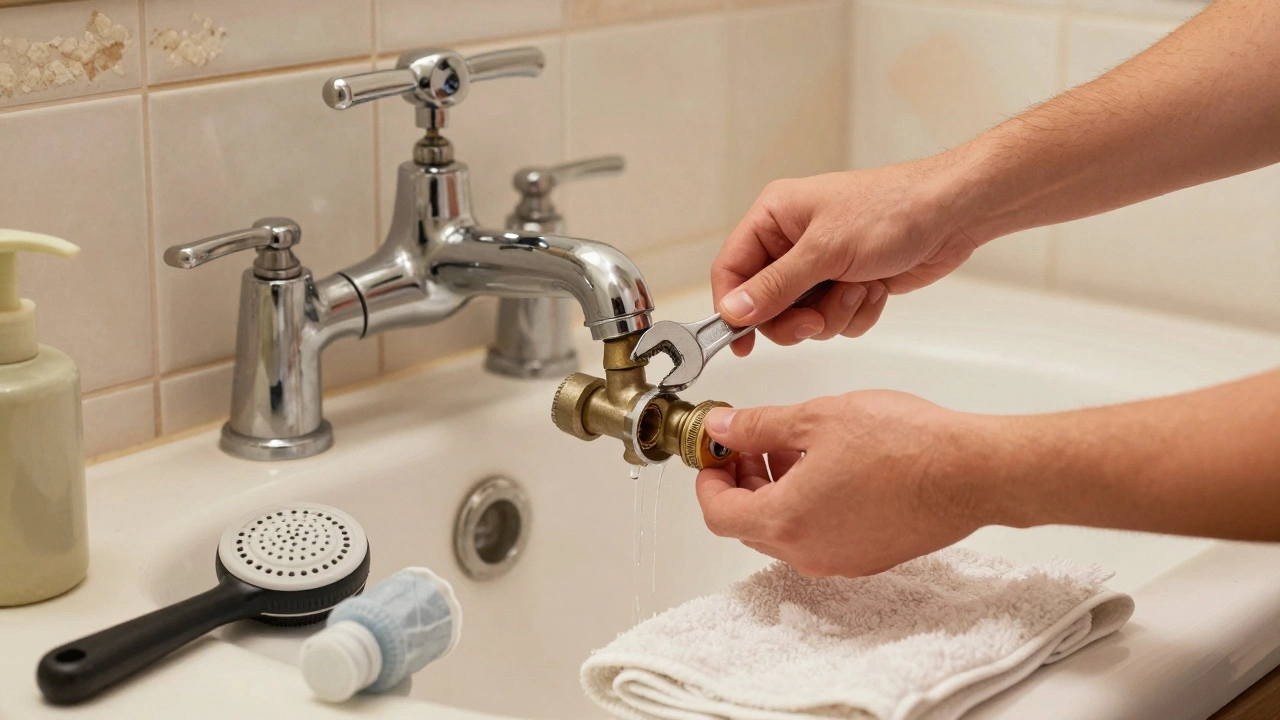
It sounds simple, but a clogged showerhead can block hot water flow. Mineral deposits from hard water build up inside the nozzles. Cold water has more pressure, so it pushes through. Hot water, which is less dense and flows slower, gets blocked.
Remove the showerhead. Soak it overnight in vinegar. Use a toothbrush to scrub the holes. Reattach it. If hot water returns, you’re done. No tools needed. This fixes the problem in 20% of cases.
Some showerheads have built-in flow restrictors. These are meant to save water but can also limit hot water flow. If you’ve got a low-flow model (under 6 L/min), try swapping it for a standard one (9-10 L/min) to see if that helps.
Is the hot water line pinched or blocked?
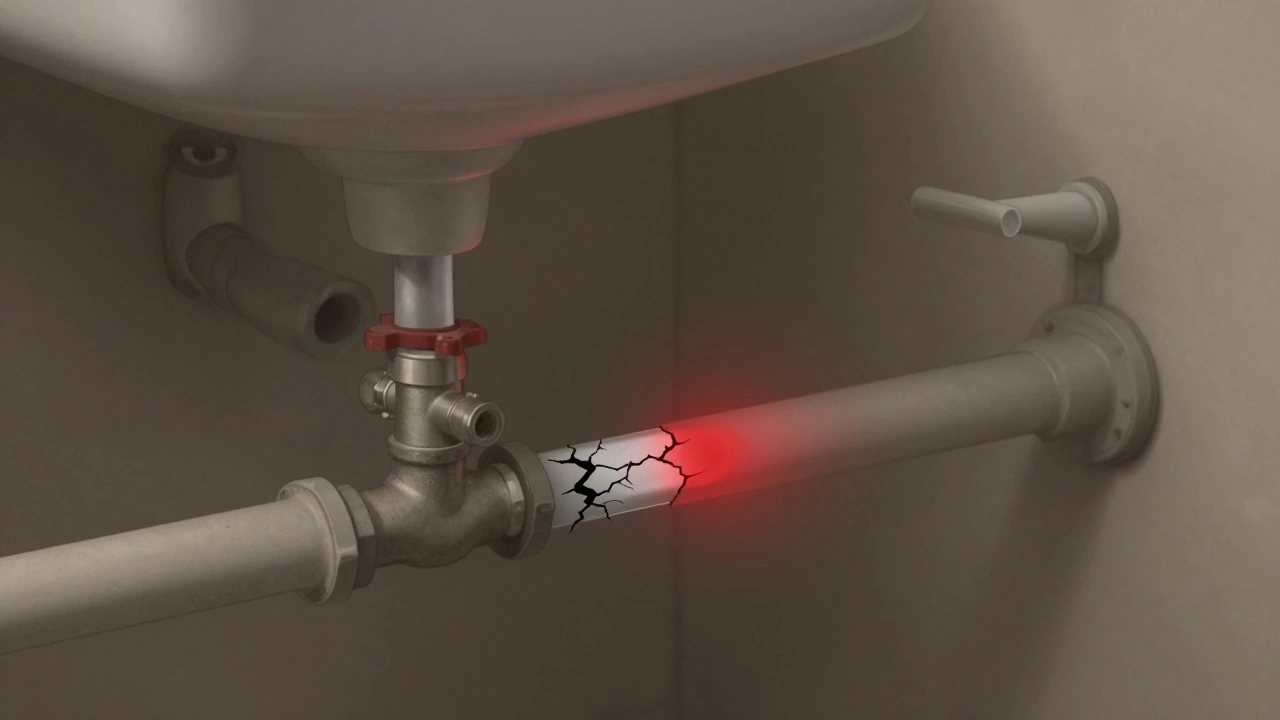
If your shower is on an upper floor, the hot water pipe might be kinked or crushed. This happens when renovations go wrong - like when a plumber runs pipes through wall studs and bends them too tight. Or when insulation is packed too tightly around the pipe.
Look behind the shower wall. If you can access the pipes, check for:
- Sharp bends in copper or PEX tubing
- Compression from nearby pipes or nails
- Insulation that’s squeezing the pipe
Even a 10% squeeze can cut hot water flow by half. If you find a bend, you’ll need to open the wall and replace that section. It’s not a DIY job unless you’re experienced. Call a plumber - but make sure they check the whole run, not just the shower.
Could it be the diverter valve?
If you have a bathtub with a showerhead on the wall, the diverter valve is the little knob or lever that switches water from the tub spout to the showerhead. When it fails, it doesn’t fully close off the tub spout. So hot water keeps leaking out into the tub instead of going up to the shower.
Here’s how to test it:
- Turn on the shower. Let it run for 30 seconds.
- Place your hand over the tub spout. Is water still dripping?
- If yes, the diverter isn’t sealing.
Replace the diverter valve. It’s a $20 part. Turn off the water, remove the spout, and swap the old one. You’ll need a wrench and a little patience. Most DIYers can do it in under an hour.
What about tankless water heaters?
If you’ve got a tankless heater, the issue might be flow rate. These systems only turn on when water flows at a certain speed - usually 0.5 to 0.8 gallons per minute. If your showerhead is low-flow, or the pipes are narrow, the heater might not even kick in.
Check your heater’s manual. Look for the minimum flow rate. If your shower is below that, the heater stays off. Solution? Replace the showerhead with one that meets the minimum. Or install a small buffer tank to help trigger the heater.
Don’t waste money on a new water heater
Too many people replace their entire water heater because the shower is cold. That’s like replacing your car’s engine because one tire is flat. It’s expensive, unnecessary, and often wrong.
Here’s what to do instead:
- Test other fixtures - confirm hot water works elsewhere
- Check the showerhead - soak it in vinegar
- Test the diverter - is water leaking from the tub spout?
- Listen for strange noises when turning the shower handle
- If none of that works, remove and clean the mixing valve cartridge
If you’ve tried all that and still have no hot water in the shower, call a licensed plumber. But make sure they check the local plumbing - not just the heater.
Quick checklist: What to check first
- ✅ Is hot water working in the sink and bathtub?
- ✅ Is the showerhead clogged? (Soak in vinegar)
- ✅ Is water leaking from the tub spout when shower is on? (Diverter issue)
- ✅ Does the shower handle feel stiff or click oddly? (Mixing valve problem)
- ✅ Is your water heater tankless? (Check minimum flow rate)
Most of the time, the fix costs less than $50 and takes under an hour. You don’t need a new heater. You just need to know where to look.
Why does my shower have hot water only when the sink is running?
This usually means your shower’s mixing valve is clogged or failing. When you turn on the sink, it increases water pressure, forcing hot water through the blocked valve. Once you turn the sink off, the pressure drops and the valve can’t push enough hot water through. Cleaning or replacing the valve fixes this.
Can low water pressure cause no hot water in the shower?
Yes, especially with tankless heaters or older mixing valves. Low pressure means hot water can’t flow fast enough to trigger the heater or overcome resistance in a clogged valve. Check your water pressure with a gauge - anything below 30 psi can cause issues. Installing a water pressure booster or replacing the showerhead with a higher-flow model often helps.
Is it safe to use vinegar to clean a shower valve?
Yes, vinegar is safe for cleaning brass, copper, and plastic parts inside shower valves. It dissolves mineral deposits without damaging the seals. Just don’t leave it soaking for more than 24 hours, and rinse thoroughly. Avoid vinegar on chrome-plated parts - it can dull the finish.
Should I replace my shower valve if it’s 15 years old?
If it’s still working, you don’t need to replace it just because of age. But if you’re having frequent issues - temperature swings, leaks, or low hot water flow - it’s worth upgrading. Modern thermostatic valves are more reliable, safer, and last longer. A $150 upgrade can save you hundreds in future repairs.
Why does my shower go cold after a few minutes?
This usually means your water heater tank is too small for your usage, or the mixing valve is failing. If you have a tank heater, a 50-gallon tank might run out if you’re showering for more than 10-15 minutes. But if your tank is large and you’re still running out fast, the valve is likely letting cold water mix in too early. Replace the valve or upgrade to a larger tank.