Microwave Repair Decision Calculator
Select your microwave's symptoms and details to estimate repair costs and get a recommendation on whether to fix or replace.
Likely Component Failure:
-
Estimated Part Cost (NZD):
-
Recommendation
-
Why this advice?
- • Calculated total repair cost vs. replacement value.
- • Considered appliance age and typical lifespan.
- • Factored in safety risks for DIY repairs.
You put your leftover lasagna in the microwave, hit start, and... nothing. Or maybe it runs but stays cold. Or worse, you hear a loud buzzing sound that makes you want to unplug it immediately. If you're staring at a dead or misbehaving appliance, you're probably wondering: what usually goes out on a microwave? It’s rarely the whole unit dying at once. In fact, most microwaves fail due to just three or four specific components.
Here is the blunt truth: microwaves are dangerous to fix if you don't know what you're doing. The high-voltage capacitor can hold a lethal charge even when unplugged. But understanding why they break helps you decide whether to call a pro or tackle a simple fix yourself. Let's break down the actual parts that fail, how to spot them, and what it costs to get your kitchen working again.
The High Voltage Diode: The Silent Killer
If your microwave turns on, the light works, the fan spins, but the food comes out ice-cold, the culprit is almost always the high voltage diode. This small component converts AC current to DC for the magnetron. When it fails, it usually shorts out. You won't see smoke. You won't smell burning plastic. The only symptom is that the machine runs but doesn't heat. Testing this requires a multimeter set to resistance mode. A good diode shows low resistance one way and infinite the other. If it reads zero both ways, it's dead. Replacement costs around $10-$20 for the part, plus labor if you aren't comfortable handling high-voltage circuits.
Magnetron Failure: The Heart Stops Beating
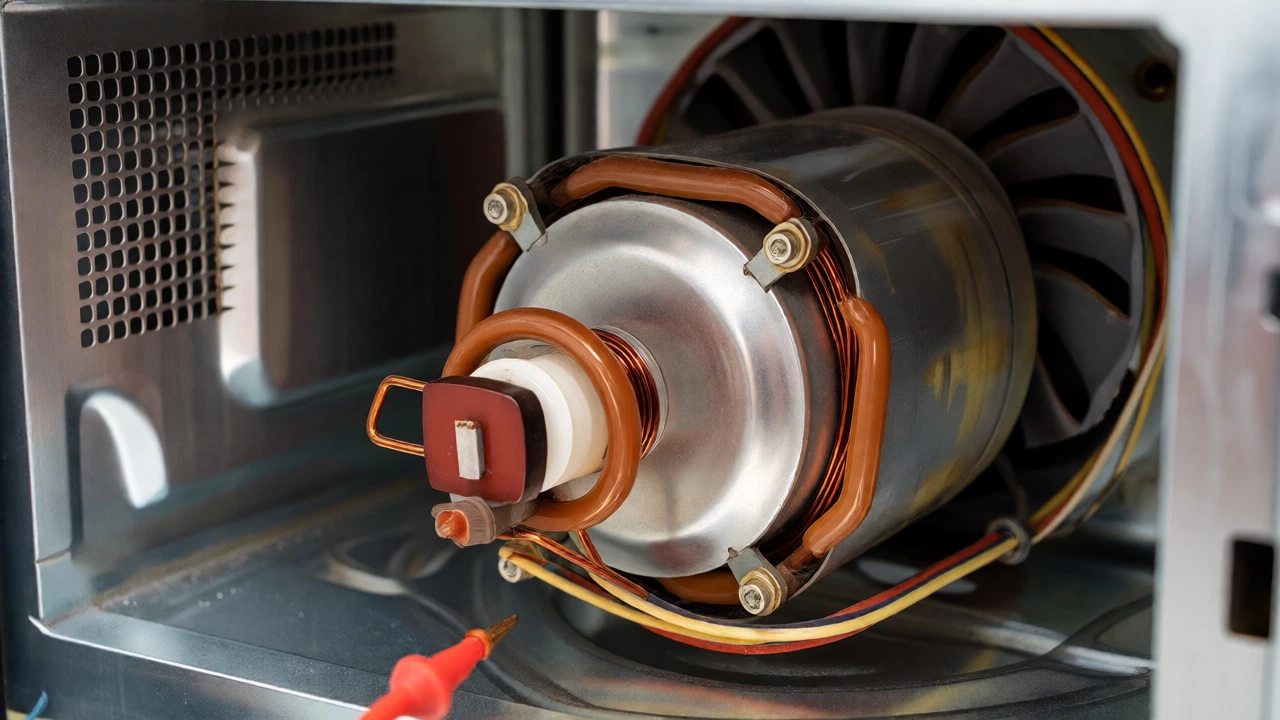
The magnetron is the engine of your microwave. It generates the microwaves themselves. Unlike the diode, magnetron failures are often dramatic. You might hear a loud hum, a grinding noise, or even sparks inside the cavity. Sometimes, the fuse blows instantly when you press start. Why do they fail? Overheating is the main reason. If the cooling fan gets clogged with grease dust (a common issue in Auckland kitchens with heavy cooking), the magnetron overheats and burns out its internal filaments. Replacing a magnetron is pricey-parts range from $80 to $150 NZD-and since it's a sealed unit, you can't repair it; you must replace it. For older units, this cost often exceeds the value of the microwave itself.
Door Switches: The Safety Lock That Breaks
Does your microwave refuse to start even though everything looks fine? Check the door switches. Microwaves have three interlock switches that ensure the door is fully closed before power flows to the magnetron. These are mechanical parts with springs and contacts that wear out over thousands of cycles. One failed switch can stop the entire machine. The symptoms are tricky: sometimes the light turns on, but the plate doesn't spin. Other times, it buzzes briefly then stops. You can test each switch with a multimeter for continuity. If one doesn't click or show continuity when pressed, it's broken. The good news? Door switches are cheap ($5-$15) and easy to replace. Just make sure to disconnect the power first.
Control Board Issues: When Electronics Go Bad
Modern microwaves are packed with electronics. The control board manages the display, timers, and sensor cooking features. If your display flickers, buttons don't respond, or the clock resets randomly, the control board might be failing. Moisture and steam are the enemies here. If you cook lots of soups or stews without covering them, steam seeps into the vent area and corrodes the circuitry. Sometimes, a blown fuse on the board causes total failure. Repairing a control board requires soldering skills and technical knowledge. Often, technicians recommend replacing the whole board, which costs $100+. Before you go there, check simpler things like the door latch alignment-sometimes a misaligned door triggers error codes that look like electronic failures.
Turntable Motor and Coupler: The Spinning Problem
Your food heats unevenly because it isn't rotating. This is a minor annoyance but an easy fix. The turntable motor sits under the floor of the microwave. It drives a plastic coupler that connects to the glass tray. Over time, the coupler cracks or strips, causing the tray to slip or not move at all. You'll hear a humming noise from the bottom while the tray stays still. Replacement is straightforward: remove the tray, unscrew the cover, and swap the motor or coupler. Parts cost under $20. This is one of the few repairs a novice can safely handle without touching high-voltage components.
Fuse Blowing: The Last Line of Defense
A blown fuse is a symptom, not a cause. If your microwave dies completely-no lights, no sounds-the fuse likely blew to protect the rest of the system. But why did it blow? Usually, it's a shorted diode or magnetron. If you replace the fuse and it blows again immediately, you have a deeper problem. Never keep replacing fuses without diagnosing the root cause. A persistent short will destroy new components quickly. Fuses are cheap ($2-$5), but accessing them requires removing the outer casing. Again, remember the capacitor hazard.
| Component | Symptoms | Part Cost (NZD) | Repair Difficulty |
|---|---|---|---|
| High Voltage Diode | Runs but doesn't heat | $10 - $20 | Medium (HV risk) |
| Magnetron | Loud hum, sparks, no heat | $80 - $150 | Hard (HV risk) |
| Door Switch | No start, intermittent operation | $5 - $15 | Easy |
| Control Board | Flickering display, unresponsive | $100+ | Hard |
| Turntable Motor | Tray doesn't spin | $10 - $25 | Easy |
| Fuse | Total power loss | $2 - $5 | Medium (Diagnostic) |
Is It Worth Repairing Your Microwave?
This is the million-dollar question. In New Zealand, a basic countertop microwave costs between $80 and $150. A built-in model can run $400 to $800+. Here's my rule of thumb: if the repair cost (parts + labor) exceeds 50% of the replacement price, buy a new one. Labor rates in Auckland average $90-$120 per hour. So, a magnetron replacement costing $150 in parts plus an hour of labor totals $270+. Unless you have a high-end built-in unit, that's money better spent on a new appliance. However, for simple fixes like door switches or turntable motors, repairing is almost always worth it.
Also, consider the age. Most microwaves last 7-10 years. If yours is 12 years old and the magnetron dies, let it go. Newer models are more energy-efficient and have better sensor technology. Don't throw good money after bad.
Safety First: The Capacitor Warning
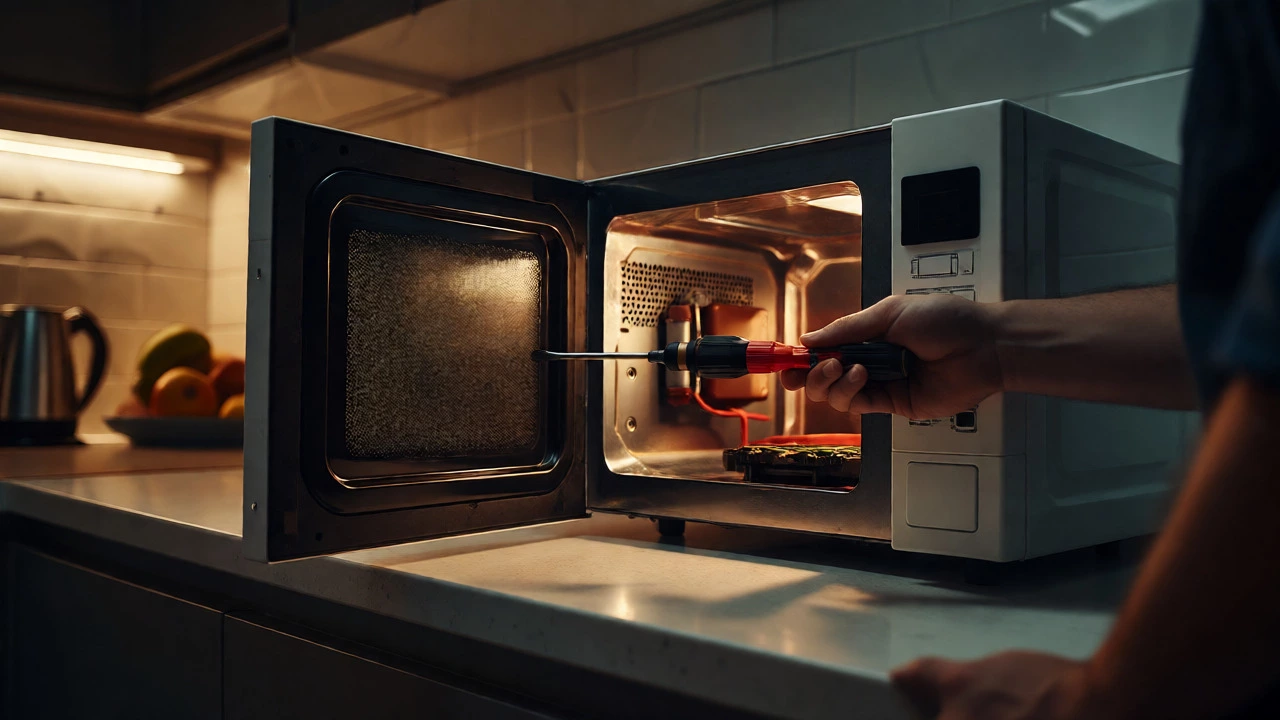
I cannot stress this enough: the high voltage capacitor stores electricity. Even when unplugged, it can deliver a shock strong enough to knock you backward or cause serious injury. If you open the case, you must discharge the capacitor using an insulated screwdriver or a dedicated discharge tool. Do not touch the terminals with bare hands. If you're unsure, leave the internal repairs to a professional. External issues like door switches and turntables are safe for DIYers. Internal HV components are not.
Why does my microwave spark?
Sparking is usually caused by food debris stuck in the waveguide cover, metal utensils inside, or a damaged stirrer blade. Clean the interior thoroughly. If sparking persists after cleaning, the waveguide cover may need replacing or the magnetron could be arcing internally.
Can I fix a microwave myself?
Yes, for external parts like door switches, turntable motors, and light bulbs. For internal components like the diode, capacitor, and magnetron, you need technical skill and strict safety precautions due to high voltage risks. If you've never worked with electronics, hire a pro.
How long do microwaves last?
Typically 7 to 10 years. Heavy use, poor ventilation, and lack of cleaning shorten lifespan. Built-in models often last longer than countertop ones due to better build quality and professional installation.
Why did my microwave stop heating suddenly?
Sudden loss of heating points to a failed high voltage diode or magnetron. Less commonly, a blown fuse or faulty door switch prevents the magnetron from engaging. Test the door switches first as they are the easiest to check.
Is it safe to run a microwave with a broken door seal?
It's risky. A broken seal can allow microwave radiation to leak. While modern microwaves are well-shielded, a compromised seal reduces efficiency and increases leakage. Replace the door seal or gasket promptly to ensure safety and proper cooking performance.