Pressure Cooker Gasket Replacement Calculator
Most pressure cookers need a new gasket every 12-18 months. This tool helps you determine if your gasket is due for replacement based on your usage patterns.
Gasket Replacement Recommendation
Enter your usage details and click 'Calculate' to see when you should replace your gasket.
If your pressure cooker isn’t working like it used to, you’re not alone. Thousands of people in New Zealand and around the world face the same issue every week. The most common problem? Pressure loss. Whether it’s a slow cook time, steam hissing from the lid, or the cooker refusing to build pressure at all, this is the #1 reason people call for repairs.
Why Pressure Loss Happens
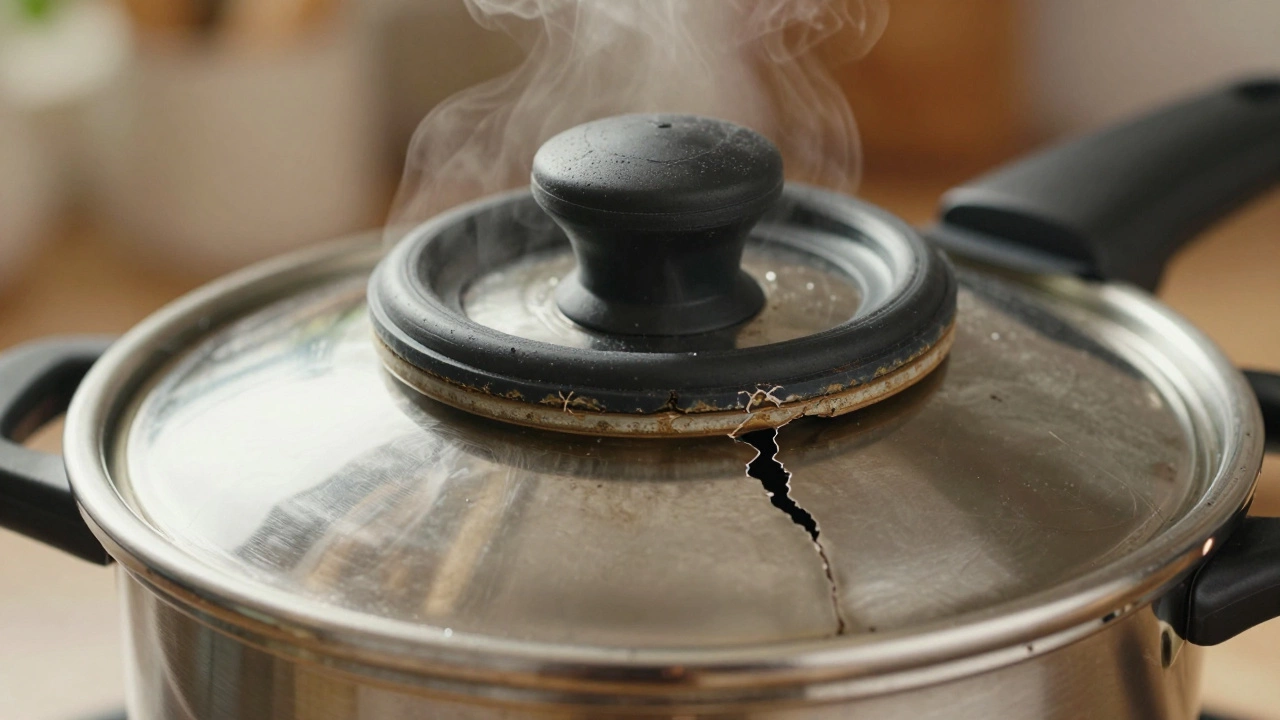
Pressure cookers work by trapping steam inside a sealed chamber. When that seal breaks-even slightly-the pressure drops, and cooking stops working properly. The culprit is almost always the gasket, also called the sealing ring. It’s a rubber or silicone loop that sits between the lid and the pot. Over time, heat, cleaning, and normal wear stretch it out, crack it, or make it sticky. A worn gasket won’t hold pressure, even if everything else is perfect.
Some people think they can fix this by tightening the lid harder. That doesn’t work. Pressure cookers aren’t screw-top jars. They’re precision-engineered systems. Forcing the lid can warp the rim or damage the locking mechanism. If the gasket is old-usually after 12 to 18 months of regular use-it needs replacing, not brute force.
Other Common Issues
While pressure loss is the biggest problem, there are a few others that show up often:
- Steam escaping from the vent pipe - This usually means the pressure regulator valve is clogged with food particles. It’s not dangerous if cleaned properly, but it will stop the cooker from reaching full pressure.
- The cooker won’t lock - The lid won’t turn into place. This often happens when the locking pins are bent or the lid is misaligned. Sometimes it’s just debris stuck under the latch. Other times, the hinge or handle is damaged from dropping the cooker.
- Food burns on the bottom - Not a mechanical problem, but a frequent complaint. Most pressure cookers need at least 1 cup of liquid to create steam. If you’re cooking rice, beans, or stews with little liquid, the bottom gets too hot. Always follow the minimum liquid guidelines in your manual.
- Pressure indicator doesn’t rise - This little metal pin or dial should pop up when pressure builds. If it stays down, either the valve is blocked, the gasket is bad, or the indicator itself is broken. Replacing the indicator is cheap and easy on most models.
What to Check Before Calling for Repair
You don’t need to rush to a technician for every issue. Try these simple steps first:
- Remove the lid and take out the gasket. Rinse it under warm water. Look for cracks, flattening, or stickiness. If it’s more than a year old, replace it. They cost under $15 and fit most major brands.
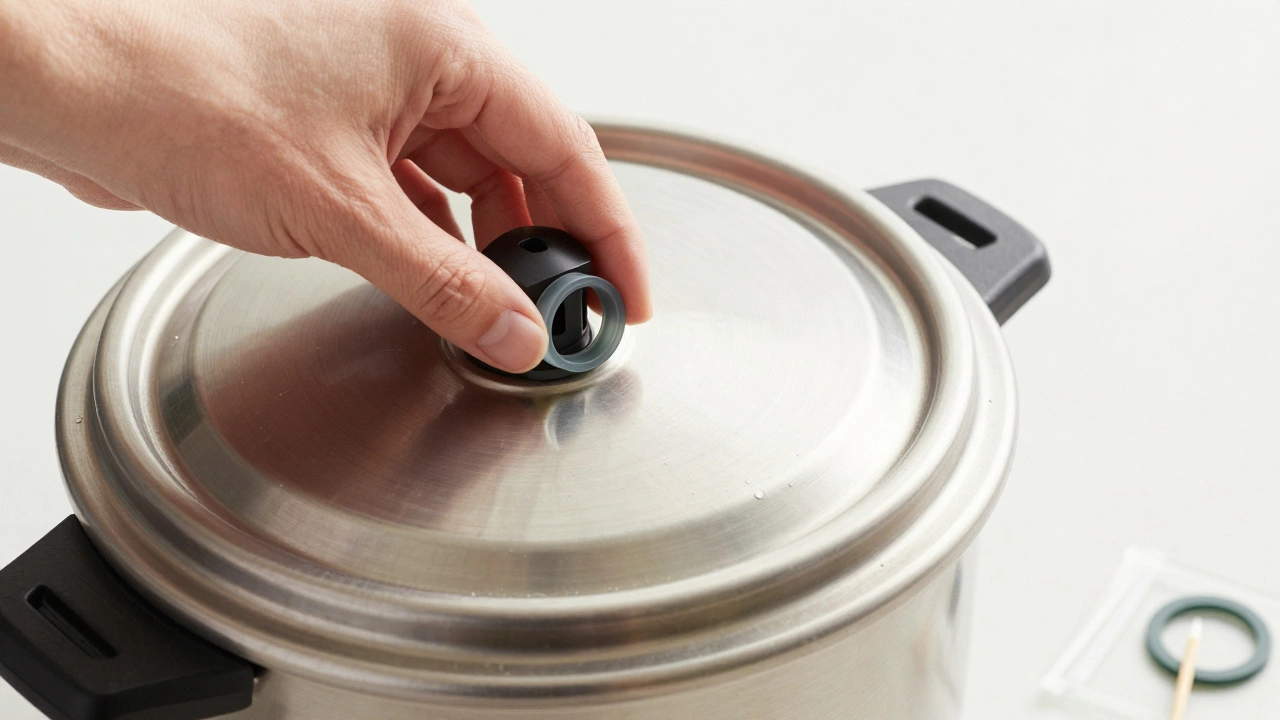
- Check the vent pipe. Use a toothpick or pipe cleaner to clear any food bits. Don’t use metal tools-they can scratch the metal and cause leaks later.
- Wipe the sealing surface on the pot and lid with a damp cloth. Even a speck of rice or grease can break the seal.
- Make sure the lid is aligned correctly. Most modern pressure cookers have a notch or arrow that must line up with the pot’s handle. Turn it slowly until you hear a soft click.
- Test with water. Put 2 cups of water in the pot, seal it, and bring it to pressure on medium heat. If it builds pressure and the indicator rises, your problem is likely user error, not a broken part.
When You Actually Need Professional Help
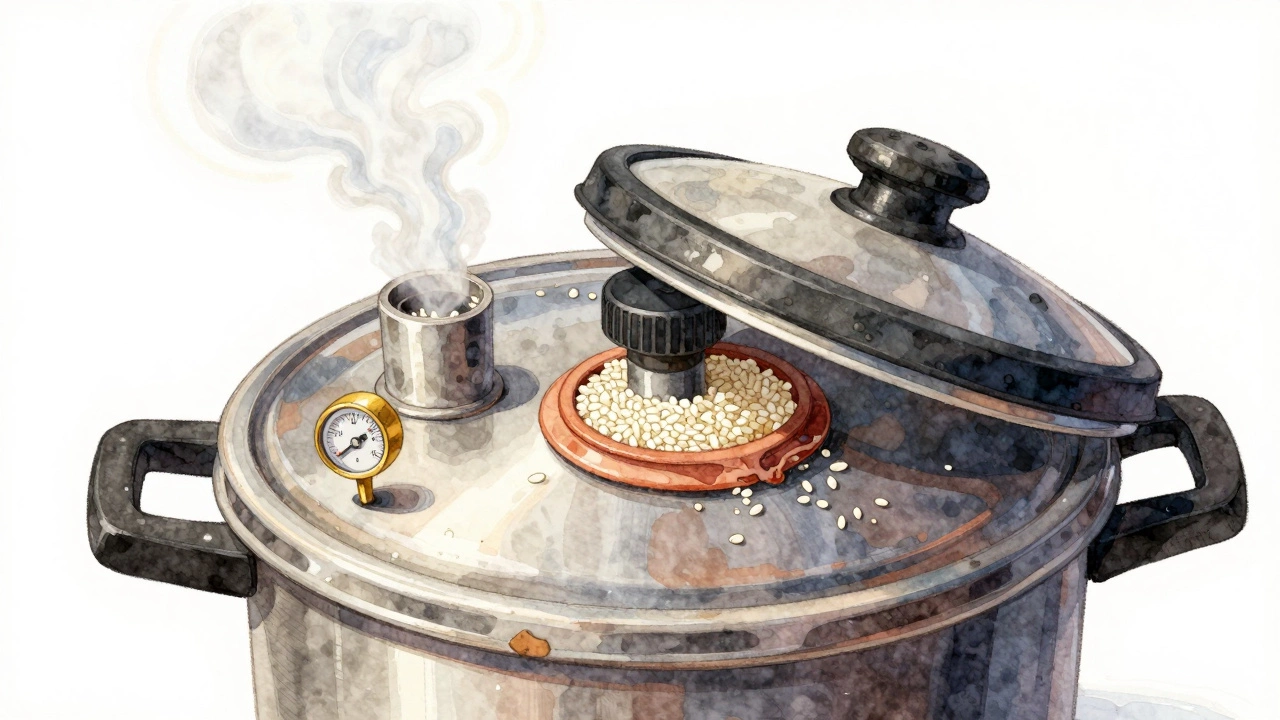
Some problems can’t be fixed with a new gasket. If you’ve tried everything and the cooker still won’t hold pressure, here’s when to call in a pro:
- The lid or pot is warped or dented
- The safety valve is stuck open or leaking steam constantly
- The pressure regulator won’t move or makes a loud hissing sound
- The electric controls on a smart pressure cooker don’t respond
These aren’t DIY fixes. A bent lid won’t seal no matter how tight you turn it. A faulty safety valve could cause a dangerous overpressure situation. Don’t risk it. In Auckland, many appliance repair shops offer same-day pressure cooker service. Most repairs cost between $40 and $80-far less than buying a new 6L or 8L cooker.
Preventing Problems Before They Start
Pressure cookers last 10+ years if treated right. Here’s how to keep yours working:
- Replace the gasket every 12-18 months-even if it looks fine. Rubber degrades with heat, even without visible damage.
- Never soak the lid. Water can seep into the locking mechanism and cause rust.
- Store the lid upside down or off the pot. Don’t leave it clamped on when not in use. That stresses the gasket.
- Use wooden or silicone utensils. Metal spoons can scratch the inner pot and create spots where food sticks and burns.
- Always clean the vent and safety valve after cooking starchy foods like beans or oatmeal. They’re the most likely to clog.
What Not to Do
Some quick fixes sound smart but are dangerous:
- Don’t use tape or glue to fix a leaky gasket.
- Don’t try to bend the pressure valve back into place.
- Don’t force the lid if it won’t lock. That can break the latch or damage the sealing surface.
- Don’t cook without liquid. Even if you’re making a roast, you need at least 1 cup of water or broth.
Pressure cookers are safe when used correctly. But they’re not toys. Treat them like tools, not magic pots.
Brands and Compatibility
Most pressure cooker parts aren’t interchangeable. A gasket from an Instant Pot won’t fit a Fagor or a Tefal. Always check your model number-usually printed on the base or inside the lid. You can find replacement parts online or at local appliance stores like Mitre 10 or Bunnings. Keep the manual. It has the exact part numbers and diagrams.
Popular models in New Zealand include: Instant Pot Duo, Fagor Lux, Tefal Clipso, and Crock-Pot Express. Each has unique parts. Don’t guess. Buy the right one.
Why does my pressure cooker leak steam from the sides?
Steam leaking from the sides almost always means the sealing ring is worn out or not seated properly. Check if it’s twisted, cracked, or dirty. Clean it or replace it. If the problem continues, the lid or pot rim may be warped from overheating or impact.
Can I use my pressure cooker if the safety valve is stuck?
No. The safety valve is a critical fail-safe. If it’s stuck, the cooker can build dangerous pressure levels. Don’t use it. Take it to a repair shop or replace it. Never try to unstick it with tools-this can damage the valve permanently.
How often should I replace the sealing ring?
Replace the sealing ring every 12 to 18 months, even if it looks fine. Heat and repeated use degrade the rubber over time. A fresh gasket improves sealing, reduces cooking time, and prevents pressure loss.
Why won’t my pressure cooker build pressure even with a new gasket?
If a new gasket doesn’t fix it, check the vent pipe for blockages, ensure the lid is aligned correctly, and inspect the sealing surface for scratches or food residue. If those are fine, the pressure regulator or internal valve may be faulty-this requires professional repair.
Is it safe to use an old pressure cooker?
Old pressure cookers can be safe if they’re well-maintained. But if the lid is warped, the handle is loose, or the safety valves are rusted or stuck, it’s time to replace it. Modern cookers have multiple safety features older models lack. Don’t risk it-your safety is worth more than the price of a new one.