Microwave Lifespan & Repair Cost Estimator
Expected Remaining Life
-- Years
Repair vs. Replace Recommendation
You just noticed your microwave is making that weird humming noise again, or maybe the turntable has stopped spinning. It’s the classic kitchen dilemma: do you fix it, or do you buy a new one? The answer depends entirely on how long these appliances are actually supposed to last.
Most people assume their microwave will run forever until it suddenly dies. But like any complex electronic device, it has a finite life. Understanding what that timeline looks like-and what factors shorten it-can save you hundreds of dollars in unnecessary replacements or failed repairs.
The Short Answer: How Long Should It Last?
If you’re looking for a straight number, here it is: the average lifespan of a standard countertop microwave is between 7 and 10 years. Built-in models, which are often better ventilated and used less frequently by casual users, can stretch this to 12-15 years. However, heavy commercial use or poor maintenance can cut that life down to just 3-5 years.
| Microwave Type | Average Lifespan (Years) | Key Longevity Factors |
|---|---|---|
| Countertop (Basic) | 7-9 | Ventilation, door seal integrity, magnetron health |
| Built-in / Over-the-Range | 10-15 | Clean filters, professional installation, lower daily cycles |
| High-Power Commercial | 4-6 | Duty cycle, cooling systems, heavy daily load |
| Inverter Technology | 8-12 | Fewer moving parts, consistent power delivery |
Why Microwaves Actually Die (It’s Not Just Age)
Microwaves don’t usually wear out from old age alone. They fail because specific components burn out due to stress. Knowing which part fails helps you decide if repair is worth it.
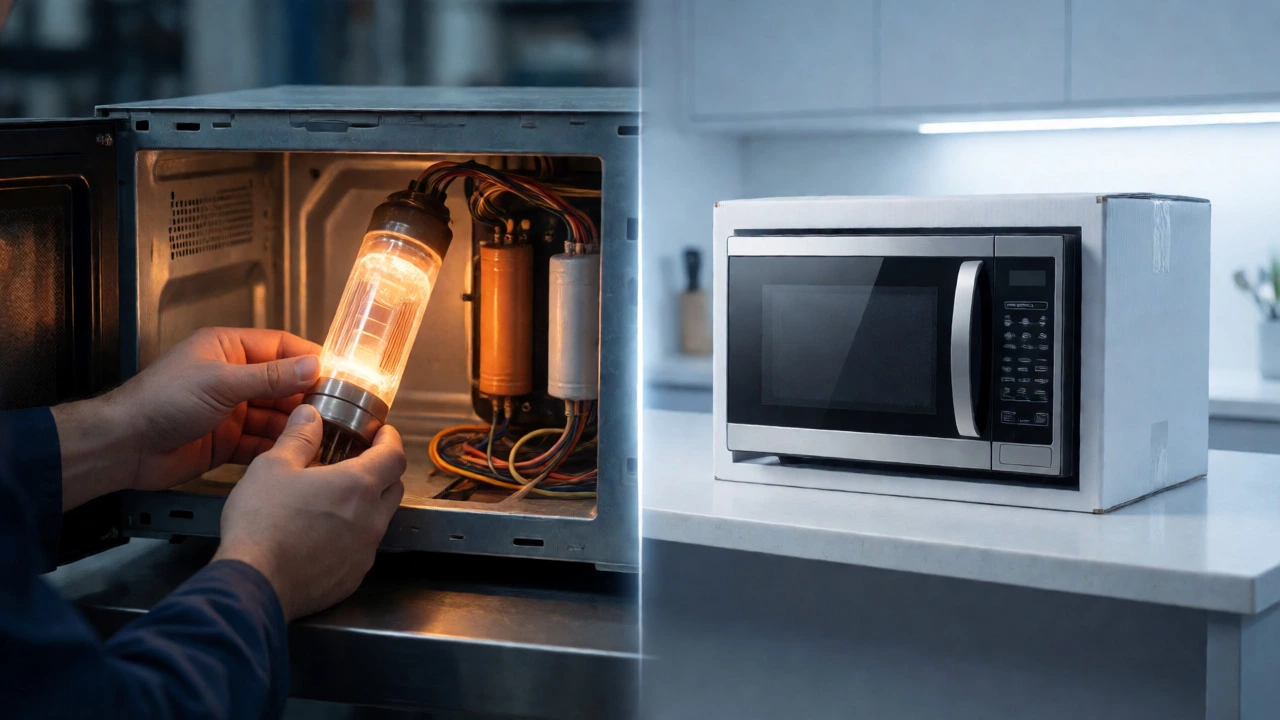
The heart of the machine is the magnetron. This vacuum tube generates the microwaves that heat your food. It’s expensive to replace (often $150-$300 plus labor). When a magnetron fails, the unit might still light up and spin, but the food stays cold. Magnetrons typically last about 2,000 to 5,000 hours of operation. If you use your microwave for 10 minutes a day, that’s plenty of time. But if you’re reheating large batches for a family of five multiple times a day, you’ll hit that limit faster.
Another common failure point is the high-voltage diode and capacitor. These regulate the power sent to the magnetron. If they fail, the microwave might trip your home’s circuit breaker or simply refuse to start. Replacing these is cheaper than replacing the magnetron, often under $100 total with labor.
Then there’s the mechanical stuff. Door switches and hinges wear out. If the door doesn’t latch perfectly, safety interlocks prevent the microwave from starting. This is a cheap fix ($50-$100) and often extends the life of an older unit significantly.
Signs Your Microwave Is Nearing the End
Don’t wait for smoke. Catching the end-of-life signs early gives you time to shop around without scrambling.
- Poor Heating Performance: If a cup of water takes 3 minutes instead of 1, the magnetron is weakening. This is the most reliable indicator of impending failure.
- Loud Noises: A hum is normal. A grinding, buzzing, or popping sound is not. This usually signals a failing fan motor or a dying magnetron.
- Door Seal Damage: Look at the mesh screen inside the window. If it’s torn or warped, microwaves leak out, heating efficiency drops, and the unit works harder.
- Electrical Issues: If the display flickers or the unit trips the breaker, internal electrical components are failing.
- Burnt Smell: Persistent burning odors after cleaning indicate overheating components or arcing inside the cavity.
Factors That Shorten Your Microwave’s Life
You can’t control the quality of the magnetron, but you can control how you treat the appliance. Here’s what kills microwaves prematurely.
Poor Ventilation: Microwaves generate significant heat. Countertop models need clearance on all sides. If you shove it into a tight cabinet space without airflow, the internal fans struggle, overheating the electronics. In Auckland homes with compact kitchens, this is a frequent issue. Ensure at least 10cm of clearance on the back and sides.
Running Empty: Never run a microwave empty. Without food or liquid to absorb the energy, the waves bounce around and reflect back into the magnetron, causing rapid degradation. Even running it for 30 seconds to "warm up" is bad practice.
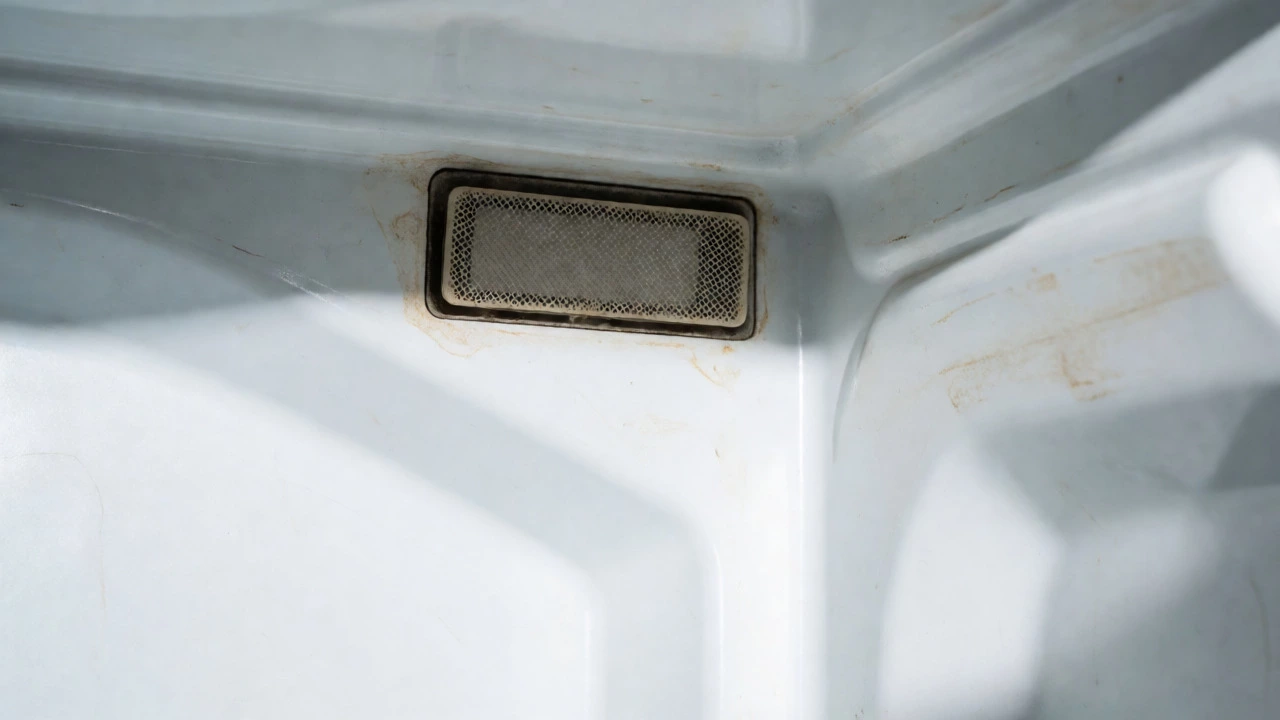
Ignoring Splatter: Dried-on grease isn’t just gross; it absorbs microwave energy unevenly and causes hot spots that can crack the interior paint or cause arcing. Arcing (sparks) damages the waveguide cover-a small mica sheet that protects the magnetron’s antenna. Once that burns through, moisture gets in, and the magnetron corrodes.
Using Metal: We know metal sparks. But many people forget that gold-rimmed plates or twist ties also cause arcing. Each spark event stresses the high-voltage system.
Repair vs. Replace: The Cost-Benefit Analysis
This is the question every homeowner asks. Should you call a technician or go to the store?
Use the 50% Rule: If the cost of the repair exceeds 50% of the price of a new comparable model, replace it. For a basic $150 microwave, a $100 magnetron replacement isn’t worth it. For a $600 built-in Siemens or Bosch model, a $150 repair is absolutely worth doing.
Consider the age. If your microwave is under 5 years old, repair is almost always the smarter choice. Parts are likely still available, and the rest of the unit is healthy. If it’s over 8 years old, even if you fix the current problem, another component (like the control board or touchpad) will likely fail within a year. At that point, you’re throwing good money after bad.
Also, factor in energy efficiency. Newer models, especially those with inverter technology, use less electricity and heat more evenly. Over five years, the energy savings might offset some of the purchase cost, though rarely enough to justify replacing a working unit solely for efficiency.
How to Make Your Microwave Last Longer
You can easily add 2-3 years to your microwave’s life with simple habits. It’s not rocket science, but it requires consistency.
- Clean the Waveguide Cover: Check the small rectangular panel inside the wall of the microwave (usually behind where the plate goes). Keep it clean and dry. If it’s stained with grease, wipe it gently. If it’s burnt or cracked, replace it immediately-it’s a cheap part ($10-$20).
- Use Microwave-Safe Containers: Stick to glass and ceramics labeled "microwave-safe." Avoid plastic containers that aren’t rated, as they can warp and release chemicals when overheated.
- Don’t Force the Timer: Stop the microwave when the food is done. Running it for extra time "just in case" wastes energy and heats the cavity unnecessarily.
- Keep the Vents Clear: Dust accumulates on the external vents. Vacuum them every few months. Blocked vents equal overheated electronics.
- Let It Rest: If you’ve been using it heavily (e.g., defrosting a whole turkey), give it a break. Continuous high-power operation stresses the cooling system.
Special Considerations for New Zealand Homes
In New Zealand, we have specific conditions that affect appliance longevity. Our humidity levels, particularly in coastal areas like Auckland or Wellington, can accelerate corrosion on internal components. Moisture ingress is a silent killer for circuit boards.
Additionally, our voltage supply is generally stable, but older homes may experience fluctuations. Using a surge protector for your microwave can protect the sensitive control board from power spikes during storms, which are becoming more frequent.
Finally, disposal matters. Microwaves contain capacitors that hold charge even when unplugged. Don’t throw them in the general waste bin if you can avoid it. Many NZ councils offer e-waste recycling programs that handle the safe discharge and recycling of these units.
When to Call a Professional
Some issues are DIY-friendly, like cleaning or replacing a turntable roller. Others are dangerous. The high-voltage capacitor can store up to 4,000 volts, enough to kill you, even when the unit is unplugged. If you hear a loud pop, see sparks, or smell burning, unplug it immediately and call a certified appliance repair technician.
Do not attempt to open the casing yourself unless you are trained. Discharging the capacitor incorrectly is a common cause of injury among DIY enthusiasts.
Is it worth repairing a 10-year-old microwave?
Generally, no. Unless it is a high-end built-in model costing over $500, the repair costs for a 10-year-old unit usually approach or exceed the cost of a new, more efficient replacement. Older units also lack modern features like inverter technology and sensor cooking.
Can I extend the life of my microwave by cleaning it?
Yes, regular cleaning prevents arcing and overheating. Grease buildup on the waveguide cover absorbs energy and can cause the magnetron to overheat. Keeping the exterior vents dust-free ensures proper cooling, which directly impacts the lifespan of internal electronics.
Why does my microwave stop working suddenly?
Sudden failure is often due to a blown thermal fuse or a faulty door switch. Thermal fuses blow if the unit overheats, acting as a safety cutoff. Door switches wear out mechanically over time. Both are relatively inexpensive repairs compared to a full replacement.
Do expensive microwaves last longer?
Not necessarily. Price often reflects brand, design, and extra features (like convection ovens or smart connectivity) rather than durability. A $100 basic model and a $400 premium model may use similar magnetrons. However, built-in models are often built with higher-grade materials to withstand constant use in cabinetry.
How do I know if the magnetron is dead?
If the light turns on, the fan runs, and the turntable spins, but the food remains completely cold, the magnetron has likely failed. You can test this by placing a cup of water inside for one minute. If it’s still cold, the heating element is dead.