Fridge Repair vs. Replace Calculator
Enter your details to get a personalized recommendation.
You stare at the puddle of water on your kitchen floor, then up at the humming beast in the corner. Your fridge freezer is seven years old. It’s not ancient, but it’s definitely not new. The question keeps popping into your head: do I call a technician and pay for a fix, or do I bite the bullet and buy a new one? There is no single right answer, but there is a clear way to figure it out without wasting money.
The 50% Rule: A Simple Math Check
Here is the golden rule most technicians use: if the repair costs more than 50% of the price of a comparable new unit, replace it. If the repair is less than 50%, fix it. But wait-there is a catch. You need to calculate this correctly.
A basic new fridge freezer is a dual-compartment appliance designed to preserve food by maintaining low temperatures in both refrigeration and freezing sections might cost you $1,200 NZD. If the quote to fix your current model is $650, that’s over 50%. Time to shop around. If the quote is $400, you’re in the clear. This simple math saves you from sinking good money after bad.
Why Age Matters More Than You Think
Seven years is a tricky age. Most major appliances have a design life of about 10 to 13 years. At year seven, you are past the manufacturer’s warranty (usually 1-2 years) and likely past any extended cover you bought. More importantly, parts availability starts to drop. Brands update their models every few years. Finding a specific door seal or control board for a discontinued model can turn a simple $150 job into a $300 hunt because the part has to be ordered from overseas.
Also, consider wear and tear. Seven years of opening and closing doors, loading heavy pots, and dealing with power fluctuations takes a toll. The plastic bins crack, the hinges sag, and the insulation loses some of its punch. Even if you fix the immediate problem, something else might fail six months later. That is the risk you take when keeping an older machine.
The Energy Efficiency Gap
This is where many people lose money without realizing it. Appliance technology has changed drastically in the last decade. A fridge freezer from 2019 is significantly less efficient than one you buy in 2026. Modern units use better compressors, improved insulation, and smarter defrost cycles.
Let’s look at real numbers. An older, inefficient fridge might use 400 kWh per year. A modern, high-rated equivalent uses about 250 kWh. In New Zealand, electricity rates vary, but let’s say you pay $0.35 per kWh. That difference of 150 kWh costs you roughly $52 a year. Over five years, that’s $260 wasted on electricity alone. If you plan to keep the appliance for another five years, replacing it now could actually save you money in the long run, even after paying for the new unit.
| Scenario | Repair Cost | New Unit Cost | 5-Year Electricity Savings | Verdict |
|---|---|---|---|---|
| Minor Issue (Seal/Fan) | $150 - $250 | $1,200+ | $200 | Repair |
| Moderate Issue (Control Board) | $400 - $600 | $1,200+ | $200 | Replace |
| Major Issue (Compressor) | $800 - $1,200 | $1,200+ | $200 | Replace |
Which Faults Are Worth Fixing?
Not all breakdowns are created equal. Some are cheap fixes; others are death sentences for your wallet. Here is how to categorize them.
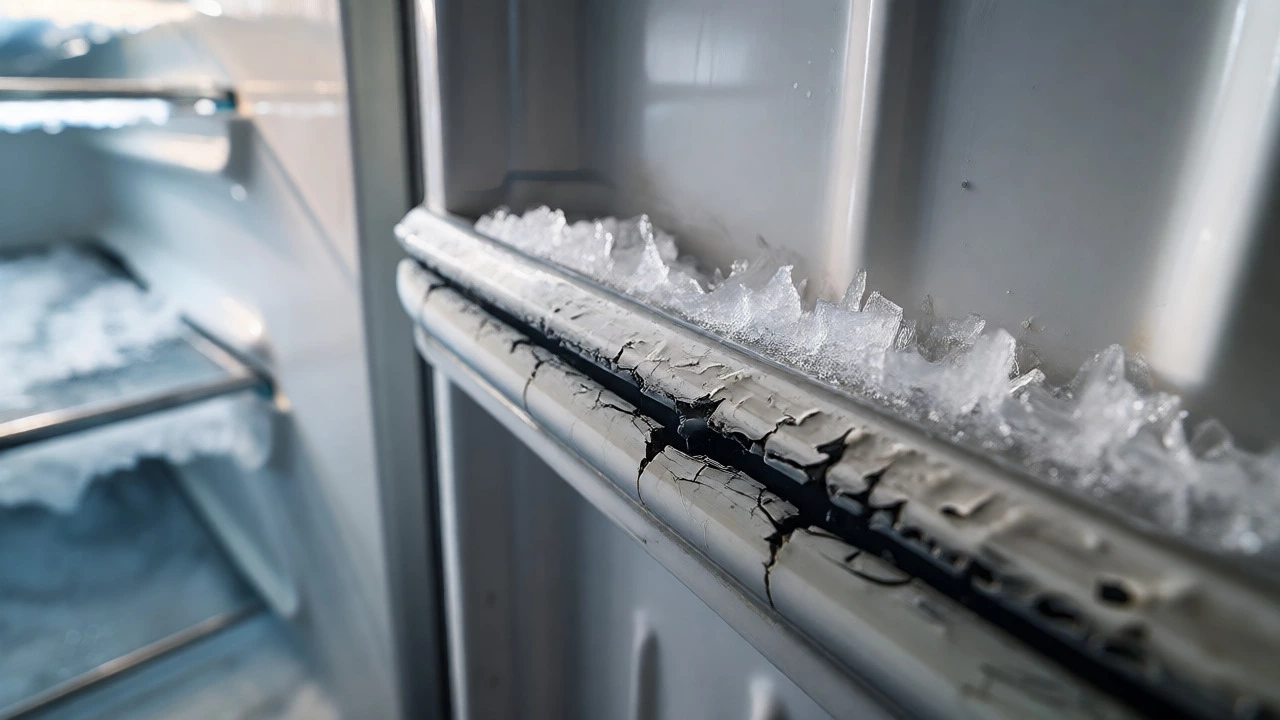
- Door Seals: These are rubber strips that keep cold air in. They crack over time. Replacing them is cheap ($50-$100 including labor). Do it. It improves efficiency immediately.
- Defrost Timer or Heater: Common issues causing ice buildup. Parts are usually affordable ($100-$200 total). Worth fixing if the rest of the fridge is solid.
- Faulty Fan Motor: If the evaporator fan stops, cooling fails. Replacement costs $150-$300. Usually worth repairing unless the motor is seized in the casing, which increases labor time.
- Control Board Failure: This is the brain of the fridge. It controls temperature and defrost cycles. Boards cost $200-$400, plus labor. At seven years old, this is often the tipping point. If the board dies, check the compressor health first. If the compressor is weak, just replace the whole unit.
- Compressor Failure: The heart of the system. If this fails, the repair cost is almost always higher than buying a new fridge. Labor is intensive, requiring gas handling and brazing. Unless you have a high-end built-in unit costing $5,000+, walk away.
Hidden Costs of Buying New
Before you rush to the store, remember that buying new isn’t just about the sticker price. You need to factor in disposal fees. Many retailers charge $50-$100 to haul away your old fridge. Delivery might also cost extra if you don’t have someone to help unload it. And what about installation? Built-in fridges require cabinetry adjustments. Freestanding ones need space clearance checks.
Also, consider the hassle. Moving a fridge involves emptying it, cleaning it, moving it through narrow doorways, and setting up the new one. It takes a day off work. Sometimes, paying a technician $300 to fix a fan is cheaper than the stress and hidden costs of a full replacement.
When to Definitely Replace
Skip the repairman and go shopping if:
- The compressor is making loud knocking or grinding noises.
- The cabinet itself is rusting or the inner lining is cracked.
- You’ve had two separate repairs in the last 12 months.
- The energy rating label shows it’s an old Class D or lower unit (check the yellow sticker).
- The repair quote is within $300 of the price of a new mid-range model.
What About Warranty and Reliability?
New appliances come with a standard one-year warranty, often extendable to three or five years for a small fee. Your seven-year-old fridge has zero coverage. If you repair it, ask the technician for a guarantee on the part they install. Usually, it’s 3-6 months. If the same part fails again, you’re back to square one.
Reliability varies by brand too. If you own a premium brand like Miele or Sub-Zero, repairs are expensive but the build quality lasts longer. For budget brands, spending $500 on a repair for a $1,000 fridge is rarely smart. Check consumer reviews for the specific model before deciding. If other owners report widespread electronic failures at year 5-7, replace it. Don’t fight the trend.
The Environmental Angle
If you’re eco-conscious, repairing is generally better. Manufacturing a new fridge consumes significant resources and generates carbon emissions. Transporting it adds more. Keeping an appliance running for its full potential lifespan reduces waste. However, if your old fridge leaks refrigerant (a potent greenhouse gas) or uses excessive electricity, the environmental benefit of repair diminishes. A leaking old fridge might be worse for the planet than a new, sealed, efficient one.
Final Checklist Before Calling a Tech
Do these quick checks yourself. You might save a call-out fee.
- Clean the coils: Dust on the back or bottom coils makes the fridge work harder. Vacuum them gently.
- Check the thermostat: Ensure it hasn’t been bumped accidentally.
- Listen to the fans: Open the freezer door and press the door switch. Does the fan start? If not, that’s your issue.
- Inspect the seals: Close the door on a piece of paper. If you pull it out easily, the seal is broken.
So, is it worth repairing a 7-year-old fridge freezer? If it’s a minor fault like a seal or fan, yes. If it’s the compressor or control board, probably not. Use the 50% rule, check your energy bills, and consider the hassle of replacement. Often, the emotional attachment to our appliances clouds our judgment. Be cold-hearted with the math, and you’ll make the right choice.
How long should a fridge freezer last?
Most fridge freezers are designed to last between 10 and 13 years. High-end built-in models may last longer, while budget freestanding units might fail sooner due to cheaper components. At seven years, your appliance is nearing the end of its reliable service life, so major component failures become more common.
Is it cheaper to repair or replace a fridge?
It depends on the fault. Minor repairs like door seals or fan motors are almost always cheaper than replacement. Major repairs involving the compressor or main control board often cost 50-70% of a new unit's price, making replacement the more economical choice. Always compare the repair quote against the cost of a comparable new model.
What are the signs my fridge needs replacing?
Key signs include loud compressor noises, frequent temperature fluctuations, excessive frost buildup despite defrosting, visible rust or cracks in the cabinet, and multiple recent repairs. If your electricity bill has spiked noticeably, the unit may also be losing efficiency due to age.
Can I recycle my old fridge freezer?
Yes, fridge freezers must be recycled properly due to their refrigerants and foam blowing agents, which are harmful to the environment. Many retailers offer removal services for a fee. Local councils in New Zealand often provide kerbside collection for bulky items or have designated recycling centers that accept white goods.
Does a new fridge save money on electricity?
Yes, modern fridges are significantly more energy-efficient than models from 7+ years ago. A new unit can use 30-50% less electricity. Depending on your local rates and usage, this can save you $50-$100 annually. Over the life of the new appliance, these savings can offset a portion of the purchase price.