Oven Repair vs. Replace Calculator
Result
Enter your details above to see the recommendation.
You’re halfway through prepping a Sunday roast when you realize the oven isn't heating up, or maybe the door seal is leaking heat like a sieve. Now comes the million-dollar question: do you spend a few hundred bucks on a technician, or do you just bite the bullet and buy a brand-new appliance? Most people panic-buy a new unit because they fear the "repair trap"-where you fix one part only for another to break a month later. But the truth is, many oven issues are simple fixes that can save you thousands.
Quick Takeaways
- The "50% Rule": If the repair costs more than half the price of a new oven and the unit is over 8 years old, replace it.
- Common quick fixes: Heating elements and thermostats are usually cheap to swap.
- When to walk away: Cracked cooktops or failed main control boards on old models often signal the end.
- Energy efficiency: Modern ovens use significantly less power than models from 15 years ago.
The Golden Rule of Appliance Math
Before you browse the latest catalogs, use the 50% rule. This is a standard heuristic used by technicians to determine if a machine is a money pit. If the cost to fix your oven repair is more than 50% of the cost of a comparable new model, it's usually time to shop. But there's a catch: you have to factor in the age of the unit. A five-year-old oven that needs a $200 part is a keeper. A fifteen-year-old oven that needs the same $200 part is a gamble because the insulation and other components are likely degrading.
Think about it like an old car. You wouldn't put new tires on a vehicle with a rusted-out frame. In the appliance world, the "frame" is the oven chassis and the wiring. If the wiring is brittle or the chassis is heavily corroded, a new heating element is just a temporary bandage.
When Repairing is the Obvious Choice
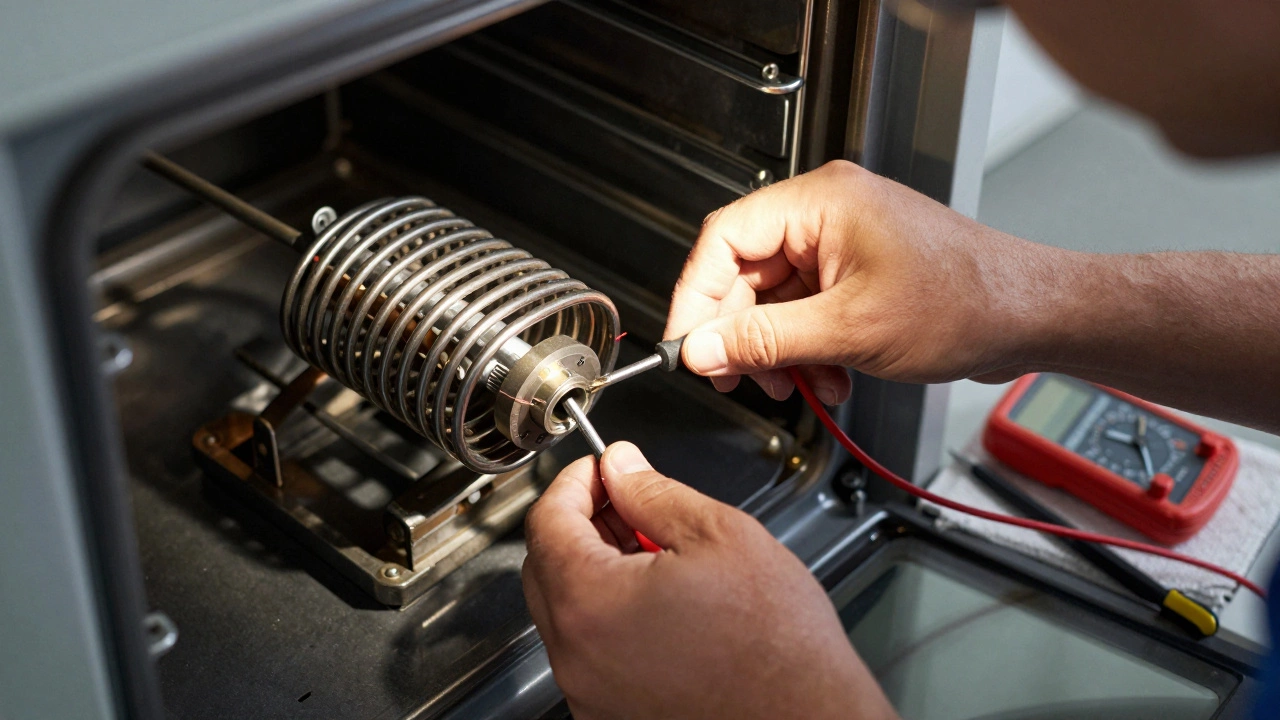
Some parts are designed to wear out. When these fail, it's almost always cheaper to fix them than to replace the whole machine. For instance, Heating Elements-the coils that actually make the heat-are common fail points. Whether it's a bake element or a broil element, these are generally affordable and easy to install.
If your oven is simply not heating, but the fans are spinning and the lights are on, you're likely looking at a faulty element or a Thermostat. A thermostat is the component that monitors and regulates the internal temperature. Replacing a thermostat is a surgical fix; it doesn't require replacing the entire electronics suite. In most cases, these repairs cost a fraction of a new unit, even when you factor in the call-out fee for a professional.
Another example is the oven door seal. If you can see heat shimmering out of the edges, your food takes longer to cook and your electricity bill climbs. A new gasket is a cheap part that you can often install yourself with a bit of patience. It's a high-value, low-cost win that extends the life of the appliance.
| Component | Typical Repair Cost | Estimated New Oven Cost | Verdict |
|---|---|---|---|
| Heating Element | $150 - $300 | $600 - $2,000 | Repair |
| Door Seal/Gasket | $80 - $180 | $600 - $2,000 | Repair |
| Control Board | $300 - $600 | $600 - $2,000 | Age Dependent |
| Main Chassis/Frame | N/A (Non-repairable) | $600 - $2,000 | Replace |
The Red Flags That Mean It's Time to Buy New
There are moments when a technician will tell you "it's possible to fix," but that doesn't mean it's smart. The biggest red flag is the Control Board. This is the brain of the oven. If the motherboard fries, you're looking at an expensive part and a labor-intensive installation. If your oven is already 10 years old, replacing the brain often leads to the "domino effect" where the next oldest component fails because the new board is pushing a different voltage or load.
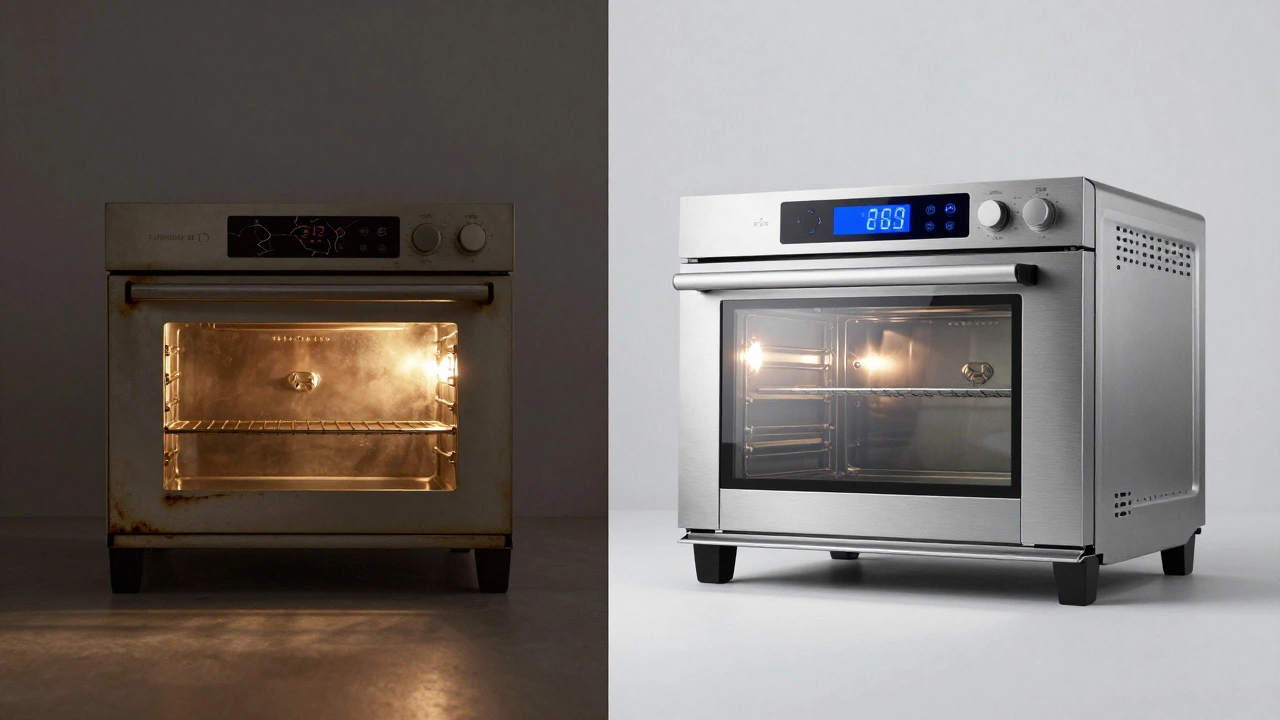
Then there's the issue of Energy Efficiency. If you're rocking an oven from the early 2000s, you're essentially burning money. Modern convection ovens use forced air to cook food faster and at lower temperatures. A new energy-efficient model can actually pay for itself over three to five years just through lower monthly power bills. If your current unit is a power hog and needs a major repair, the math shifts toward buying new.
Physical damage is another deal-breaker. A cracked glass top on an electric oven or a warped frame that prevents the door from sealing properly is usually a game-over scenario. While you can replace glass, the cost of the part plus the risk of it cracking again during installation often makes it a poor investment.
Evaluating the Long-Term Value
When deciding, don't just look at the invoice for today. Look at the "lifecycle cost." If you spend $300 now on a repair, but the oven is likely to last another five years, your cost of ownership is incredibly low. If you buy a new $1,200 oven that lasts ten years, you're paying a premium for the peace of mind and the new features.
Consider the type of oven you have. Gas Ovens tend to have simpler mechanical components and can often be repaired indefinitely. Electric Ovens, specifically those with complex digital interfaces, have a harder ceiling on their lifespan. Once the digital components go, the unit is often obsolete because manufacturers stop making boards for models older than a decade.
You should also consider the installation hassle. Replacing an oven isn't just about the cost of the box. You have to deal with removing the old unit, potentially updating the electrical circuit (if you're upgrading to a more powerful model), and hauling the old beast to a recycling center. These "hidden costs" of replacement often make a quick repair much more attractive.
The Decision Matrix: A Step-by-Step Approach
If you're staring at your broken oven and can't decide, follow this logic flow:
- Check the Warranty: Is it still covered? If yes, repair is free. No-brainer.
- Diagnose the Part: Is it a wearable part (element, seal, bulb)? If yes, repair.
- Check the Age: Is the oven under 8 years old? If yes, repair (unless it's a catastrophic frame failure).
- Compare Costs: Is the repair quote less than 50% of a new equivalent? If yes, repair.
- Assess Efficiency: Is the current model an energy drain? If yes, and it's over 10 years old, replace.
By following this process, you remove the emotion from the decision. You aren't just "hoping" the oven lasts; you're making a decision based on the actual value of the hardware.
How long do most ovens actually last?
On average, a good quality oven lasts between 10 and 15 years. Gas ovens often lean toward the longer end of that spectrum because they have fewer sensitive electronic components. Electric ovens, especially those with advanced digital displays, may start showing significant issues around the 12-year mark.
Can I fix a broken oven element myself?
Yes, for many people this is a straightforward DIY project. It usually involves unplugging the unit, removing a few screws to pull the element out, and plugging in a new one. However, if you aren't comfortable working with high-voltage electricity, it is always safer to hire a licensed technician to avoid shocks or improper wiring.
Is a convection oven worth the extra money?
If you bake often or cook large meals, absolutely. Convection ovens use a fan to circulate hot air, which eliminates "cold spots" and cooks food more evenly and quickly. This efficiency can reduce cooking times by 25%, which saves on electricity over the long run.
Why is my oven taking so long to preheat?
Slow preheating is usually caused by one of three things: a failing heating element, a worn-out door seal that is letting heat escape, or a malfunctioning thermostat. If you notice the oven is still "heating" for a long time but never seems to reach the set temperature, it's time to have the element tested with a multimeter.
What should I do with my old oven after replacing it?
Never just throw an oven in a landfill. Most cities have electronic waste (e-waste) centers that can strip the copper and steel for recycling. Many retailers also offer a "haul-away" service when you buy a new appliance, which is often the easiest way to ensure the old unit is disposed of responsibly.
Next Steps and Troubleshooting
If you've decided to attempt a repair, start by documenting the exact model number and serial number found inside the door frame or on the back of the unit. This ensures you order the correct part-generic parts often don't fit perfectly and can lead to further damage.
For those choosing to replace, take a moment to check your kitchen dimensions. Modern ovens sometimes have different depths or ventilation requirements than models from twenty years ago. You don't want to spend $1,000 on a new machine only to find it doesn't fit in the cabinetry or requires a different electrical plug.
If you're still on the fence, get a second opinion. A quick diagnostic visit from a professional can tell you if a problem is a $50 sensor fix or a $500 structural failure. Spending a small amount on a diagnostic fee is a smart way to avoid wasting hundreds on a doomed appliance.