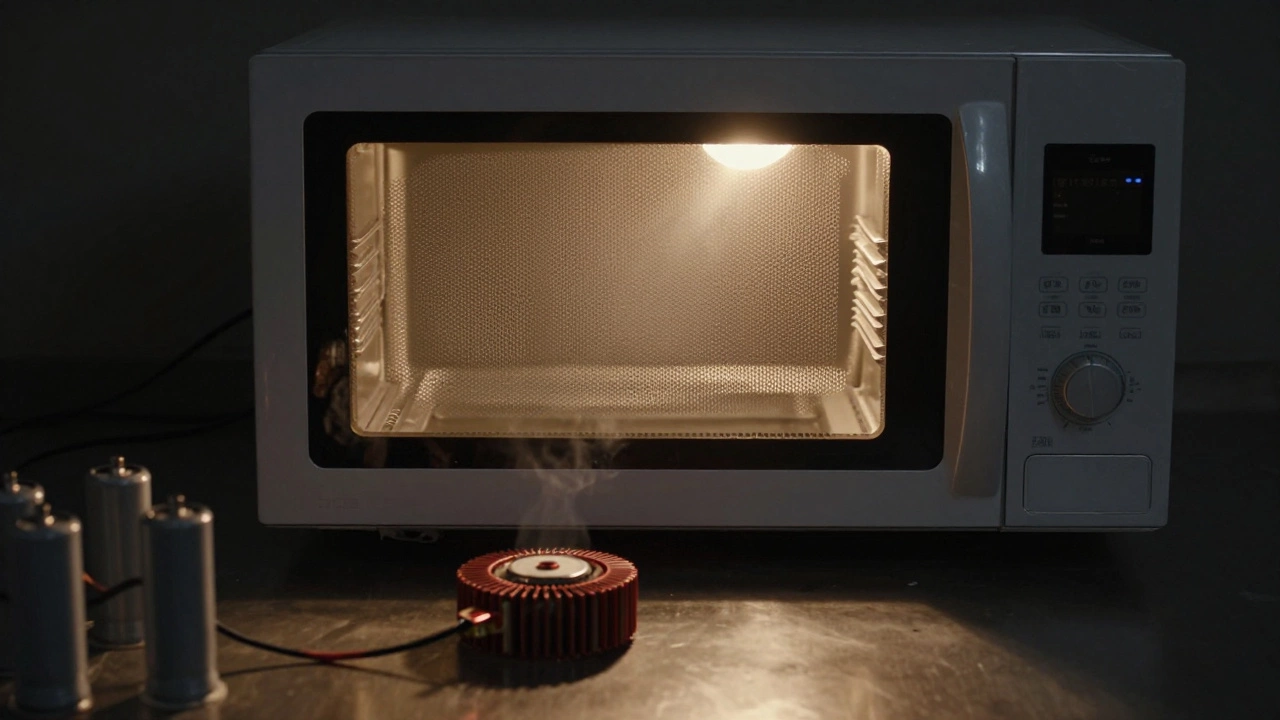
Your microwave stops heating food. It still spins, the light turns on, the timer counts down-but nothing gets hot. You’ve heard the magnetron might be dead. You’re wondering: is it worth replacing it, or should you just buy a new one?
Let’s cut through the noise. Replacing a magnetron isn’t like fixing a broken door hinge. It’s the heart of your microwave. If it fails, the whole appliance stops doing its main job. But here’s the truth most repair shops won’t tell you: in 9 out of 10 cases, replacing the magnetron isn’t worth it.
What Even Is a Magnetron?
The magnetron is a small, heavy metal component that generates microwaves. It’s usually located near the back or side of the microwave, connected to a high-voltage capacitor and transformer. When you press start, electricity flows through it, creating the radio waves that vibrate water molecules in your food. That vibration creates heat.
It’s not a simple part. It runs on over 2,000 volts. Even when unplugged, the capacitor can hold a lethal charge for days. That’s why you should never try to open a microwave unless you’re trained. Most people who attempt DIY magnetron replacement end up with a damaged microwave-and possibly a hospital visit.
How Long Does a Magnetron Last?
Most magnetrons are built to last 5 to 10 years. If your microwave is older than 7 years and the magnetron has failed, you’re already past its average lifespan. That’s not a coincidence. Microwaves are designed as disposable appliances. Manufacturers know most people will replace the unit before major components fail.
In New Zealand, the average microwave lasts about 6.8 years, according to a 2024 Consumer NZ survey. Only 12% of microwaves make it past 10 years. If yours is hitting that mark and the magnetron died, it’s not a malfunction-it’s an endpoint.
How Much Does a Magnetron Replacement Cost?
Here’s the real math:
- A new magnetron part costs between $40 and $80, depending on your microwave model.
- Professional labor to replace it? $80 to $150.
- That’s $120 to $230 total.
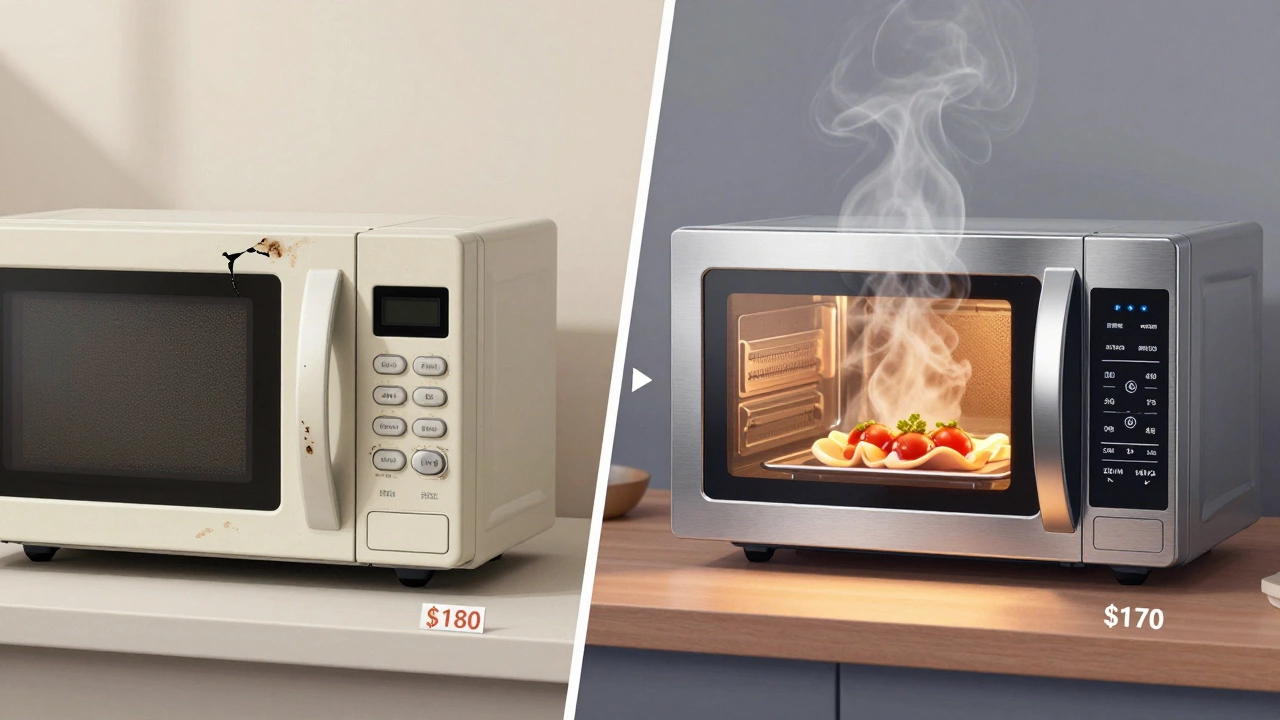
Meanwhile, a brand-new basic microwave? You can get one for $120 to $180. Even a mid-range model with sensor cooking, inverter tech, and a stainless steel finish? Still under $300.
So if you pay $180 to fix your 8-year-old microwave, you’re spending almost as much as a new one. And you’re getting back a 16-year-old unit with worn buttons, a dirty interior, and another 1-2 years of life-if you’re lucky.
Why Replacement Is Rarely Worth It
Here’s the hidden problem: when the magnetron dies, other parts are usually close behind.
High-voltage diodes, capacitors, and thermal fuses often fail at the same time-or shortly after. Why? Because they’re all stressed by the same electrical load. If the magnetron burned out from age or overheating, the capacitor might be weak. The diode might be cracked. The door safety switch could be corroded.
Fixing just the magnetron is like replacing a single tire on a 15-year-old car. You’re fixing one thing, but the rest is falling apart. A technician might quote you $150 to replace the magnetron. But if the capacitor is bad too? That’s another $60. Then the door latch? Another $40. Suddenly you’re at $250-and still not sure if the next thing will break next month.
And here’s the kicker: most microwaves sold today come with a 1-year warranty. If you pay $200 to repair a 7-year-old microwave, you’re getting zero warranty on that repair. A new microwave? You get a full year of protection.
When Replacing the Magnetron Might Make Sense
There are two real exceptions.
First: High-end built-in microwaves. If your microwave is part of a custom kitchen cabinet, replacing it means tearing out cabinetry, rewiring, and matching the exact size and trim. That’s expensive. In those cases, replacing the magnetron can save you $800-$1,500 in kitchen renovation costs.
Second: Commercial units. If you run a small café or takeaway shop and rely on a heavy-duty commercial microwave, it’s often cheaper to repair than replace. Commercial models cost $1,000+ and are built to last 15+ years. Replacing a magnetron in one of those? Totally reasonable.
For 95% of home users? Neither of these applies.
What to Do Instead
If your microwave isn’t heating, here’s your step-by-step plan:
- Check if the turntable spins and the light turns on. If yes, the magnetron or high-voltage system is likely dead.
- Don’t open the case. Seriously. That’s not a DIY job.
- Call a local appliance repairer. Ask for a quote on magnetron replacement. If they say over $120, walk away.
- Go to a local appliance store or online retailer. Look at microwaves under $200. Look for models with a 1-year warranty.
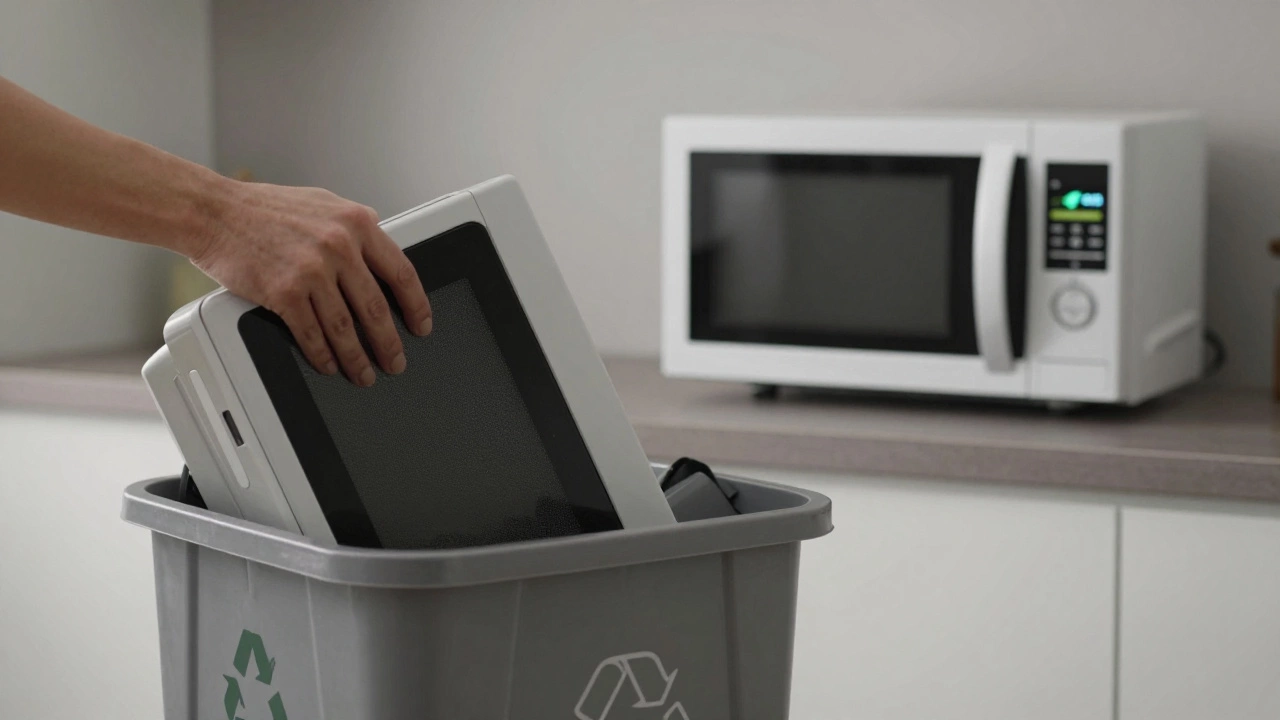
- Buy a new one. Take your old microwave to an e-waste drop-off. Auckland has free e-waste recycling at all major council depots.
There’s no shame in replacing a microwave. It’s not a broken heirloom. It’s a kitchen appliance designed to be replaced.
What About the Environmental Impact?
You might be thinking: “Isn’t throwing it away bad for the planet?”
It’s a fair question. But here’s the reality: repairing an old microwave doesn’t automatically make it eco-friendly. The energy used to manufacture a new microwave is roughly the same as the energy it uses over 3-4 months of normal use.
What actually helps? Recycling your old microwave properly. New Zealand’s e-waste program recovers copper, aluminum, and steel from old appliances. A new microwave? Many now use 30% less energy than models from 10 years ago. So you’re saving electricity every time you use it.
Plus, modern microwaves have better safety features, quieter operation, and more even heating thanks to inverter technology. You’re not just replacing a part-you’re upgrading your kitchen.
Final Answer: No, It’s Not Worth It
Replacing a magnetron is technically possible. But it’s rarely practical. For most people, it’s a waste of time, money, and risk.
Buy a new microwave. You’ll save money, get a warranty, improve efficiency, and avoid dangerous electrical work. And you’ll have a microwave that actually works-without wondering if the next thing will break next week.
That’s not giving up. That’s being smart.
Can I replace the magnetron myself?
No. Microwaves contain high-voltage components that can deliver a lethal shock-even when unplugged. The capacitor can hold a charge for days. Only trained technicians with proper tools and safety gear should open a microwave. DIY attempts often result in injury or further damage.
How do I know if the magnetron is really broken?
If your microwave turns on, the light works, and the turntable spins-but food doesn’t heat-it’s likely the magnetron, high-voltage diode, or capacitor. You can’t confirm this without testing equipment. Don’t guess. Call a repair technician for a diagnosis.
Is it cheaper to repair or replace a microwave?
For microwaves under 7 years old, repair might make sense if it’s a simple fix like a door switch. For magnetron failure, replacement is almost always cheaper. A new microwave costs $120-$300. Magnetron repair runs $120-$230-and gives you no warranty. You’re better off buying new.
What should I look for when buying a new microwave?
Look for a 1-year warranty, inverter technology (for even heating), and a size that fits your space. Avoid the cheapest models-they often have thin walls and weak turntable motors. Brands like Panasonic, Sharp, and LG offer reliable entry-level models under $200. Check Consumer NZ’s latest ratings for tested performance.
Where can I recycle my old microwave in Auckland?
Auckland Council runs free e-waste drop-off points at all major recycling centers, including the Auckland Resource Recovery Centre in Wiri, the North Shore Recycling Centre, and the Waitakere Transfer Station. You can also check with local retailers like Noel Leeming or Harvey Norman-they often take old appliances for recycling when you buy a new one.