Oven Repair vs. Replacement Calculator
Enter Your Details
Verdict
Financial Breakdown
Enter your details and click Analyze to see if you should repair or replace.
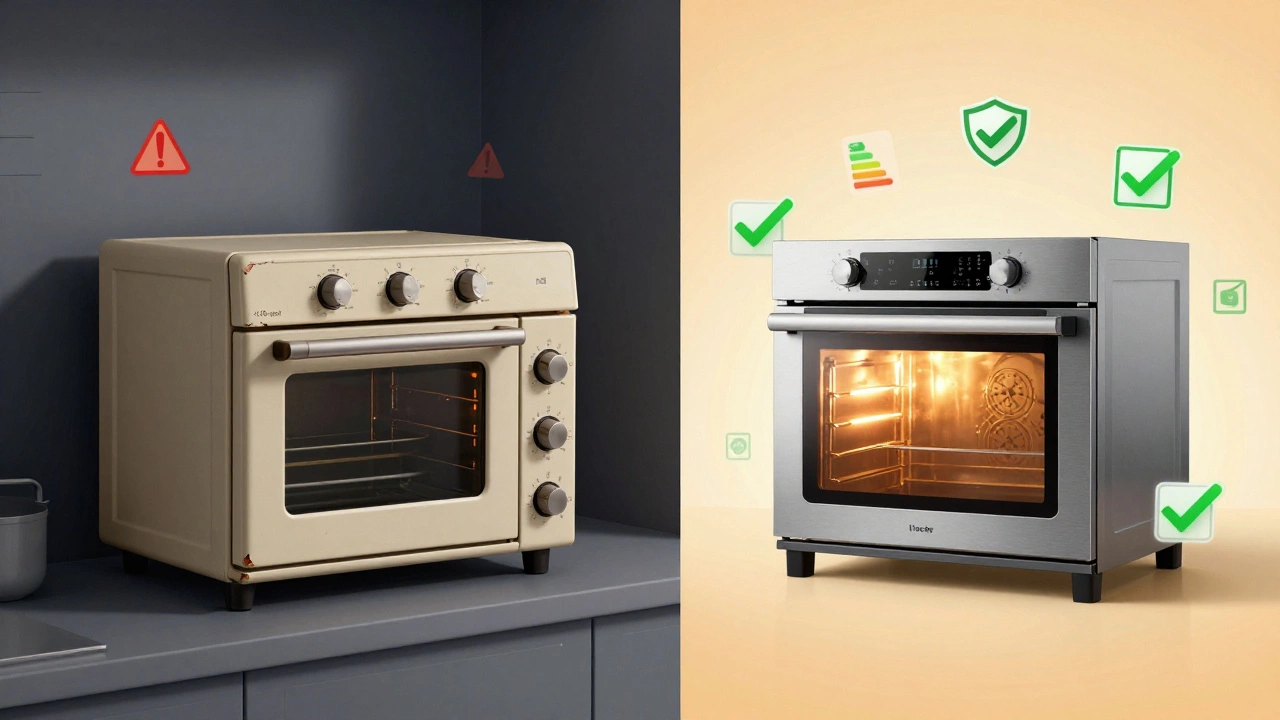
You press the start button, but nothing happens. Or worse, the oven heats up to 250°C when you asked for 180°C. You’re staring at a 20-year-old oven that has served your family through countless roasts and holiday meals. Now it’s broken. The immediate question isn’t just “can it be fixed?” but “should it be?” With modern appliances becoming smarter and more efficient, keeping an ancient unit running feels like holding onto a flip phone in the age of smartphones.
Here is the hard truth: In most cases, fixing a 20-year-old oven is not worth the money or the hassle. However, there are specific scenarios where a repair makes sense. Let’s break down the costs, safety risks, and efficiency gains to help you make the right call for your kitchen.
The 50% Rule: When Does Repair Make Financial Sense?
In the appliance industry, we often use a simple heuristic called the 50% rule. If the cost of the repair exceeds 50% of the price of a new, comparable appliance, you should replace it. For a 20-year-old oven, this math rarely works in your favor.
Let’s look at the numbers. A basic new electric oven in New Zealand might cost between $600 and $900 NZD. A professional repair call-out fee plus parts for an older model can easily range from $200 to $400 NZD for minor issues, and over $600 NZD for major component failures like control boards or heating elements.
If your repair quote is $350, you’ve already spent nearly half the cost of a brand-new unit on a machine that has likely exceeded its expected lifespan. Furthermore, that new oven comes with a warranty-usually two years under Australian Consumer Law (ACL) which applies in NZ for imported goods, or manufacturer warranties. Your repaired 20-year-old oven has zero warranty left. If the thermostat fails again three months later, you pay again.
Safety Risks of Aging Appliances
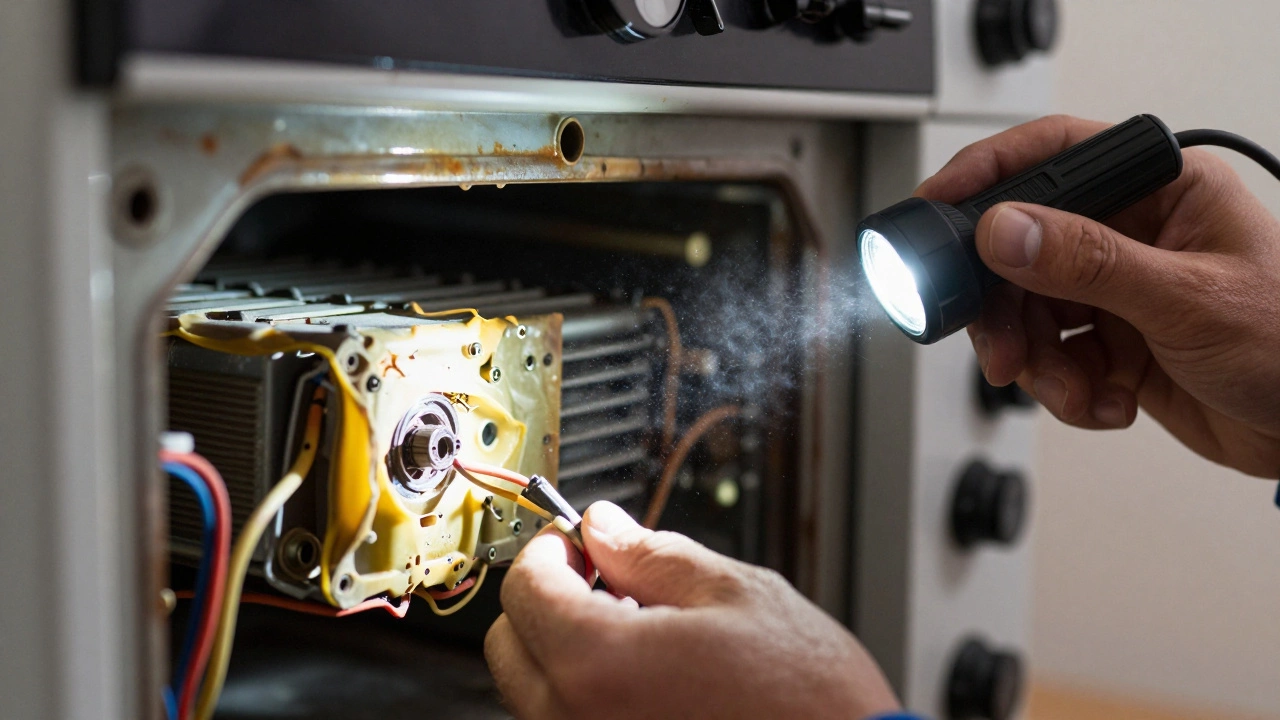
Beyond the wallet, safety is the biggest concern with decades-old appliances. Ovens from the early 2000s were built differently. Materials degrade over time. Wiring insulation becomes brittle. Gas lines (if applicable) can corrode. Electrical connections loosen.
- Electrical Fires: Old wiring inside the oven cavity can short out, posing a fire risk. Modern ovens have better thermal fuses and circuit breakers.
- Gas Leaks: If you have a gas oven, seals and valves wear out. A small leak is undetectable by smell after prolonged exposure due to olfactory fatigue. Carbon monoxide detectors are essential, but prevention is better.
- Uneven Heating: Degraded insulation means heat escapes into your kitchen, raising your home’s temperature and increasing cooling costs in summer.
I once inspected a 22-year-old electric oven in Auckland that had melted internal wiring near the door hinge. It hadn’t caught fire yet, but one more surge could have. The homeowner saved $400 on the repair but lost peace of mind. Is saving a few hundred dollars worth risking your home?
Energy Efficiency: The Hidden Cost of Keeping Old
A 20-year-old oven is significantly less energy-efficient than today’s models. Energy standards have tightened dramatically since 2005. Modern ovens use better insulation materials, more precise thermostats, and convection fans that circulate heat evenly, allowing you to cook at lower temperatures or for shorter times.
According to Energy Ratings data, an old non-convection oven can use up to 30-40% more electricity than a modern 4-star rated model. Over a year, this might add $50-$100 to your electricity bill. While that doesn’t sound like much, combined with the lack of precision cooking (leading to wasted food), the operational cost adds up.
Newer ovens also feature self-cleaning cycles, steam functions, and smart connectivity. These aren’t just gimmicks; they reduce the labor of cleaning and improve cooking consistency. An old oven requires manual scrubbing, which takes time and elbow grease.
When Might Repair Be Justified?
There are exceptions. Sometimes, repairing an old oven makes sense. Here are the scenarios:
- High-End Professional Models: If you own a premium brand like Wolf, Sub-Zero, or a high-end Miele, the replacement cost can exceed $3,000-$5,000 NZD. In this case, a $400 repair is a no-brainer. These units are built to last longer and have better support networks.
- Minor, Cheap Fixes: If the issue is a blown fuse, a faulty door latch, or a worn-out seal costing under $100, it might be worth trying. But check if the part is still available. Manufacturers stop making parts for discontinued models after 10-15 years.
- Temporary Use: If you’re planning to move or renovate your kitchen in the next six months, a quick fix might bridge the gap until you install a new range.
For standard mid-range brands (like Samsung, LG, Bosch, or Fisher & Paykel), the parts availability drops off sharply after 15 years. You might find yourself waiting weeks for a generic replacement part that may not fit perfectly.
Comparison: Repair vs. Replace
| Factor | Repair Old Oven | Buy New Oven |
|---|---|---|
| Upfront Cost | $200 - $600+ | $600 - $1,500 |
| Lifespan Remaining | Unknown (high failure risk) | 10-15 years |
| Warranty | None (unless labor warranty) | 2-5 years |
| Energy Efficiency | Low (older tech) | High (modern standards) |
| Features | Basic (manual controls) | Smart, convection, self-clean |
| Safety | Risk of electrical/gas issues | Modern safety certifications |
Signs Your Oven Should Be Replaced Immediately
If you notice any of these signs, skip the repair quote and start shopping for a new one:
- Burning Smell: Even after cleaning, a persistent burning odor suggests melting wiring or degraded insulation.
- Visible Sparks: Any sparking inside the oven cavity is a serious fire hazard.
- Door Won’t Seal: If the door warps or the seal cracks, heat escapes. This wastes energy and can burn your hands.
- Inconsistent Temperatures: If your cakes burn on the bottom and stay raw on top, the thermostat is failing. This leads to food waste.
- Frequent Breakdowns: If you’ve repaired it twice in the last two years, the unit is dying. One more fix will likely be the last straw.
Choosing a New Oven: What to Look For
If you decide to replace your 20-year-old oven, don’t just buy the cheapest option. Consider these factors:
Size and Fit: Measure your existing cutout carefully. Standard sizes vary. Built-in ovens require precise dimensions. Freestanding ranges offer more flexibility but take up floor space.
Type: Electric ovens are generally cheaper to run in NZ due to our electricity mix. Gas ovens heat up faster but require ventilation and gas line installation. Induction hobs paired with electric ovens are the modern standard for efficiency.
Features: Look for convection fans for even baking. Self-cleaning options save hours of scrubbing. Smart features like Wi-Fi control allow you to preheat from your phone, ensuring the oven is ready when you are.
Brand Reliability: Brands like Fisher & Paykel, Bosch, and Siemens have strong service networks in New Zealand. Check reviews for common issues. Avoid obscure brands with no local support.
Disposing of Your Old Oven Responsibly
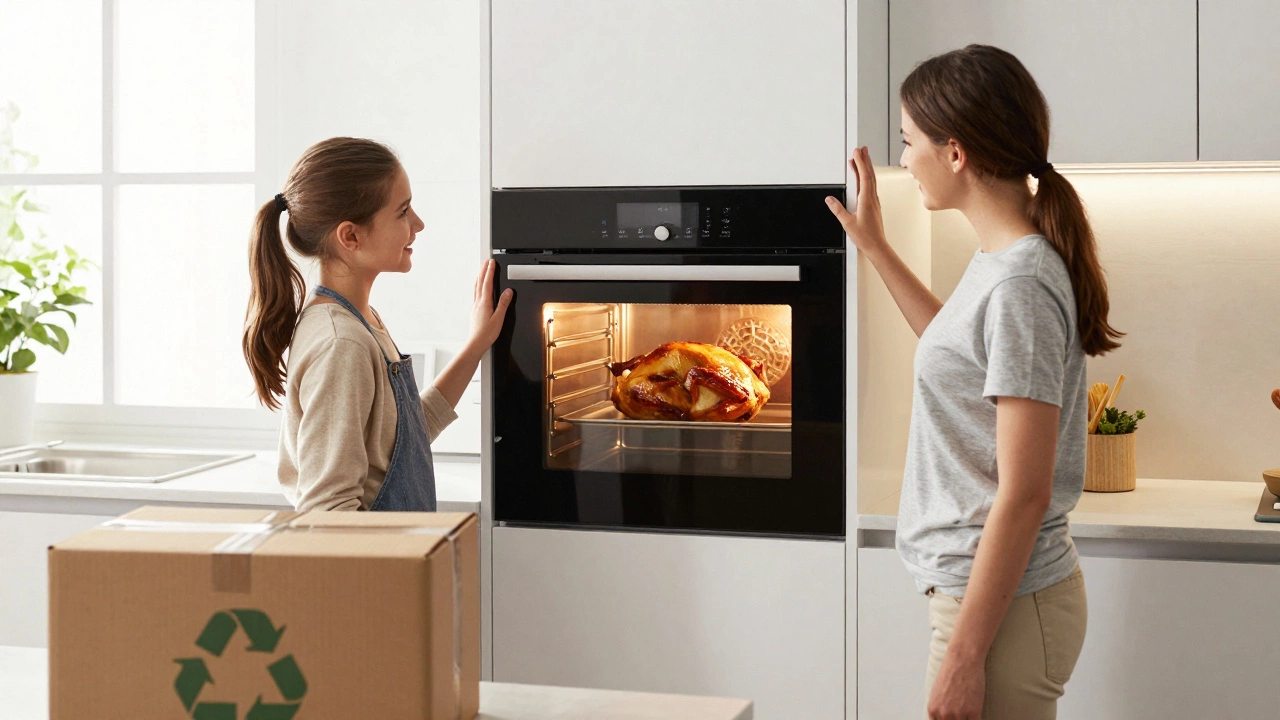
Once you’ve decided to replace, you need to get rid of the old unit. Don’t just leave it on the curb. In Auckland, you can arrange a bulk waste collection through Auckland Council. Alternatively, many appliance retailers offer haul-away services when delivering your new oven. Some recycling centers accept large appliances for free, recovering metals and plastics.
Before disposal, remove any personal items stored inside (yes, people keep pots and pans in there!). Disconnect the power supply safely. If it’s a gas oven, ensure the gas valve is turned off at the source.
How long do electric ovens typically last?
Most electric ovens have a lifespan of 10 to 15 years with regular use. High-end models may last up to 20 years, but performance degrades over time. If your oven is 20 years old, it has already exceeded its expected life.
Can I fix a 20-year-old oven myself?
While simple tasks like replacing a light bulb or cleaning the interior are safe, internal repairs involving electricity or gas should be done by licensed professionals. DIY repairs on old appliances carry significant safety risks, including electrocution and fire.
Is it cheaper to repair or replace an oven?
For a 20-year-old oven, replacement is almost always cheaper in the long run. Repairs can cost $200-$600+, while a new efficient oven lasts another 10+ years. Plus, you save on energy bills and avoid future repair costs.
What are the signs my oven is dangerous?
Burning smells, visible sparks, inconsistent heating, and a warped door seal are all red flags. If you suspect a gas leak (rotten egg smell), evacuate immediately and call your gas provider. Never ignore electrical issues.
Do newer ovens really save money on electricity?
Yes. Modern ovens use better insulation and more efficient heating elements. They reach target temperatures faster and maintain them with less energy. Over a year, this can save $50-$100 on your power bill, depending on usage.