Anode Rod Lifespan Calculator
Check Your Anode Rod
Your Results
Enter your details to see when to replace your anode rod.
If your hot water smells like rotten eggs, turns rusty, or just doesn’t last as long as it used to, the problem might not be your heater-it could be your anode rod. This small, often forgotten part is the first line of defense against corrosion inside your water tank. When it goes bad, your tank starts to eat itself from the inside. And once that happens, you’re looking at a full replacement, not a simple fix.
What even is an anode rod?
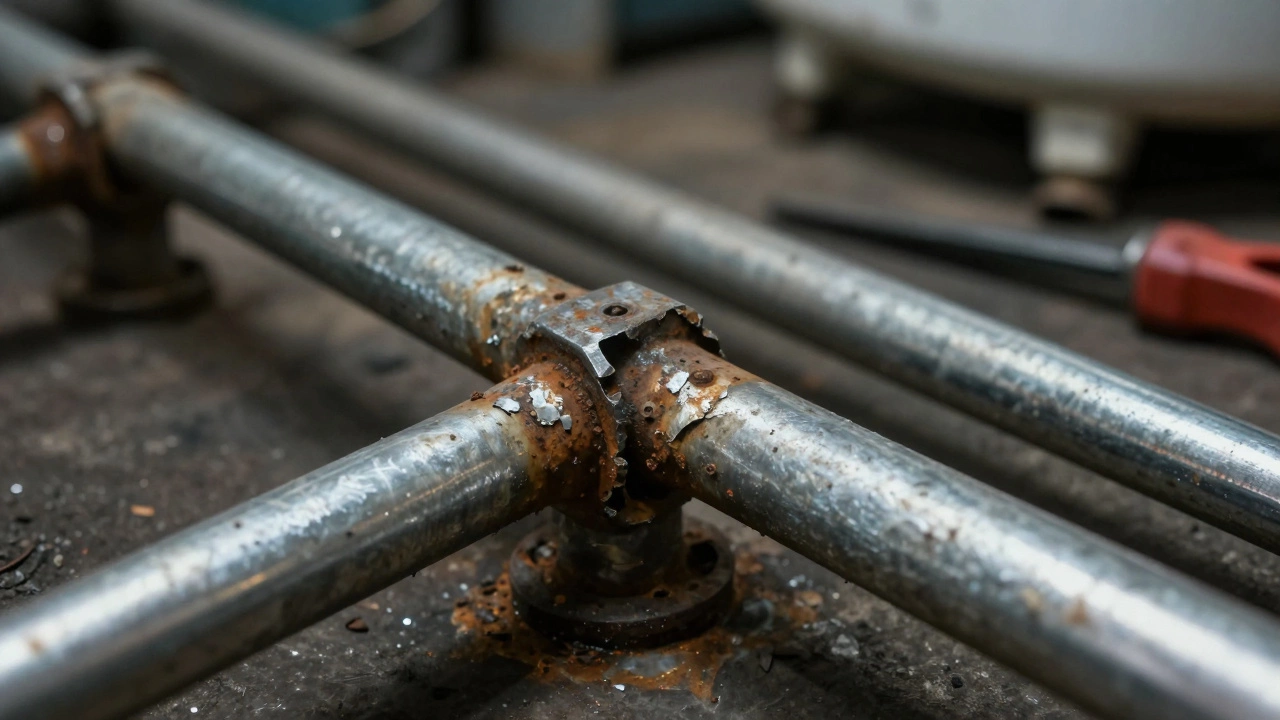
The anode rod is a long metal stick, usually made of magnesium, aluminum, or zinc, that hangs down into the water heater tank. Its job? To attract corrosive elements in the water-like sulfur and minerals-so they attack the rod instead of the steel tank. It’s sacrificial. Think of it like a shield that takes the hits so your tank doesn’t have to. Over time, the rod wears down. When it’s gone, the tank starts rusting. And once the tank rusts through, water leaks. No fix. Just replacement.
Signs your anode rod is bad
You don’t need a tool to spot a failing anode rod. Here’s what to look for:
- Rotten egg smell - That sulfur smell? It’s not your water supply. It’s bacteria feeding on sulfur in the water, made worse when the anode rod breaks down. Magnesium rods are especially prone to this. If the smell started after a few years of use, the rod’s likely done.
- Rusty or discolored hot water - If your hot water comes out brown or orange but your cold water is clear, corrosion is happening inside the tank. That means the anode rod has given up.
- Reduced hot water supply - Sediment buildup from corrosion can settle at the bottom of the tank, insulating the heating element. Your heater takes longer to warm up, or runs out faster.
- Noise from the tank - Popping, crackling, or rumbling sounds? That’s sediment baking on the bottom. It’s a late-stage symptom, but it often follows a failed anode rod.
- Water heater age - If your tank is over five years old and you’ve never checked the rod, it’s probably worn out. Most rods last 3-5 years, depending on water hardness and usage.
How to check your anode rod
You can check it yourself in under 30 minutes. Just follow these steps:
- Turn off the power. For electric heaters, flip the breaker. For gas, turn the dial to "pilot".
- Shut off the cold water supply to the tank. Look for the valve on top or near the top of the heater.
- Open a hot water tap somewhere in the house to relieve pressure. This stops water from spraying when you remove the rod.
- Find the anode rod. It’s usually on top of the tank, under a cap labeled "anode rod" or "vacuum breaker". It might be next to the hot water outlet.
- Use a 1-1/16 inch socket or wrench to loosen the hex head. It’s often tight-use a breaker bar if needed.
- Pull the rod out. If it’s less than half its original thickness, or if you see big chunks missing, it’s done. If it’s completely gone, your tank is unprotected.
Pro tip: If the rod is hard to reach, you might need to drain a few gallons of water first. Just attach a hose to the drain valve at the bottom and let out 5-10 liters. That gives you room to work.
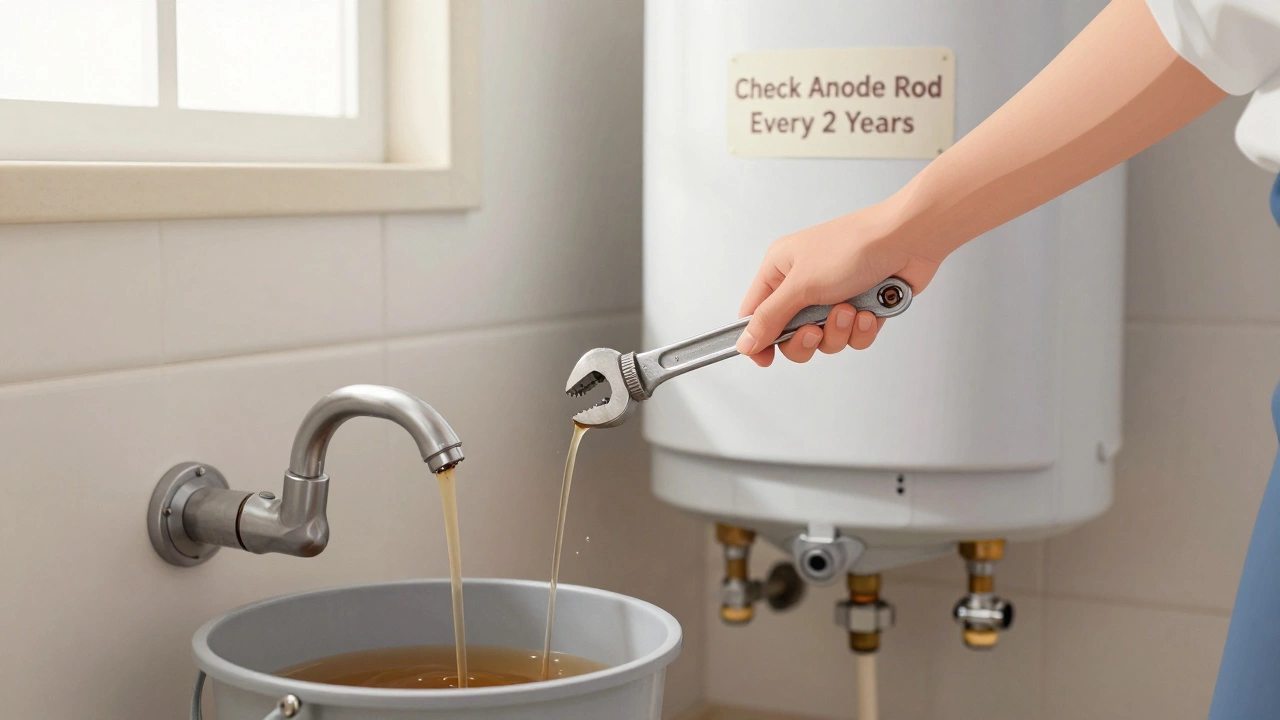
What to do if your anode rod is bad
If the rod is worn down, replace it. Don’t wait. Even if your tank isn’t leaking yet, corrosion is eating away silently.
When buying a new rod, match the material to your water:
- Magnesium - Best for soft water. Most common. But can cause sulfur smell in some areas.
- Aluminum - Better for hard water. Less likely to cause odor, but doesn’t last as long as magnesium.
- Zinc-aluminum - A hybrid. Helps reduce sulfur smell. Good if you’ve had odor issues before.
Don’t use a rod made for a different brand unless it fits. Size matters. Most standard rods are 3/4 inch in diameter and 40-50 inches long. Check your manual or measure the old one.
Installation is the reverse of removal. Tighten it snugly-don’t over-torque. Reconnect the water and power. Let the tank refill, then check for leaks.
Why you shouldn’t ignore a bad anode rod
Replacing an anode rod costs $20-$50. A new water heater? $1,200-$2,500 in Auckland. That’s a 50x difference. Most people wait until they get a leak. By then, water damage to your ceiling, floor, or walls can cost thousands more.
Some plumbers say you can skip the rod if you have a tankless heater. But if you’ve got a traditional tank-and most homes in New Zealand do-this rod is your cheapest insurance policy.
How often should you check it?
Check every 2-3 years. If you live in an area with hard water-like parts of Auckland’s North Shore or Manukau-you should check it every year. Hard water has more minerals, which eat the rod faster.
Keep a note in your phone or calendar: "Check anode rod-June 2026." Set a reminder now. That’s the only way most people remember.
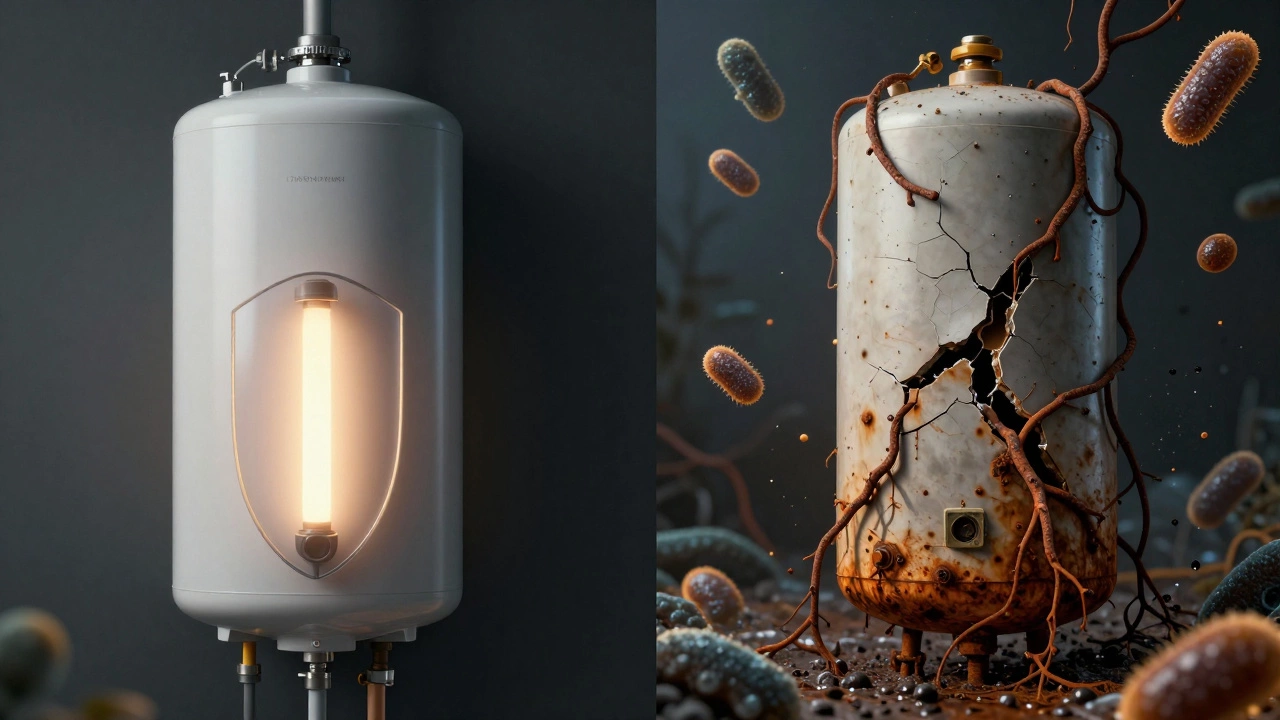
What if you don’t replace it?
Letting a bad anode rod go unchecked leads to three outcomes:
- Corrosion eats the tank - Eventually, the steel lining rusts through. You’ll see water pooling under the heater.
- Warranty void - Most manufacturers require proof of anode rod maintenance. Skip it, and your warranty is gone.
- Emergency replacement - No one plans for a flooded laundry room at 2 a.m. Replacing a tank under pressure is expensive and stressful.
There’s no magic fix. Once the tank is corroded, it’s done. No patch, no sealant, no miracle product. Just replacement.
Myth: You don’t need an anode rod if you have a water softener
False. Water softeners remove calcium and magnesium from the water-but they don’t remove sulfur or chlorides. Those still corrode the tank. In fact, softened water can make the anode rod wear faster. So if you have a softener, check the rod even more often.
Final tip: Don’t wait for the smell
The rotten egg smell is a red flag. But by the time you smell it, your rod has been failing for months. The best time to replace it is before it fails. Check it every two years. Replace it if it’s thin. It’s cheap. It’s easy. And it saves you from a much bigger mess.
How long does an anode rod last?
Most anode rods last 3 to 5 years, but this depends on water hardness, usage, and the rod’s material. In hard water areas like parts of Auckland, they can wear out in as little as 2 years. Check every 2 years to be safe.
Can I remove the anode rod entirely?
No. Removing it leaves your tank completely unprotected. The steel lining will corrode quickly, leading to leaks and tank failure. It’s not a way to save money-it’s a way to guarantee a costly replacement.
Why does my hot water smell like eggs?
Sulfur bacteria in the water feed on hydrogen sulfide, which forms when the magnesium anode rod corrodes. The smell gets worse as the rod wears out. Switching to an aluminum or zinc-aluminum rod often helps reduce the odor.
Can I replace the anode rod myself?
Yes. You’ll need a socket wrench, a new rod, and about 30 minutes. Turn off power and water, relieve pressure, and unscrew the old rod. Install the new one snugly. Most homeowners do it without help.
Is a longer anode rod better?
Not necessarily. Most water heaters are designed for a 40- to 50-inch rod. A longer rod won’t fit and could block the outlet pipe. Stick to the manufacturer’s recommended size. If you’re unsure, measure the old one or check your manual.