Cooker Replacement Calculator
Determine whether it's time to replace your cooker based on age, symptoms, and costs. This tool helps you make an informed decision that saves money and improves safety.
Enter Your Cooker Details
Your Recommendation
Estimated Energy Savings
$0 per year
Most people don’t think about replacing their cooker until it stops working completely. But waiting for a breakdown can cost you more than just a ruined dinner. A cooker that’s past its prime uses more energy, becomes a safety risk, and often costs more to fix than to replace. So how often should you really replace a cooker? The short answer: between 10 and 15 years. But that’s not the whole story.
What’s the average lifespan of a cooker?
A standard electric or gas cooker bought new in 2015 should be nearing the end of its life by now. Most manufacturers design cookers to last around 10 to 15 years under normal use. That means if yours was installed before 2011, you’re already in the danger zone. It’s not just about age, though. How you use it matters. A cooker used daily for large family meals, or one that’s never cleaned properly, will wear out faster than one used sparingly.
In Auckland, where homes are often older and humidity levels are high, corrosion can eat away at internal wiring and gas fittings sooner than in drier climates. That’s why many local repair technicians see cookers failing around the 8- to 12-year mark - even if they’re not broken yet.
Signs your cooker needs replacing (not fixing)
Not every glitch means it’s time for a new one. But some red flags are clear indicators your cooker is past saving:
- Uneven heating - Food burns on one side and stays raw on the other, even after recalibrating the thermostat. This usually means the heating element or gas burner is failing.
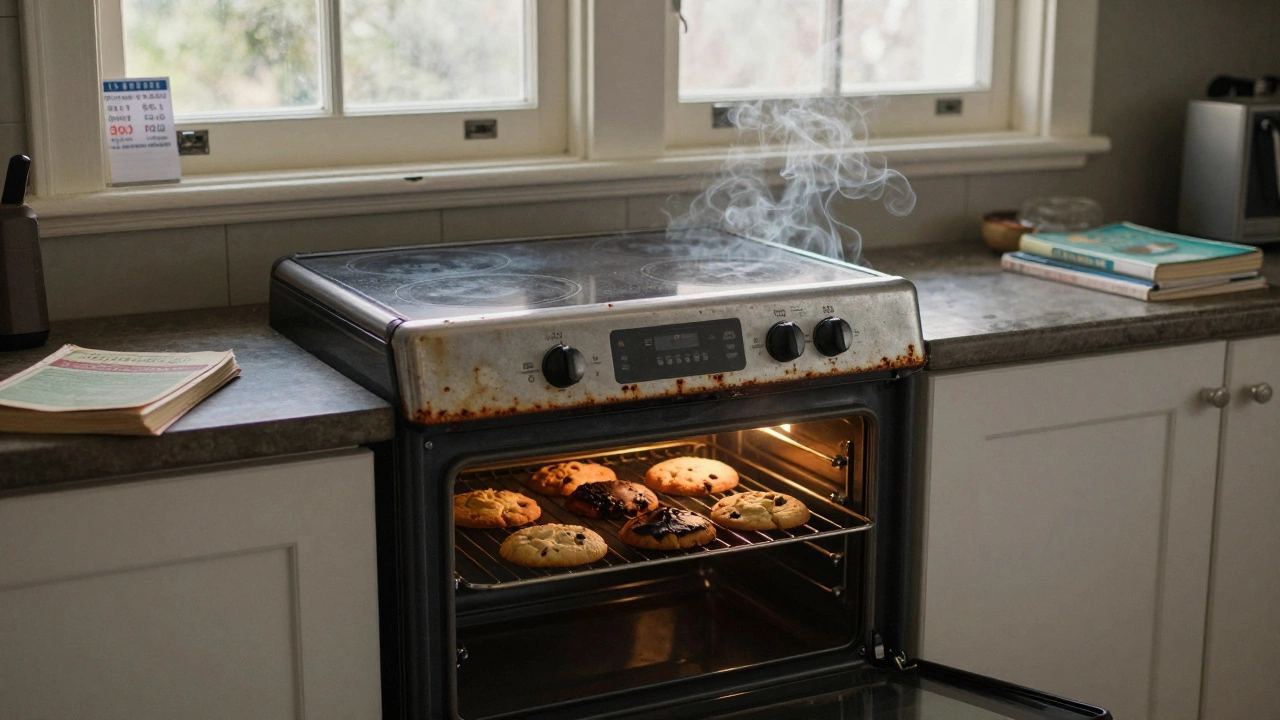
- Strange smells or smoke - A burning plastic or metallic odor during use is never normal. It often points to worn insulation or failing wiring inside the casing.
- Delayed ignition - If your gas cooker takes more than 3 seconds to light, or you hear a small ‘pop’ when turning it on, gas is building up before igniting. That’s a fire hazard.
- Control panel glitches - Buttons that don’t respond, displays that flicker, or timers that reset randomly. These aren’t just annoyances - they’re signs the control board is failing and parts are no longer available.
- High energy bills - If your electricity or gas bill has crept up noticeably over the past two years with no change in usage, your cooker might be working harder to reach the same temperature. Older models can be up to 30% less efficient than new ones.
One real example from a homeowner in Mt. Roskill: their cooker had been working fine for 14 years. Then the oven started taking 45 minutes to heat to 180°C. The repair technician said it was the thermostat. Replacement part? $220. Labor? $150. But the same model was discontinued. No warranty. No guarantee the fix would last. They spent $370 on a repair that might last 6 months - then bought a new A+++ rated cooker for $1,200. Two years later, their energy bill is $80 less per year. The cooker paid for itself.
Repair vs. Replace: When does it make sense?
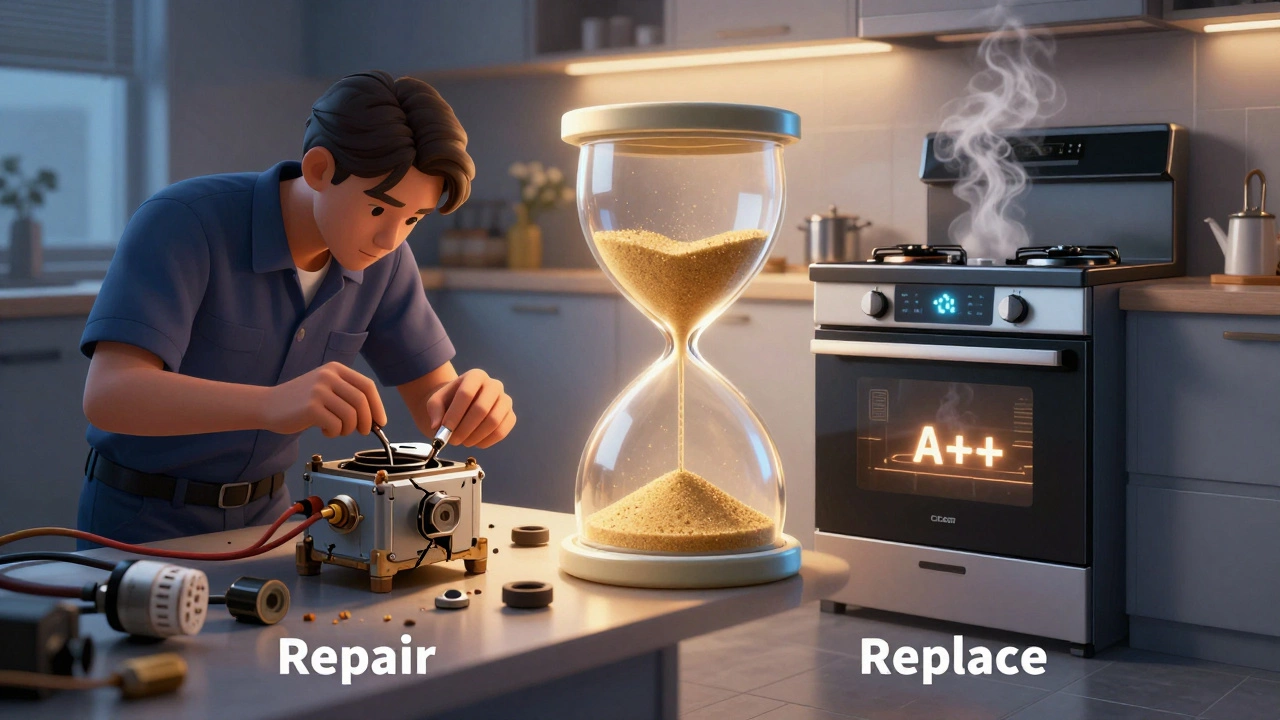
Here’s a simple rule: if the repair costs more than half the price of a new cooker, walk away. That’s not just a tip - it’s what appliance repair professionals in Auckland tell their customers.
Let’s say your cooker is 12 years old and the fan oven motor fails. A new motor might cost $180. But if a new basic cooker costs $800, you’re spending 22% of the replacement cost on a part that won’t fix the rest of the aging system. The other components - wiring, seals, heating elements - are also wearing out. Fixing one thing just delays the next failure.
Also consider parts availability. Cookers made after 2020 use standardized parts. Older models? Many manufacturers stopped making spare parts after 5-7 years. A technician might spend hours searching for a discontinued thermostat, only to find it’s no longer produced. That’s time you’re paying for, with no guarantee of success.
What to look for in a new cooker
When you’re ready to replace, don’t just pick the cheapest one. Focus on these three things:
- Energy rating - Look for A+++ models. They use 20-40% less electricity than A-rated ones from 10 years ago. In New Zealand, where electricity prices keep rising, this adds up fast.
- Warranty length - Most budget models offer 1 year. Mid-range ones give you 2-3 years. Premium brands like Smeg, Bosch, or Fisher & Paykel offer 5-year warranties on major components. That’s peace of mind.
- Self-cleaning feature - Pyrolytic or steam-cleaning ovens save hours of scrubbing. If you cook often, it’s worth the extra $200-$400. One Auckland mum told us she saved 3 hours a week after switching to a self-cleaning model.
Don’t ignore size and layout. A cooker that’s too small forces you to cook in batches. One that’s too big wastes energy. Measure your space. Check door swing direction. Make sure the controls are easy to reach - especially if you have arthritis or limited mobility.
What happens to old cookers?
You can’t just leave a cooker on the footpath. In Auckland, the city council bans large appliances from regular rubbish bins. You have two legal options:
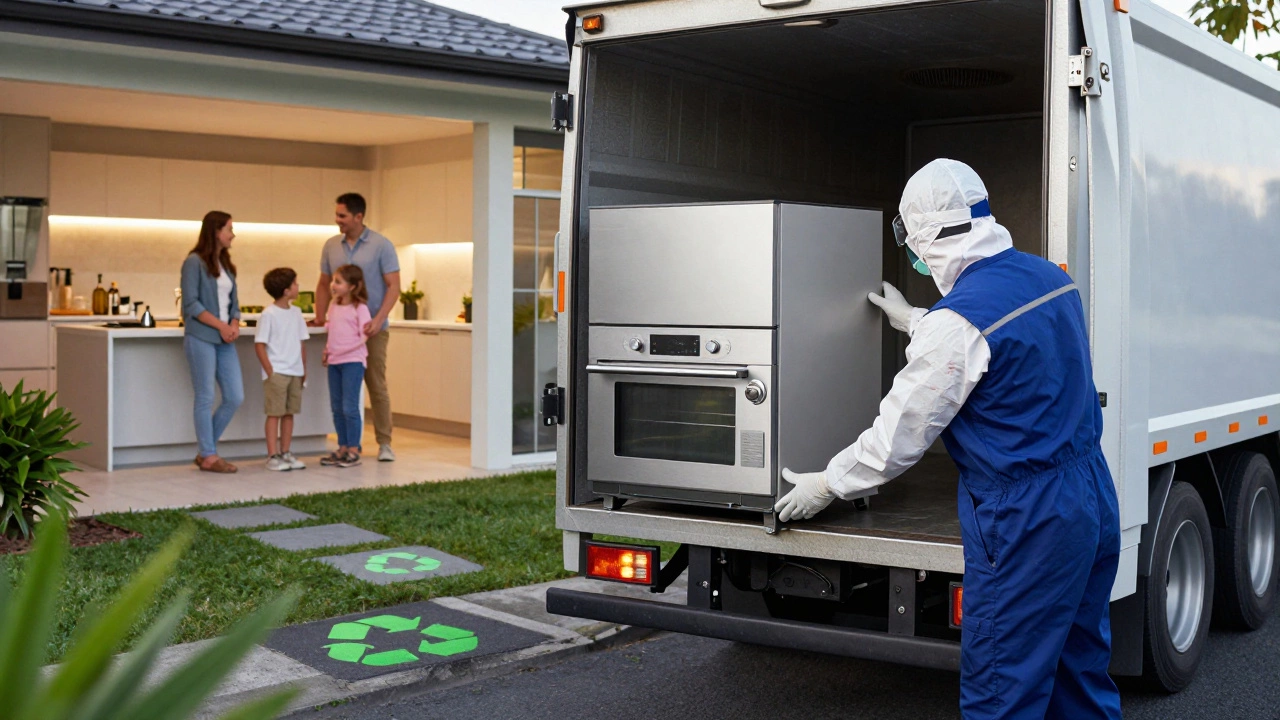
- Recycle it - Most major retailers like Noel Leeming or The Warehouse offer free pickup when you buy a new cooker. They send it to certified e-waste recyclers who safely dispose of refrigerants, copper, and plastics.
- Donate it - If it still works, charities like Salvation Army or Local Recycling Network will take it. Just make sure it’s clean and functional. A broken cooker isn’t helpful to anyone.
Never try to dismantle it yourself. Cookers contain hazardous materials like asbestos (in very old models), copper wiring, and pressurized gas lines. Let the pros handle it.
How to extend your cooker’s life
If you’re not ready to replace yet, these habits can buy you 2-4 extra years:
- Clean the oven and hob every 2 weeks. Built-up grease causes overheating and fires.
- Check door seals yearly. If you can pull a piece of paper out easily when the door is closed, the seal is worn. Replacement seals cost under $30.
- Don’t slam the door. Hinges wear out fast. Close gently.
- Use the right-sized pots. A small pot on a large burner wastes heat and stresses the element.
- Get a professional service every 2 years. They’ll check gas pressure, clean burners, test thermostats, and spot hidden issues.
One customer in Takapuna had a 17-year-old cooker that still worked - because she had it serviced every two years since 2010. The technician replaced the door seal, cleaned the burner jets, and recalibrated the oven. It ran like new for another 5 years. That’s the power of maintenance.
Final checklist: Should you replace your cooker?
Ask yourself these five questions:
- Is it over 10 years old?
- Are repairs costing more than $300?
- Do you notice uneven cooking, strange smells, or delayed ignition?
- Has your energy bill gone up without reason?
- Are replacement parts hard to find or discontinued?
If you answered ‘yes’ to two or more - it’s time to replace. Don’t wait for it to fail on Christmas Eve.
Can I fix a cooker that’s 15 years old?
You can fix it, but it’s rarely worth it. Parts for cookers older than 12 years are often discontinued. Even if you find a replacement, other components like wiring, seals, or control boards are likely worn out too. You’ll pay for labor and a part that may only last a few months. Replacing the whole unit is usually more cost-effective and safer.
Is it cheaper to repair or replace a cooker?
If the repair costs more than half the price of a new cooker, replace it. For example, if a new cooker costs $800, don’t spend more than $400 on repairs. Also consider energy savings. A new A+++ cooker can save you $70-$120 a year on bills, which adds up fast.
How long should a cooker last?
Most cookers last 10 to 15 years with normal use. In humid climates like Auckland, corrosion can shorten that to 8-12 years. Regular maintenance can extend life by 2-4 years, but no cooker lasts forever.
What’s the most common reason cookers fail?
The most common cause is worn-out heating elements or faulty thermostats. Gas cookers often fail due to clogged burner jets or failing gas valves. But in older models, it’s usually the control board or wiring that gives out - and those are expensive to fix.
Should I replace my cooker before it breaks?
If your cooker is over 10 years old and showing signs of wear - uneven heating, higher bills, slow ignition - yes. Waiting for a breakdown means you’ll be stuck without a cooker during holidays, or worse, risk a fire or gas leak. Replacing proactively is safer and less stressful.
Next steps
If you’re thinking about replacing your cooker, start by checking your energy bill from the last 12 months. Compare it to the year before. If it’s up more than 10%, your cooker is likely inefficient. Then measure your space and note what features you use most - do you bake often? Need a large oven? Prefer gas or electric?
Visit a local appliance store. Ask to see A+++ models. Compare warranties. Ask if they offer free pickup of your old unit. Don’t buy online without seeing the size in person. A cooker that looks compact on screen might be too wide for your kitchen.
And if you’re still unsure - get a technician to check it. A $90 service call can tell you if it’s worth fixing. Most reputable repair services offer a free diagnostic. Use that to make a smart decision - not a rushed one.