Boiler Repair Cost Estimator
Repair Details
Estimated Cost
Your estimated repair cost:
$0 - $0
Note: This estimate includes labour and parts.
Prices may vary based on specific circumstances.
This estimate does NOT include warranty on parts or labour.
Fixing a boiler isn’t like fixing a leaky tap. When your boiler stops working in winter, you’re not just dealing with cold water-you’re dealing with a home that feels like a fridge. And the question on everyone’s mind? How much does it cost to fix a boiler? The answer isn’t a single number. It depends on what’s broken, how old the unit is, where you live, and who shows up to fix it.
What’s the average cost to fix a boiler in New Zealand?
In New Zealand, most boiler repairs fall between $150 and $800. That’s the range you’ll hear from plumbers in Auckland, Wellington, or Christchurch. But don’t take that as a guarantee. A simple thermostat replacement might cost $180, including parts and labour. A pump failure? That’s closer to $450. If the heat exchanger is cracked-common in older boilers-it could hit $700 or more.
Why the big spread? Because boilers aren’t one-size-fits-all. A combi boiler in a 2020s home behaves differently than a regular boiler from 2005. Older units often need parts that aren’t made anymore, so plumbers have to source them secondhand or upgrade the whole system just to make a small fix work.
What breaks most often-and how much does it cost to fix?
Not all boiler problems are equal. Some are cheap and quick. Others are warning signs the whole system is done.
- Thermostat or control panel failure: $150-$250. This is the most common fix. The display goes blank, or the boiler won’t turn on. Often, it’s just a loose wire or a dead circuit board.
- Pump failure: $350-$550. If your boiler turns on but no heat comes out, the pump might be stuck. Replacing it takes a few hours and costs more because it’s buried inside the unit.
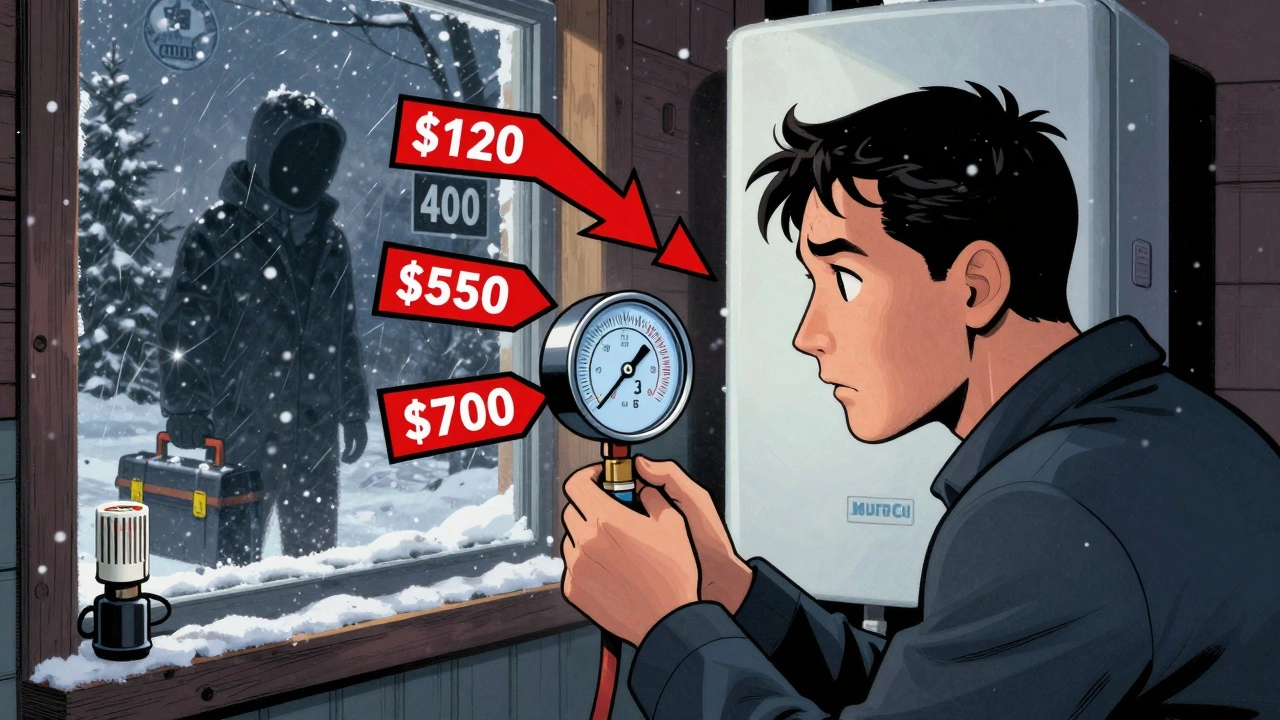
- Pressure issues: $120-$200. Low pressure is easy to fix-just top it up. But if it keeps dropping, you’ve got a leak. Finding the leak can add $100-$300 to the bill.
- Ignition or flame sensor fault: $200-$350. If the boiler tries to start but shuts off after a few seconds, this is usually the culprit. A quick clean or swap fixes it.
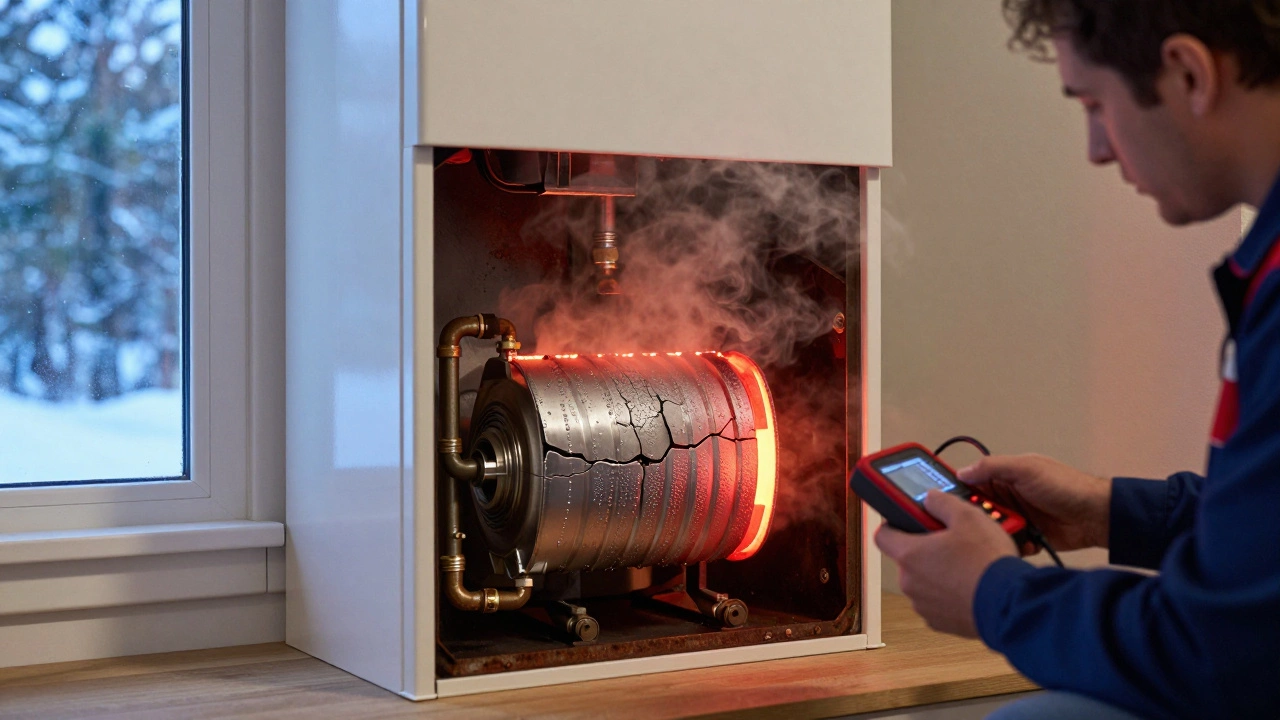
- Heat exchanger crack: $600-$1,200. This is the expensive one. The heat exchanger transfers heat from the gas flame to your water. If it cracks, it’s unsafe to repair. Most plumbers will recommend a full replacement at this point.
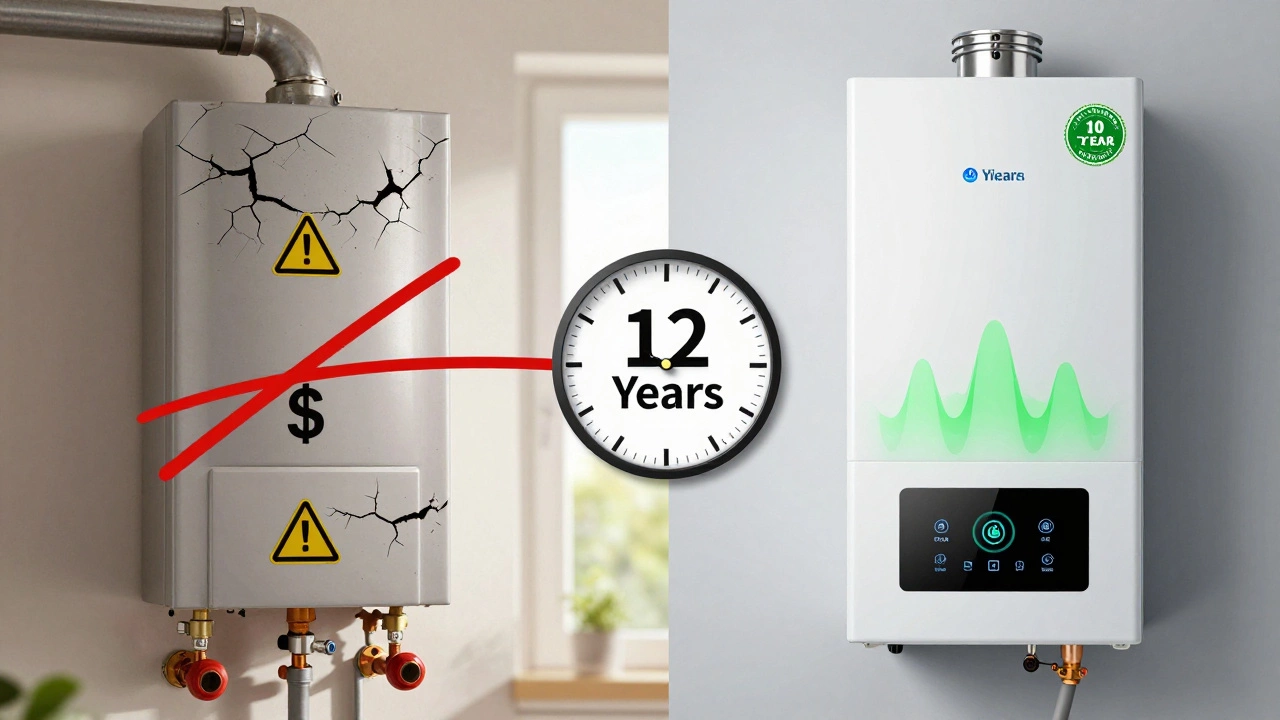
One thing to watch: if your boiler is over 12 years old and you’re facing a $500+ repair, you’re probably just delaying the inevitable. New boilers in New Zealand last 15-20 years with good maintenance. Anything older is running on borrowed time.
Why labour costs vary so much
Labour isn’t just about time. It’s about experience, location, and demand.
In Auckland, a qualified plumber charges $80-$120 per hour. In smaller towns like Whangarei or Nelson, you might pay $70-$95. But here’s the catch: plumbers who specialise in boilers often charge more because they’ve got the right tools, certifications, and spare parts on hand.
Also, emergency calls after 5 PM, on weekends, or during winter storms? That’s when prices jump. A $200 daytime repair can become $400 if you call at midnight because your boiler died during a cold snap. Some companies charge a flat emergency fee of $100-$150 on top of labour.
And don’t assume all plumbers are the same. Some are general handymen who do boilers on the side. Others are Gas Safe registered (in NZ, that’s a licensed plumber with boiler-specific training). The latter cost more upfront but won’t guess at fixes or leave you with a safety hazard.
What’s included in the price?
Some quotes look cheap until you read the fine print. A $180 quote might only cover labour. Parts? Extra. Diagnostic fee? Extra. Disposal of the old part? Extra.
Ask for a written quote before any work starts. A good plumber will give you:
- A breakdown of labour hours and rate
- Exact part names and prices (e.g., “Worcester Bosch pump model 720-02”)
- Whether VAT or GST is included (in NZ, GST is included in most prices)
- Any warranty on parts or labour
Reputable companies offer 12-month warranties on repairs. If someone says “no warranty,” walk away. That’s a red flag they’re not confident in their fix.
When should you replace instead of repair?
There’s a moment when fixing a boiler stops making sense. Here’s when to consider replacement:
- Your boiler is over 12 years old
- You’ve had two or more major repairs in the last year
- It’s making loud banging, whistling, or gurgling noises
- Your energy bills have jumped 20%+ without changing usage
- The boiler is leaking water or gas (yes, gas leaks happen)
Replacing a boiler in New Zealand costs $4,000-$7,000 for a standard combi unit. That sounds steep-but you’re not just buying a new machine. You’re getting:
- 30%-40% better energy efficiency
- Lower monthly bills
- A 10-year manufacturer warranty
- Smart controls that let you adjust heat from your phone
- No more midnight breakdowns
Some local councils in Auckland offer subsidies for replacing old gas boilers with heat pumps. Check with your city council-there might be cash back available.
How to avoid getting ripped off
Boiler repair scams are real. Here’s how to protect yourself:
- Never pay upfront. Pay only after the job is done and you’ve tested the system.
- Ask for their license number. In NZ, all plumbers must be registered with the Plumbers, Gasfitters, and Drainlayers Board. You can verify them online.
- Get at least two quotes. Don’t pick the cheapest. Pick the clearest.
- Check Google reviews. Look for recent ones with photos of the work done.
- Ask if they carry boiler insurance. If they don’t, and they damage your floor or wall, you’re stuck paying.
Also, avoid companies that show up unannounced. If someone knocks on your door saying “I saw your boiler leaking from the street,” they’re not a plumber-they’re a salesperson trying to upsell a replacement.
What you can do yourself
You don’t need to call a plumber for every little thing. Here are two things you can check before you pay for a service call:
- Check the pressure gauge. Most boilers need 1-1.5 bar. If it’s below 0.5, you can top it up yourself using the filling loop (usually under the boiler). Instructions are on the boiler label.
- Reset the boiler. Turn it off at the wall for 30 seconds, then back on. Many faults clear with a reset.
Don’t try to open the boiler casing, touch gas lines, or adjust internal parts. That’s dangerous and voids warranties.
Final tip: Get your boiler serviced yearly
A $150-$200 annual service can save you $1,000 in repairs. A good technician will clean the burner, check for gas leaks, test safety valves, and spot small issues before they turn into big ones.
Book it in spring, before winter hits. Most plumbers are busy in June and July. You’ll get better rates and faster service if you plan ahead.
How long does a boiler repair usually take?
Most repairs take 2-4 hours. Simple fixes like resetting the system or replacing a thermostat can be done in under an hour. Complex jobs like replacing a heat exchanger or fixing a gas leak may take half a day, especially if parts need to be ordered.
Can I fix my boiler myself?
You can check the pressure, reset the boiler, or bleed radiators-but anything involving gas, electrical components, or internal parts should be left to a licensed plumber. DIY fixes on boilers are dangerous and illegal in New Zealand if you’re not certified. Plus, it voids your warranty.
Is boiler repair covered by home insurance?
Most standard home insurance policies don’t cover boiler repairs unless the damage was caused by a covered event like a flood or fire. Some insurers offer optional home emergency cover that includes boiler breakdowns. Check your policy or call your provider to confirm.
Why is my boiler making noise?
Knocking or banging noises usually mean limescale buildup or air in the system. Whistling can mean low water pressure or a faulty pump. Gurgling often means the boiler is struggling to circulate water. These aren’t always emergencies, but they’re signs your boiler needs attention. A service visit can fix them before they break.
What’s the difference between a combi boiler and a regular boiler?
A combi boiler heats water on demand and doesn’t need a tank. It’s compact and efficient, common in newer homes. A regular boiler (or system boiler) heats water and stores it in a tank. It’s bulkier but can supply multiple taps at once. Repairs differ because the parts and systems aren’t the same. Combi boilers are more common in New Zealand today.