Oven Element Diagnosis Tool
Quick Check for Blown Oven Element
Answer these questions based on your oven's behavior. This tool helps identify if your heating element is likely blown based on common symptoms.
Results will appear here after checking
If your oven won’t heat up-or heats unevenly-chances are the heating element has gone out. It’s one of the most common oven failures, especially in older models. You don’t need to be a technician to figure this out. Here’s how to tell if your oven element is blown, and what to do next.
Look at the element itself
Turn off the oven and unplug it or turn off the circuit breaker. Safety first. Once it’s cool, open the oven door and take a close look at the heating element. In most electric ovens, there are two: one on the bottom for baking, and one on the top for broiling. If you’re having trouble baking, the bottom element is usually the culprit.
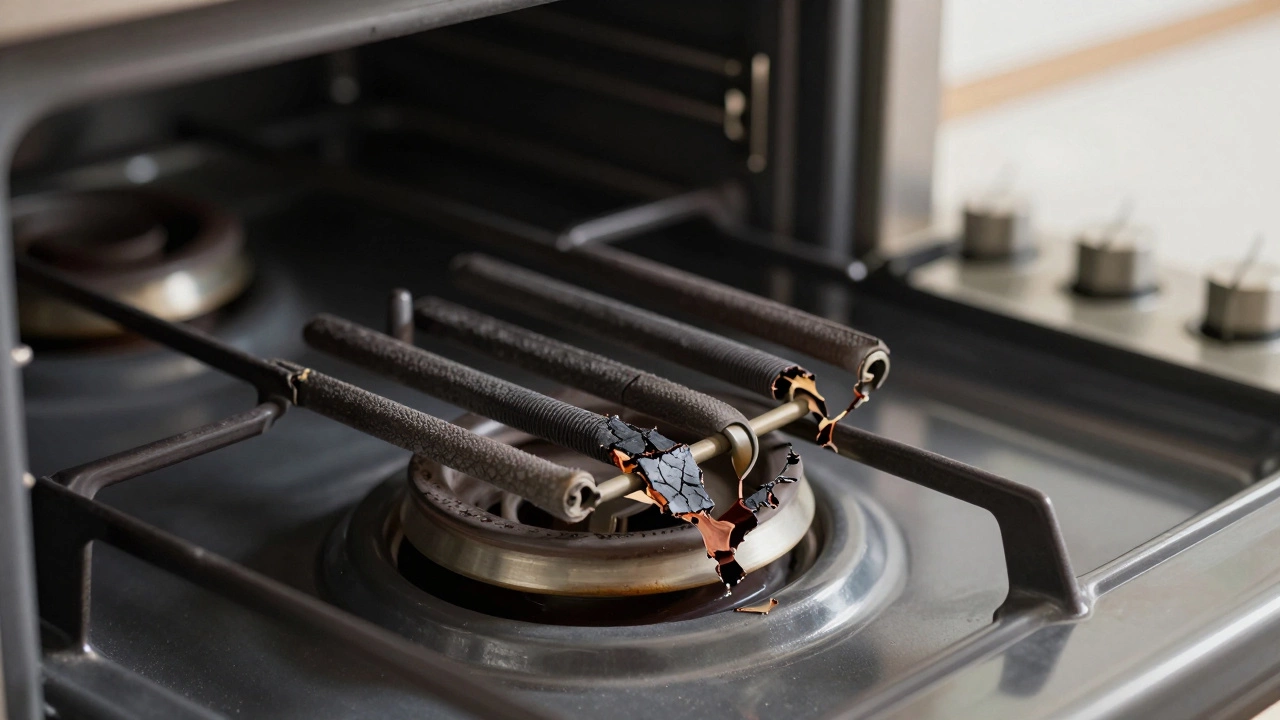
Look for visible damage. A healthy element is a shiny, smooth metal coil. A blown one will have dark spots, cracks, or sections that look bubbled or melted. Sometimes, the coil will be broken in half. If you see any of that, the element is dead. No need for tools or tests-you’ve found your problem.
Check for uneven heating
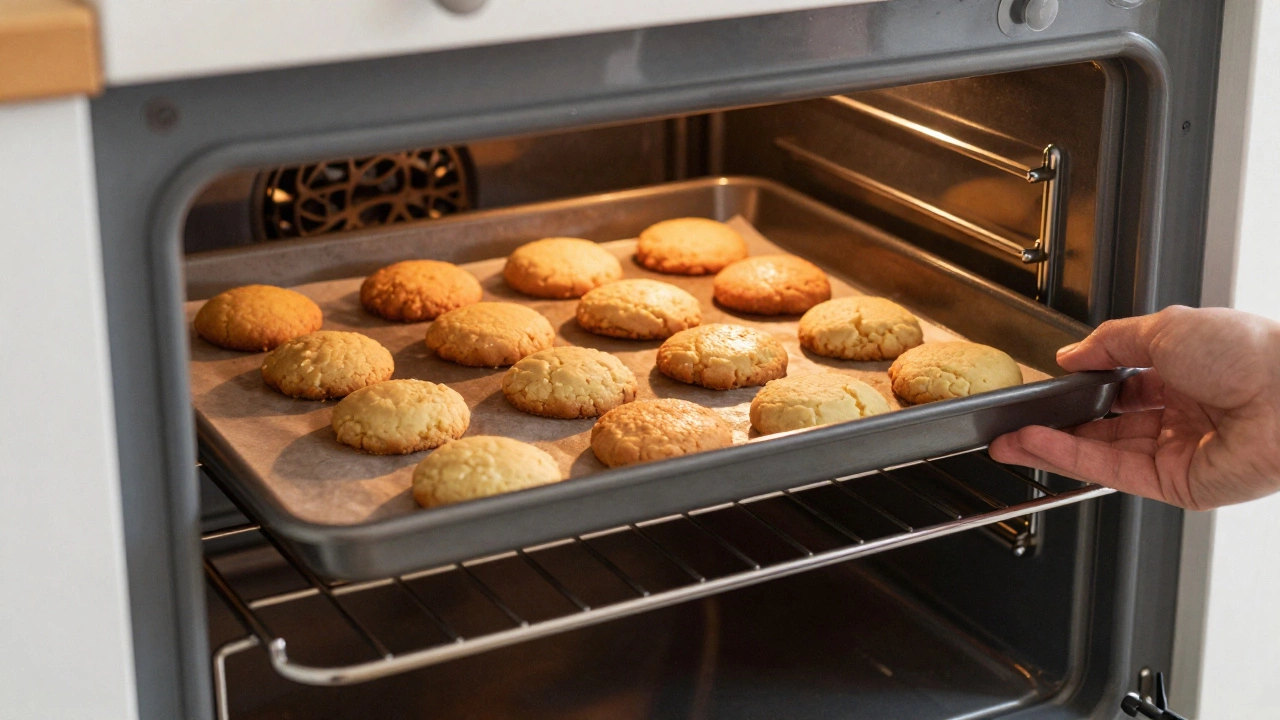
Even if the element looks okay, it might still be failing. Try this: preheat your oven to 180°C and put a tray of cookies or bread on the middle rack. After 15 minutes, check how evenly they’re browning. If the bottom is raw and the top is burnt, the bottom element isn’t working right. If the top is too hot and the bottom stays cold, that’s a classic sign of a failed bottom element.
Some people assume their oven thermostat is broken. But if the fan runs and the light turns on, but the food doesn’t cook properly, the element is far more likely to be the issue. Ovens can run for years with a weak element before it completely fails. Don’t ignore slow heating-it’s the early warning sign.
Listen for the click
When you turn on the oven, you should hear a soft click as the element activates. That’s the relay switching power to the heating coil. If you hear nothing at all, and the oven doesn’t heat, the element might be dead. But this isn’t foolproof-some modern ovens use solid-state controls that don’t make noise.
A better test: turn the oven on to bake, then open the door slightly. Look through the gap. If the element glows bright orange within 2-3 minutes, it’s working. If it stays dark, even when the oven says it’s preheated, the element isn’t getting power-or it’s broken.
Use a multimeter (if you’re comfortable)
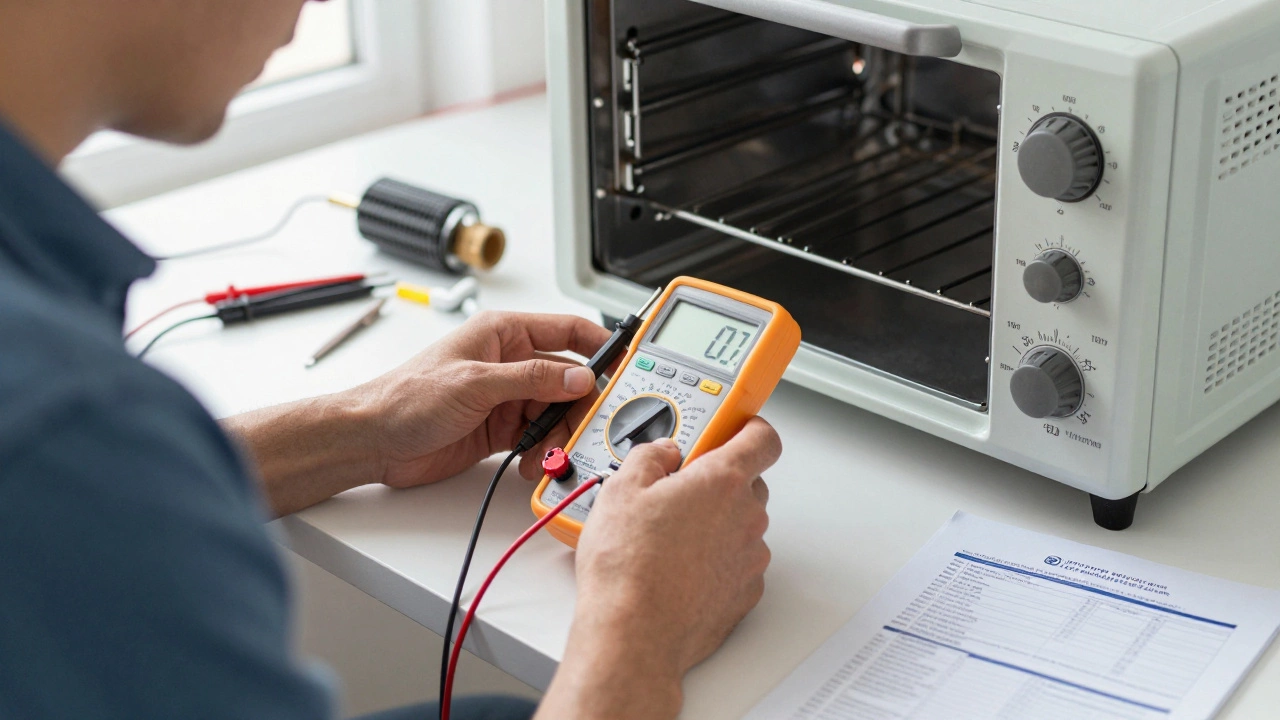
If you’ve got a multimeter and know how to use it, you can test for continuity. This is the most accurate way to confirm a blown element. First, disconnect power. Then remove the element by unscrewing the mounting screws at the back of the oven cavity. Pull it out gently.
Set your multimeter to ohms (Ω). Touch one probe to each terminal on the element. A good element will show between 15 and 30 ohms of resistance. If the meter reads “OL” (open loop) or zero, the element is blown. No continuity means no electricity can flow through it. That’s a dead element.
Pro tip: Test both elements. Sometimes the broil element fails too, and you’ll need to replace both if they’re the same age. Most oven elements last 5-10 years. If yours is older than seven, it’s worth checking both.
Other signs your oven element is gone
- The oven takes way longer to preheat than it used to.
- You smell burning or see smoke when you turn it on.
- The oven light works, but nothing heats up.
- There’s no glow at all, even after 10 minutes on bake mode.
- Your oven displays an error code like “E1” or “HEAT FAIL”-check your manual, but this often points to element failure.
These signs don’t always mean the element is dead, but they’re strong clues. If two or more of these happen together, you’re almost certainly looking at a blown element.
What to do next
Once you’ve confirmed the element is blown, don’t try to fix it. Heating elements aren’t repairable-they’re replaceable. You can buy a replacement online or from an appliance parts store. Make sure you get the right model. Look up your oven’s make and model number (usually on a sticker inside the door frame or on the back). Match it to the part number on the old element.
Replacing it is usually a 30-minute job. You’ll need a screwdriver and maybe a pair of pliers. Disconnect power, remove the old element, plug in the new one, screw it back in, and test it. Many people do this themselves and save $150-$250 in service fees.
If you’re not comfortable with it, hire a local appliance technician. In Auckland, most charge between $80 and $120 for a simple element swap. It’s still cheaper than buying a new oven.
Prevent future failures
Heating elements don’t just die randomly. They wear out from heat stress and buildup. Here’s how to make yours last longer:
- Don’t use the self-clean function too often-it overheats the element.
- Wipe up spills quickly. Burnt-on food creates hot spots that stress the coil.
- Keep the oven ventilated. Blocked vents cause overheating.
- Use oven-safe cookware. Metal pans that touch the element can cause short circuits.
With basic care, a new element can last 8-12 years. That’s more than enough to get your money’s worth.