Water Heater Problem Checker
Identify Your Water Heater Issue
Select symptoms you're experiencing to get a diagnosis and solution
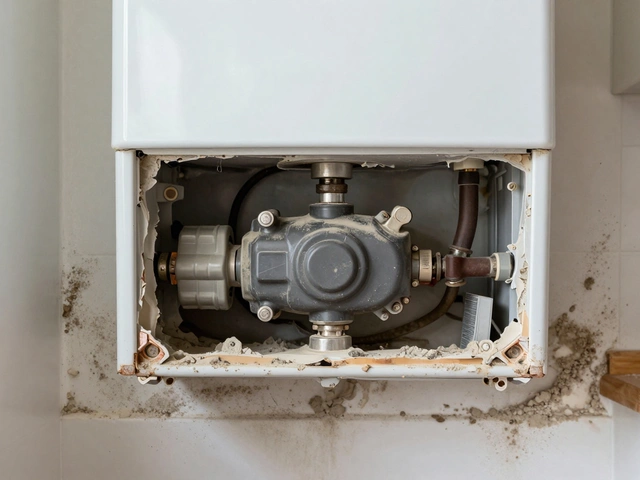
Water heater a device that heats water for home use, typically powered by gas or electricity is a crucial appliance in most homes. When water heater problems arise, they often start with subtle signs like strange noises or inconsistent hot water. Most issues are preventable with regular maintenance, saving you from costly repairs or replacements.
Sediment Buildup: The Silent Clogger
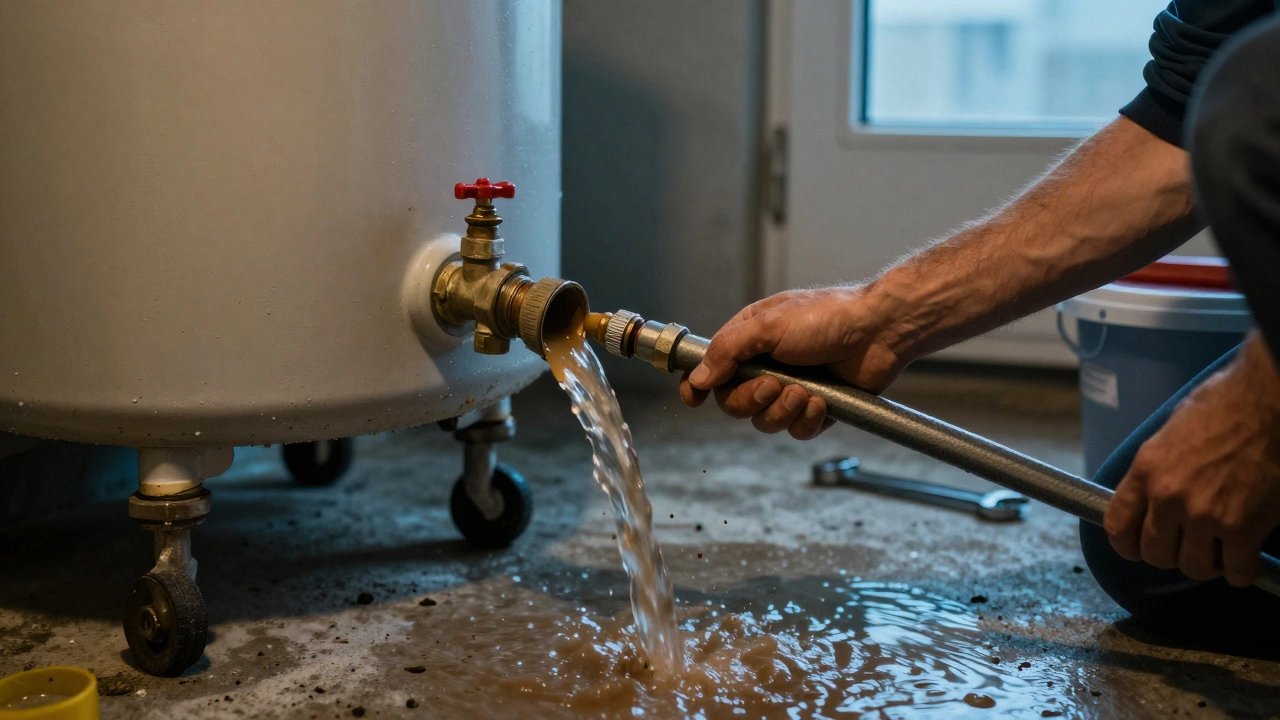
When hard water flows into your tank, minerals like calcium and magnesium settle at the bottom. Over time, this sediment buildup a layer of mineral deposits at the bottom of a water heater tank forms, insulating the heating element from the water. This means the heater works harder, using more energy and making loud popping noises. A 2023 plumbing study found that 65% of water heater failures in areas with hard water started with sediment buildup. Flushing the tank annually can prevent this. Here's how: turn off the power or gas, close the cold water inlet, attach a hose to the drain valve, and let water flow out until it runs clear. It takes about 20 minutes but saves you from costly repairs later.
Heating Element Failure: No Hot Water?
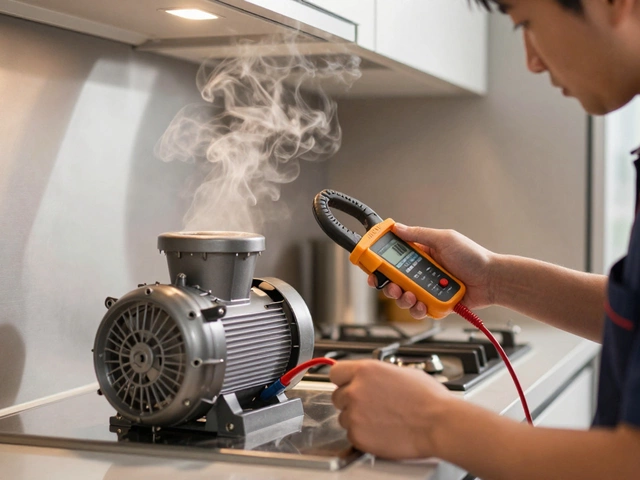
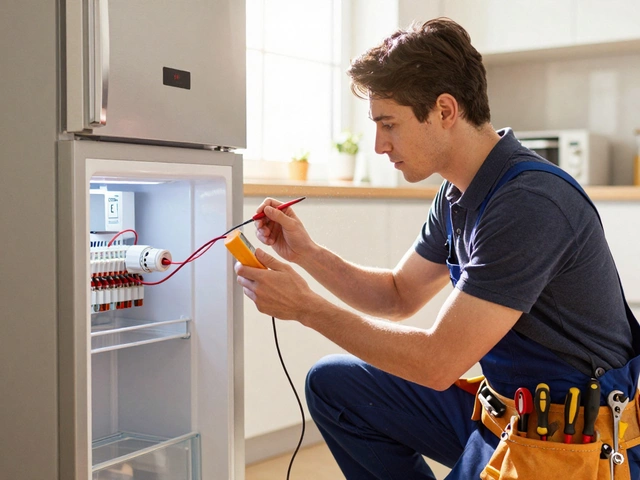
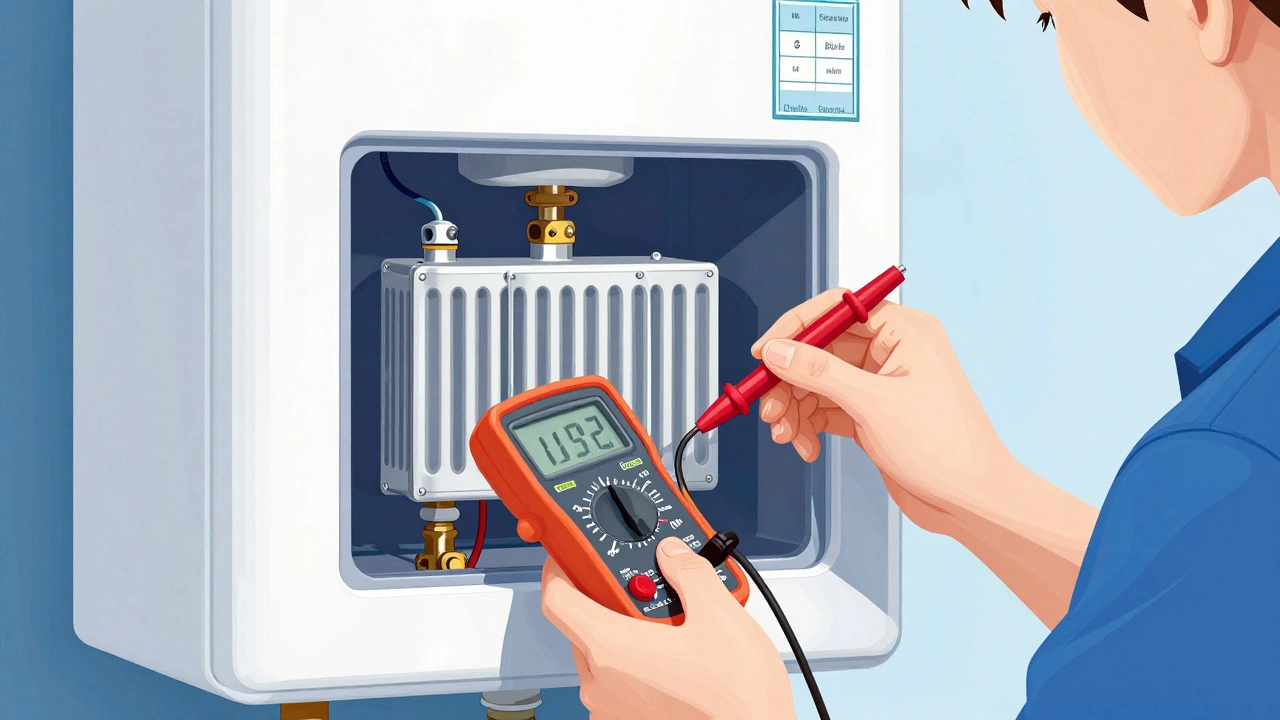
Electric water heaters rely on one or two heating element a resistive wire inside a metal sheath that generates heat in electric water heaters. If one fails, you'll get lukewarm water; if both go, no hot water at all. Signs include cold showers or the heater running constantly without heating. To check, shut off power, remove the access panel, and use a multimeter to test resistance. A good element reads between 10-16 ohms. If it's outside that range, replace it-costing around $20-$50. Always replace both elements at once to avoid future issues.
Thermostat Troubles: Temperature Gone Wild
Thermostats control water temperature, but they can malfunction. If your water is too hot, you risk scalding; if it's too cold, you'll have chilly showers. A faulty thermostat might also cause the heater to cycle on and off constantly. Adjusting the thermostat might help temporarily, but if it's damaged, replacement is needed. New thermostats cost $20-$40 and are easy to install. Always turn off power before working on electrical components. This thermostat a device that regulates water temperature in a water heater failure is one of the most common issues.
Pressure Relief Valve: Safety First
The pressure relief valve a safety valve that releases excess pressure or temperature in a water heater is a critical safety feature. It opens if pressure or temperature gets too high, preventing tank explosions. If it's leaking, don't ignore it-this means the valve is faulty or the system pressure is too high. Replace the valve immediately; it's cheap ($10-$20) and takes minutes to install. Never block or replace it with a regular valve. A 2024 safety report showed 12% of water heater accidents were due to faulty TPR valves.
Anode Rod: The Tank's Guardian
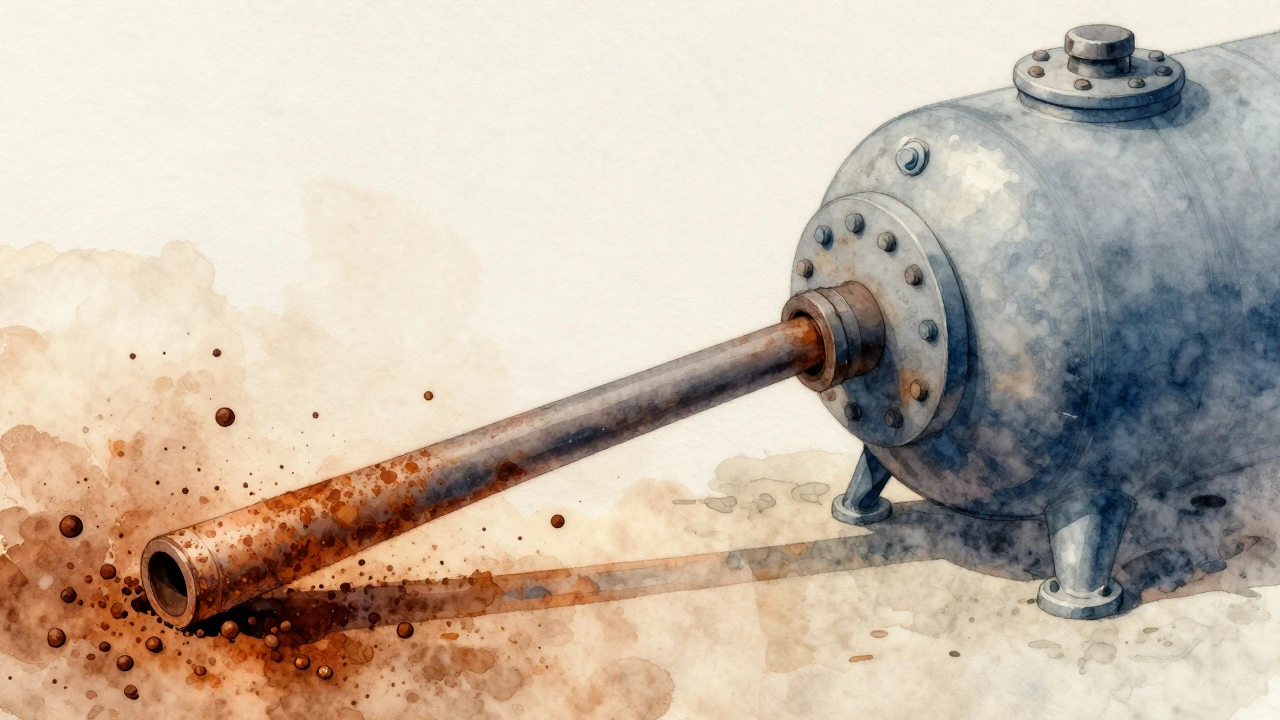
The anode rod a sacrificial metal rod that protects the water heater tank from corrosion attracts corrosive elements in the water, protecting the tank from rust. Over time, it corrodes and needs replacement. If it's gone, the tank itself starts to rust, leading to leaks. Check the rod every 3 years-if it's more than half eaten away, replace it. New rods cost $20-$50. Skipping this step can shorten your water heater's lifespan by 5+ years.
Gas Water Heater Issues: Pilot Light and Burners
For gas water heaters, common problems include a pilot light that won't stay lit or a burner that won't ignite. Often, the issue is a faulty thermocouple a sensor that detects the pilot flame and shuts off gas if it goes out-a sensor that detects the pilot flame. If it's dirty or broken, the gas supply shuts off. Clean the thermocouple or replace it ($15-$30). Also, check for blocked vents or gas supply issues. If you smell gas, turn off the gas valve and call a professional immediately.
Preventive Maintenance: Keep Your Water Heater Running Smoothly
Regular maintenance can double your water heater's lifespan. Here's what to do yearly: flush the tank to remove sediment, check the TPR valve, inspect the anode rod, and test the thermostat. Installing a water softener a device that reduces mineral content in hard water in hard water areas reduces mineral buildup. These simple steps cost little time and money but prevent major issues.
Common Water Heater Failures at a Glance
| Failure Type | Key Symptoms | Quick Fixes |
|---|---|---|
| Sediment Buildup | Popping noises, reduced hot water | Flush tank annually; install water softener |
| Heating Element Failure | Cold or lukewarm water | Test with multimeter; replace element |
| Thermostat Issues | Water too hot or inconsistent | Adjust settings or replace thermostat |
| Pressure Relief Valve Leaks | Water dripping from valve | Replace valve immediately for safety |
| Anode Rod Corrosion | Rusty water, tank leaks | Inspect and replace every 3-5 years |
| Gas Pilot Light Failure | Pilot light won't stay lit | Replace thermocouple; check gas supply |
Why is my water heater making popping noises?
Popping noises usually mean sediment buildup at the bottom of the tank. As water heats, it gets trapped under the sediment, causing steam bubbles to burst loudly. Flushing the tank annually removes this sediment and stops the noise. If the problem persists after flushing, a professional may need to check for deeper issues.
How often should I flush my water heater?
Flush your water heater at least once a year. In areas with hard water, do it every 6 months. Regular flushing prevents sediment buildup, improves efficiency, and extends the tank's life. Skipping this step can lead to costly repairs or premature replacement.
Can I replace the anode rod myself?
Yes, replacing the anode rod is a DIY task for most homeowners. Turn off the power and water supply, drain some water from the tank, and unscrew the old rod. Install a new one-usually aluminum or magnesium. It takes about 30 minutes and costs under $50. If you're unsure, a plumber can do it for $100-$150.
What causes a water heater to leak from the top?
Leaks from the top usually come from the TPR valve or the cold water inlet connection. Check if the TPR valve is leaking (replace it) or if the pipe fittings are loose (tighten them). If the tank itself is leaking, it's likely corroded and needs replacement. Never ignore a top leak-it can lead to serious water damage.
How long does a water heater typically last?
Most water heaters last 8-12 years with proper maintenance. Factors like water quality, usage frequency, and maintenance affect lifespan. Signs it's time to replace include frequent leaks, rust-colored water, and constant repair needs. Investing in a new unit before it fails avoids emergency costs.