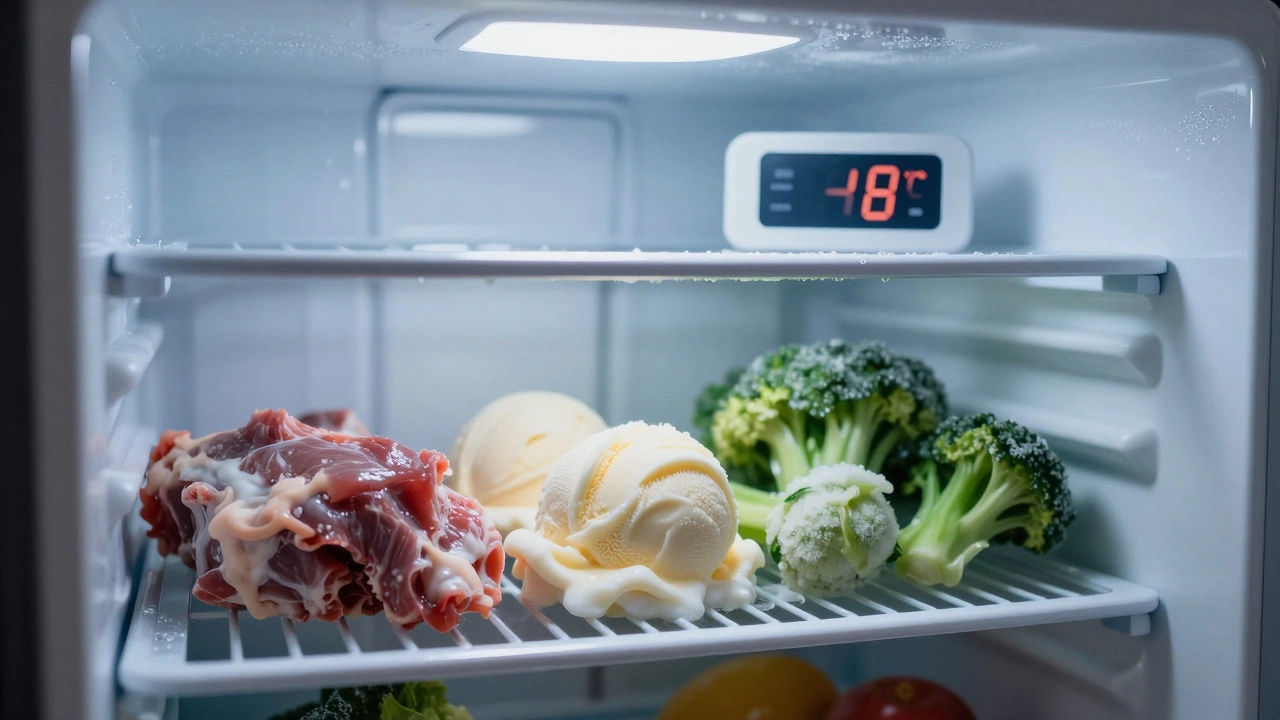
If your freezer has stopped making ice, or you found a puddle on the floor, or your frozen meals are softening - you’re not imagining it. Your freezer might be broken. And unlike a light bulb, you can’t just swap it out. Freezers are complex appliances that keep your food safe for months. When they fail, it’s not just an inconvenience - it’s a food waste crisis waiting to happen.
Is the temperature rising?
The most obvious sign your freezer is broken is that things inside are no longer frozen solid. If ice cream is soft, meat is thawing, or frozen vegetables are sticking together in a mushy clump, the temperature has risen above 0°C. A working freezer should stay at or below -18°C. If you’ve got a digital display, check it. If it shows anything above -10°C, that’s a red flag. Even if the light turns on and the motor hums, the cooling system might not be working. Many people assume the freezer is fine because it’s still running - but a compressor can run without cooling. That’s like a car engine revving in neutral.Is there too much frost or ice buildup?
A little frost is normal. But if you’re scraping ice off the back wall every few weeks, or the shelves are buried under a thick layer of white stuff, your freezer’s defrost system is failing. Modern freezers have an automatic defrost cycle that melts ice every 6-12 hours. If that timer, heater, or sensor breaks, ice builds up and blocks airflow. That stops cold air from circulating, so your food warms up. You might notice this first in the back corners, where frost grows like a glacier. If you’ve tried unplugging it for 24 hours to manually defrost it - and the ice comes back within a week - the problem isn’t you. It’s the defrost system.Is it louder than usual?
Freezers aren’t silent, but they shouldn’t sound like a jackhammer. A sudden change in noise is a big clue. If you hear loud buzzing, grinding, or rattling, something’s wrong inside. The compressor might be struggling. The fan could be hitting ice buildup. Or the motor bearings are worn out. If your freezer used to hum quietly and now sounds like it’s about to explode, don’t ignore it. A noisy compressor often means it’s working harder than it should - and it’s burning out. In Auckland’s humid climate, moisture can accelerate wear. If the noise started after a power surge or during a heatwave, that’s likely the trigger.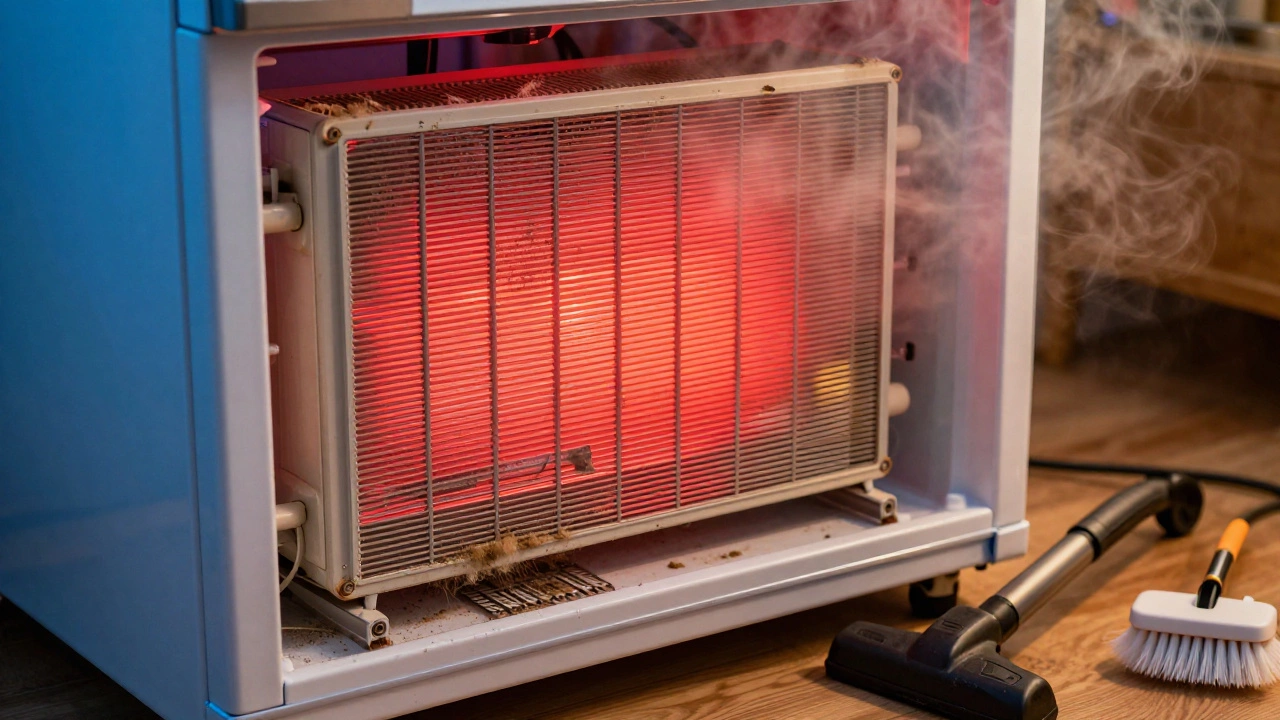
Is the back of the freezer hot to the touch?
It’s normal for the back or sides of a freezer to feel warm - that’s where the condenser coils release heat. But if it’s so hot you can’t keep your hand on it for more than a second, something’s wrong. Overheating coils mean the system can’t release heat properly. That’s usually caused by dust buildup, a broken condenser fan, or a refrigerant leak. In older freezers, coils get clogged with pet hair, lint, or kitchen debris. Clean them with a vacuum and brush every six months. But if you’ve cleaned them and the back is still burning hot, the refrigerant might be leaking. That’s not something you fix yourself. Refrigerant is regulated, dangerous, and requires a licensed technician.Are you seeing water on the floor?
A small drip from the defrost drain is one thing. A growing puddle? That’s serious. Water pooling under your freezer usually means the defrost drain is clogged or the drain pan is cracked. In some models, the drain tube gets blocked by ice or food particles. When the defrost cycle runs, water can’t drain out - so it spills onto the floor. If you’ve checked the drain and cleared it, and the water keeps coming, the pan might be broken. Or worse - the inner liner has cracked from age or impact. That’s a sign the freezer’s structural integrity is failing. No amount of cleaning will fix that.Is the door seal failing?
Check the rubber gasket around the door. If it’s cracked, brittle, or peeling away from the frame, cold air is leaking out. You can test it with a simple trick: close the door on a piece of paper. Try to pull it out. If it slides out easily, the seal is weak. A bad seal means your freezer has to work twice as hard to stay cold. That increases energy bills and wears out the compressor faster. In New Zealand’s damp winters, mold can grow in the seal, making it sticky and ineffective. Replace the gasket if it’s damaged - they’re cheap and easy to install. But if the door won’t close flush even with a new seal, the hinge or frame might be warped. That’s a sign the unit is past its prime.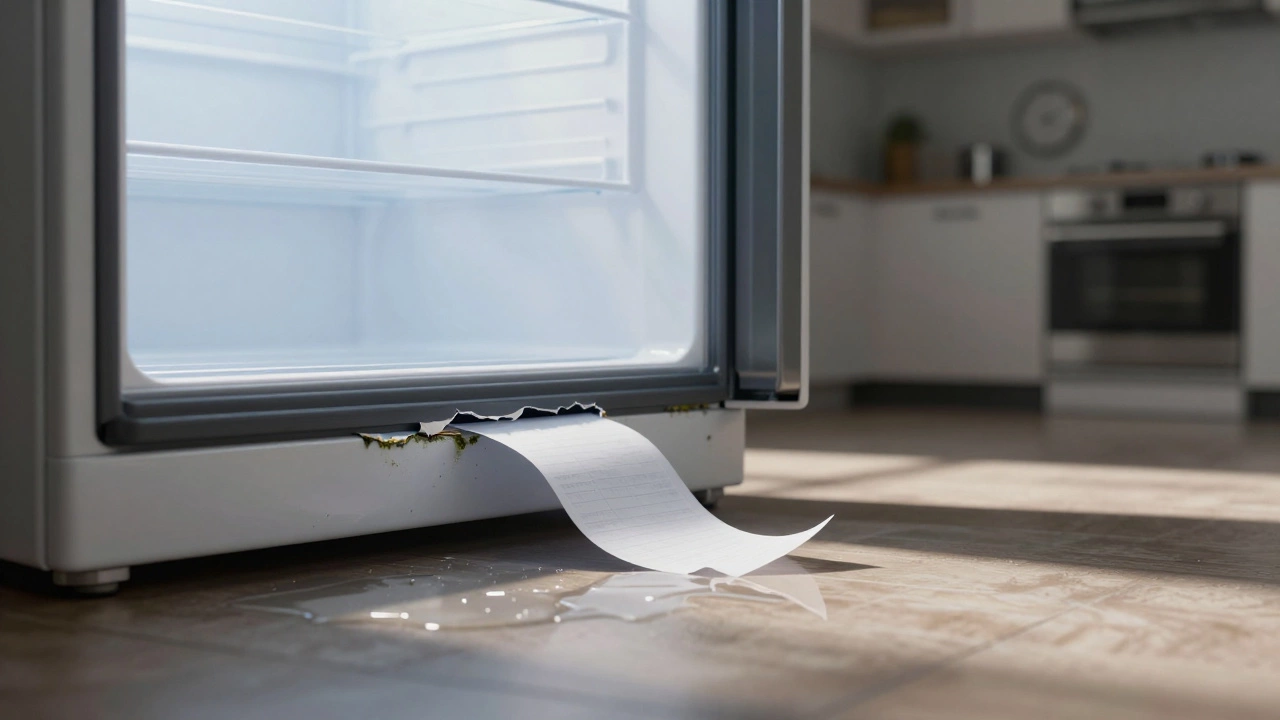
Is it running all the time?
A freezer should cycle on and off. It runs for 15-30 minutes, then shuts off for 20-40 minutes. If it’s running nonstop - even when the door hasn’t been opened - the thermostat is stuck, or the cooling system is overwhelmed. This often happens after a power outage, when the freezer tries to recover from a warm start. But if it’s been more than 24 hours and it’s still running, something’s broken. A thermostat that won’t shut off can burn out the compressor. You might hear it clicking constantly, or feel the back getting hotter by the hour. That’s not efficiency - that’s failure in progress.What to do next
If you’ve checked all these signs and more than two apply, your freezer is likely beyond simple fixes. Don’t waste money on DIY repairs unless you’re confident. Most freezer issues - refrigerant leaks, compressor failure, control board faults - need professional tools and certification. In New Zealand, refrigerant handling requires an EPA-licensed technician. Call a local appliance repair service. Bring the model number. Take a photo of the frost buildup. That helps them diagnose faster.When to replace instead of repair
If your freezer is over 10 years old, and repair costs are more than half the price of a new one, walk away. Modern freezers use 40% less energy than models from 2015. A new frost-free upright freezer costs around $800-$1,200. You’ll save that much in electricity within 2-3 years. Also, older freezers often use R12 or R22 refrigerants - both banned for new equipment. Repairing them means using scarce, expensive recycled gas. That’s a money trap.Keep your freezer running longer by cleaning the coils every six months, checking the door seal monthly, and never putting hot food inside. But if it’s showing multiple warning signs - don’t wait. Food spoilage is expensive. And a failing freezer can leak water, damage your floor, or even cause a fire if the wiring is compromised.
How long should a freezer last before it breaks?
Most freezers last between 10 and 15 years with proper care. Upright models tend to wear out faster than chest freezers because they have more moving parts and seals. If yours is older than 12 years and you’re seeing multiple issues - like frost buildup, noise, or poor cooling - replacement is usually more cost-effective than repair.
Can a freezer break without making any noise?
Yes. A silent freezer can be just as broken as a noisy one. If the compressor has seized or the control board has failed, the unit might not turn on at all. Or it might hum quietly but not cool. Always check the temperature inside with a thermometer. A freezer can look and sound fine while its cooling system is completely dead.
Why is my freezer cold but the fridge is warm?
If you have a side-by-side or top-mount fridge-freezer, this usually means the evaporator fan or damper is stuck. Cold air from the freezer is supposed to circulate into the fridge compartment. If the fan isn’t running or the air duct is blocked by ice, the fridge warms up while the freezer stays cold. This is a common issue in older models. Cleaning the evaporator coils and checking the fan motor usually fixes it.
Can a power outage damage my freezer?
A short power outage (under 4 hours) usually won’t hurt your freezer if the door stays closed. But a long outage, especially during a heatwave, can cause the compressor to overheat when power returns. Power surges can also fry the control board. If your freezer won’t start after a storm or outage, unplug it for 10 minutes, then plug it back in. If it still doesn’t work, the board may need replacing.
Is it safe to use a freezer that smells funny?
A mild plastic or musty smell is normal in older freezers - especially if they’ve been empty for a while. But a sour, rotting, or chemical odor means food has spoiled inside or the insulation is breaking down. If you’ve thrown out all the food and cleaned the interior thoroughly, and the smell remains, the insulation or liner may be damaged. That’s a sign of structural failure. Don’t risk food contamination - replace the unit.