Gas Oven Repair Decision Calculator
Gas Oven Decision Tool
This calculator helps you determine if repairing or replacing your gas oven makes the most sense based on your specific situation.
When your gas oven stops heating, it’s not just an inconvenience-it’s a disruption to your whole routine. No roast dinners, no baked cookies, no warm bread on a Sunday morning. The first thought that pops into your head? Can gas ovens be repaired? The answer isn’t a simple yes or no. It depends on what’s broken, how old the unit is, and whether the cost of fixing it makes sense compared to replacing it.
Common Gas Oven Problems That Can Be Fixed
Most gas ovens fail for one of five reasons. And guess what? Four of them are fixable without replacing the whole appliance.
- Igniter failure - This is the #1 issue. The igniter glows but doesn’t get hot enough to open the gas valve. It’s a $30-$80 part, and most technicians replace it in under an hour.
- Gas valve malfunction - If the igniter works but no gas flows, the valve might be clogged or stuck. Cleaning or replacing it costs $150-$300, depending on the model.
- Thermostat or temperature sensor failure - Your oven heats unevenly or won’t reach the right temperature. A faulty sensor is easy to test with a multimeter and costs $40-$100 to replace.
- Blocked burner ports - Food grease and debris clog the tiny holes where gas exits. A simple cleaning with a toothpick and soapy water often solves this.
- Thermocouple failure - Common in older models, the thermocouple shuts off gas if it doesn’t sense heat. It’s a $20-$50 part and usually takes 20 minutes to swap.
These aren’t rare issues. In fact, 78% of gas oven repairs handled by licensed technicians in 2025 were for one of these five problems, according to the National Association of Home Inspectors.
When Repair Isn’t Worth It
Not every gas oven can or should be fixed. Here’s when it’s smarter to walk away:
- Unit is over 15 years old - Older models use parts that are no longer made. Even if you fix one thing, another part is likely to fail soon. The average lifespan of a gas oven is 13-15 years. If yours is past that, replacement is usually more cost-effective.
- Multiple components are failing - If the igniter, sensor, and gas valve are all giving trouble, you’re looking at $400-$700 in repairs. A new mid-range gas oven costs $600-$900.
- Gas leaks are suspected - Never try to fix a gas leak yourself. If you smell rotten eggs (the added odorant in natural gas), turn off the gas supply and call your utility company immediately. Repairs involving gas line work require certified plumbers or gas fitters, and the cost can quickly exceed the value of the oven.
- Manufacturer no longer supports the model - Check the model number online. If parts are listed as “discontinued” or “obsolete,” you’re gambling with every repair.
One technician in Chicago told me he replaced 11 gas ovens last year that were over 18 years old. All of them had been repaired once or twice before. Each time, the fix lasted six months. The homeowners finally gave up and bought new ones.
How to Decide: Repair or Replace?
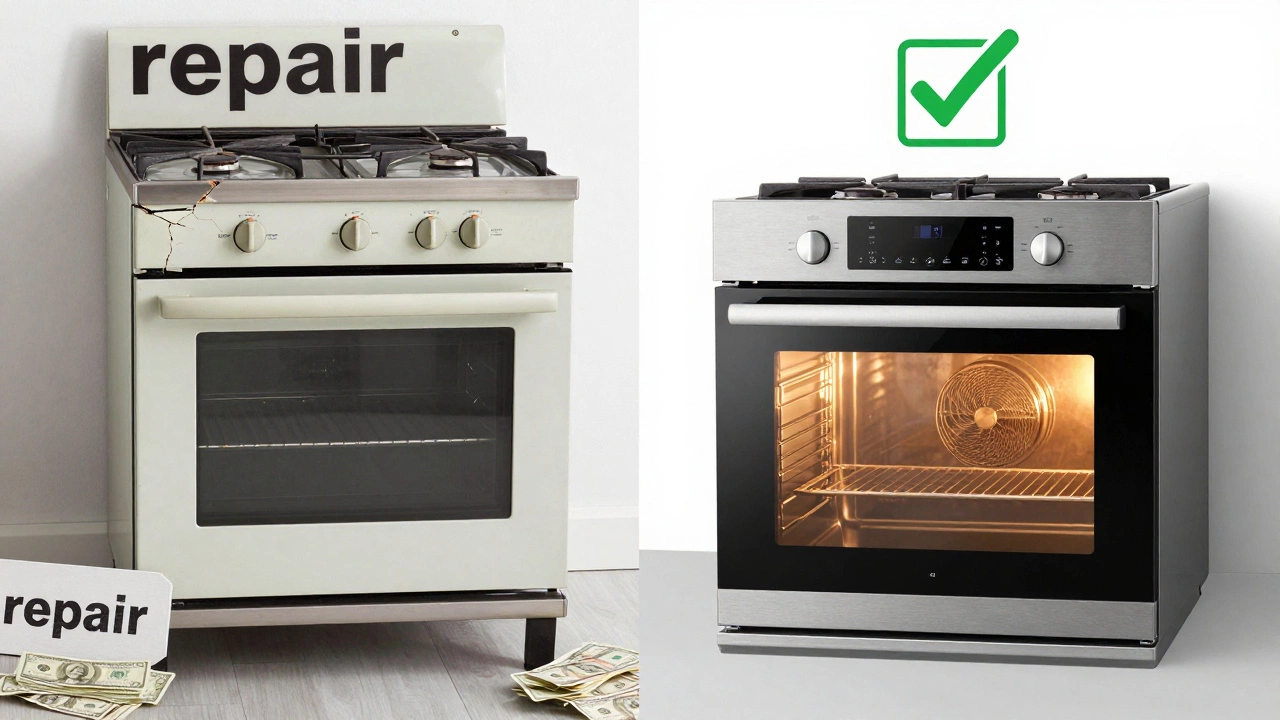
Use this simple rule: if the repair cost is more than 50% of the price of a new oven, walk away.
Here’s a quick comparison:
| Factor | Repair | Replace |
|---|---|---|
| Cost | $100-$500 | $600-$1,800 |
| Time | 1-3 hours | 1-2 days (delivery + install) |
| Energy Efficiency | Same as before | Up to 25% better with new models |
| Warranty | 30-90 days on parts | 1-5 years on new unit |
| Features | Same old controls | Smart tech, convection, self-cleaning |
Modern gas ovens use less gas, heat more evenly, and come with safety features like automatic shut-off and flame failure detection. If you’re paying $400 to fix a 12-year-old oven that still uses 18% more gas than a new one, you’re not saving money-you’re just delaying the inevitable.
What to Look for in a Repair Technician
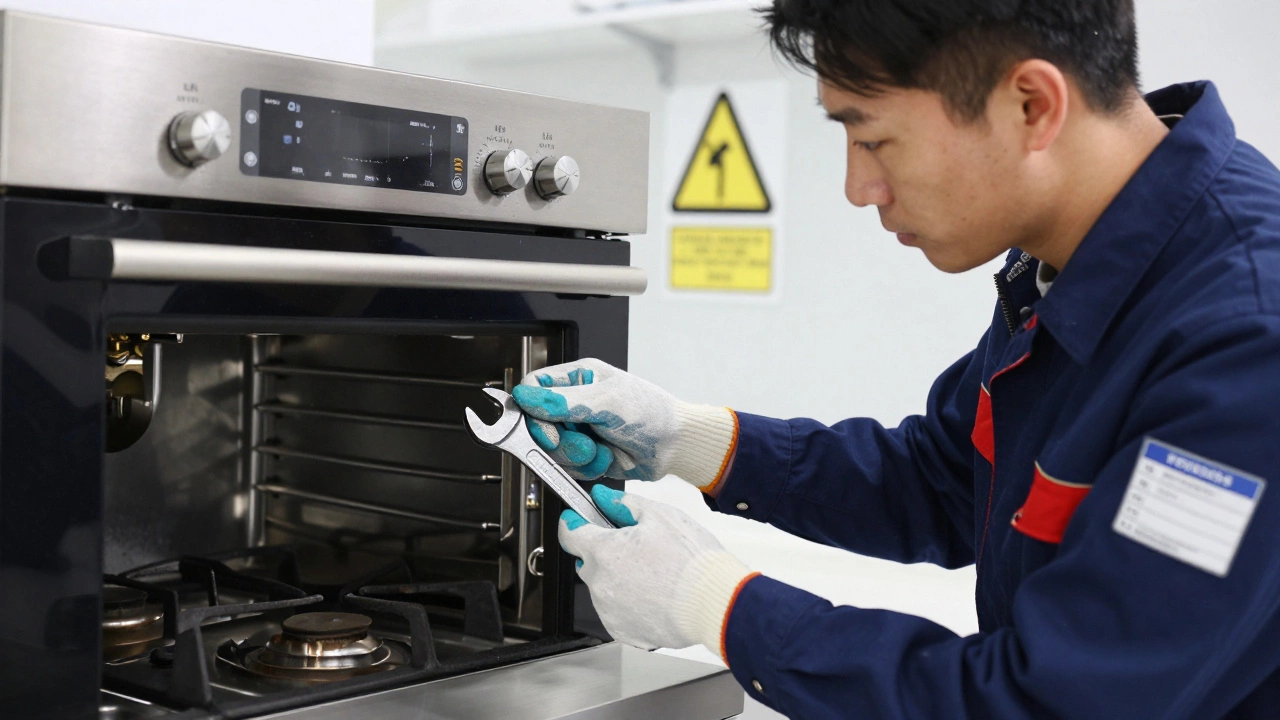
Not every handyman can safely work on gas appliances. Here’s what to check before you hire someone:
- Gas certification - They must be licensed by your state or local gas authority. Ask for their license number and verify it online.
- Experience with your brand - Whirlpool, GE, Samsung, and Bosch ovens have different internal layouts. A tech who’s worked on 50 Frigidaire ovens won’t be as quick with a Viking.
- Written estimate - Any reputable technician will give you a price before starting work. Avoid anyone who says, “I’ll take a look and see what it needs.” That’s how surprise bills happen.
- Parts warranty - Good repair shops guarantee their parts for at least 90 days. If they don’t offer that, walk away.
Don’t be fooled by cheap online quotes. A $99 service call that turns into a $450 repair is a trap. The average diagnostic fee for a gas oven is $75-$125, and it’s usually applied to the final repair cost if you go ahead.
DIY: What You Can and Can’t Do
Some fixes are safe for homeowners. Others are dangerous.
Safe DIY tasks:
- Cleaning burner ports with a toothpick or needle
- Wiping down the oven interior to remove grease buildup
- Checking that the gas shut-off valve behind the oven is fully open
- Replacing the oven light bulb (if accessible)
Never DIY:
- Replacing the gas valve
- Testing or replacing the igniter without a multimeter
- Adjusting gas pressure
- Working on the control board or wiring
One homeowner in Ohio tried replacing his igniter without turning off the gas. He ended up with a small flame that burned for 12 minutes before he realized what was happening. No one got hurt, but the fire department came anyway. Don’t be that person.
What to Do Right Now
If your gas oven isn’t working, here’s what to do in the next 10 minutes:
- Turn off the gas valve behind the oven. It’s usually a lever that turns 90 degrees.
- Don’t use the oven until it’s fixed.
- Check if the pilot light is out (on older models). If it is, follow the manufacturer’s instructions to relight it-only if you’re comfortable.
- Look up your oven’s model number (usually on a sticker inside the door or on the back).
- Call a licensed gas appliance technician. Ask if they carry parts for your brand.
If you’re unsure whether to repair or replace, take a photo of the model number and send it to two local repair shops. Ask them: “Is this worth fixing?” Most will give you a free opinion.
How Long Do Repairs Last?
There’s no guarantee, but here’s what you can expect:
- Igniter replacement: lasts 3-7 years
- Thermostat or sensor: 5-10 years
- Gas valve: 4-8 years
- Thermocouple: 2-5 years
If you’re replacing a part that’s already failed once, expect a shorter lifespan. That’s because the rest of the system is wearing out too.
One rule of thumb: if a repair costs more than $300 and your oven is over 10 years old, you’re buying time-not a solution.
Final Thought: It’s Not Just About the Oven
Your gas oven isn’t just a cooking tool. It’s part of your home’s safety system. A broken igniter might seem harmless, but if it’s causing gas to leak into your kitchen, that’s a risk no one should ignore.
Repairing a gas oven is often the smart choice-especially if it’s under 10 years old and the problem is simple. But if the cost keeps climbing, the repairs keep failing, or your oven feels like a relic from the 2000s, it’s time to think about what’s next.
Don’t wait until the oven dies completely. Start researching new models now. You’ll thank yourself when you’re not scrambling for a replacement during the holidays.
Can I fix a gas oven myself?
You can handle basic cleaning and checking the gas valve, but never attempt to replace gas lines, igniters, or valves without training. Gas leaks can cause fires or explosions. If you’re unsure, call a professional.
How much does it cost to repair a gas oven?
Most repairs cost between $100 and $500. Simple fixes like replacing an igniter or sensor run $150-$300. Complex repairs involving gas valves or control boards can hit $500-$700. Always get a written estimate before work begins.
Is it cheaper to repair or replace a gas oven?
If the repair costs more than half the price of a new oven, replacement is usually the better choice. New models are more energy-efficient and come with warranties. For ovens over 10-12 years old, replacement often makes more financial sense.
How long does a gas oven last?
The average lifespan of a gas oven is 13 to 15 years. With proper maintenance, some last up to 20 years. But after 15, parts become harder to find, and efficiency drops. Most homeowners replace their ovens by then.
What should I do if I smell gas from my oven?
Turn off the gas supply immediately. Open windows. Do not turn on lights, use phones, or create sparks. Leave the house and call your gas company or emergency services from outside. Never try to fix a gas leak yourself.