If your extractor fan is making noise but not pulling air, or if your kitchen still smells like last night’s stir-fry, it’s not just in your head. The fan might be failing-and ignoring it can lead to mold, sticky grease buildup, and even poor indoor air quality. Checking if your extractor fan is working properly doesn’t require a toolbox or an electrician. With a few simple steps, you can diagnose the issue yourself in under 10 minutes.
Start with the obvious: Is it plugged in and turned on?
It sounds basic, but more than 30% of extractor fan complaints turn out to be simple power issues. Check the switch on the wall or the button on the fan itself. Some models have a timer that turns off after 10 or 15 minutes. If you’re unsure, leave it running for 20 minutes and come back. If it’s still quiet, move to the next step.
Also, check if the fan is connected to a GFCI outlet or circuit breaker. In kitchens and bathrooms, these are common for safety. If the GFCI has tripped, reset it. You’ll hear a click, and the fan should come back on if that was the issue.
Feel the airflow
Put your hand near the fan’s outlet-either the vent grille on the wall or the external exhaust point outside your house. Turn the fan on to high. You should feel a strong, steady pull of air. If you feel nothing, or just a weak breeze, the fan isn’t moving enough air.
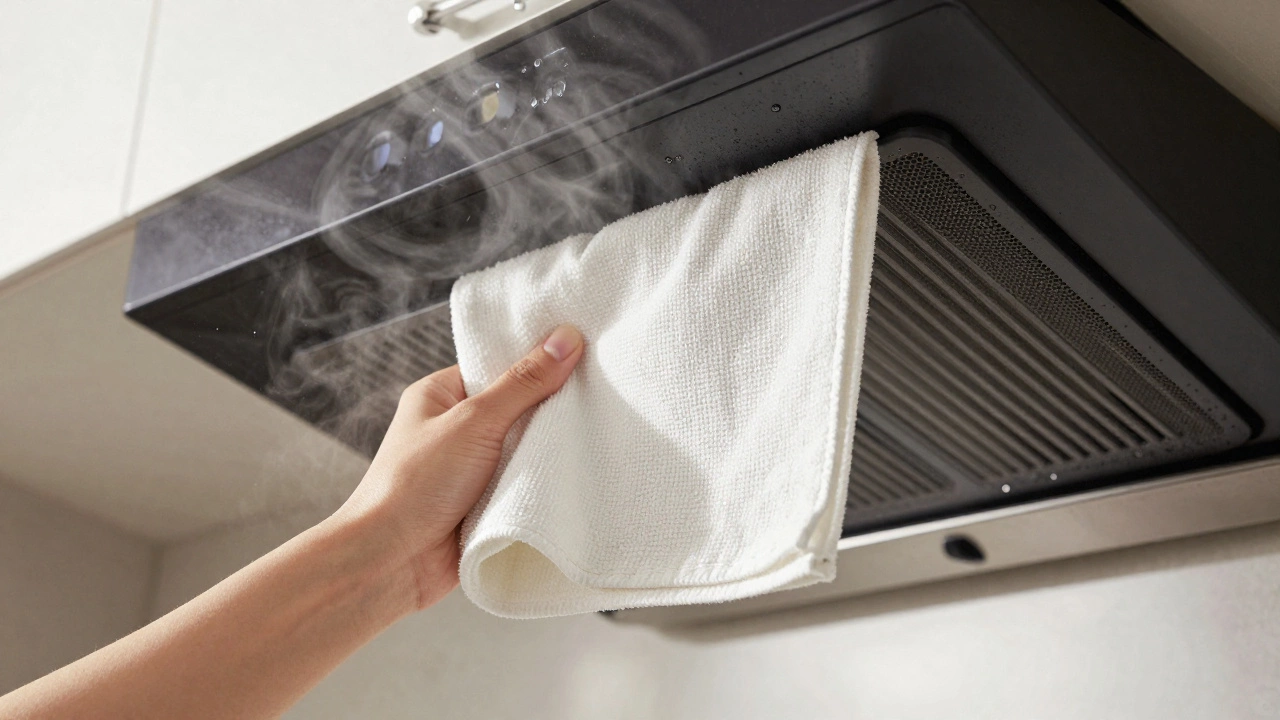
Here’s a trick: Hold a piece of tissue paper or a lightweight kitchen towel up to the grille. If the fan is working, the paper should stick to the grille or flutter vigorously. If it just droops, the airflow is too weak. This test works whether the fan vents through the roof, wall, or into a duct.
Listen for unusual sounds
A working extractor fan makes a low, steady hum-not a screech, rattle, or grinding noise. If you hear any of those, something’s wrong inside.
Grinding sounds usually mean the motor bearings are worn out. Rattling could be a loose blade or mounting. Squealing often points to a dried-up or dirty motor shaft. These aren’t just annoying-they’re signs the fan is wearing out. A fan that’s over 10 years old and making new noises is likely nearing the end of its life.
Check the duct for blockages
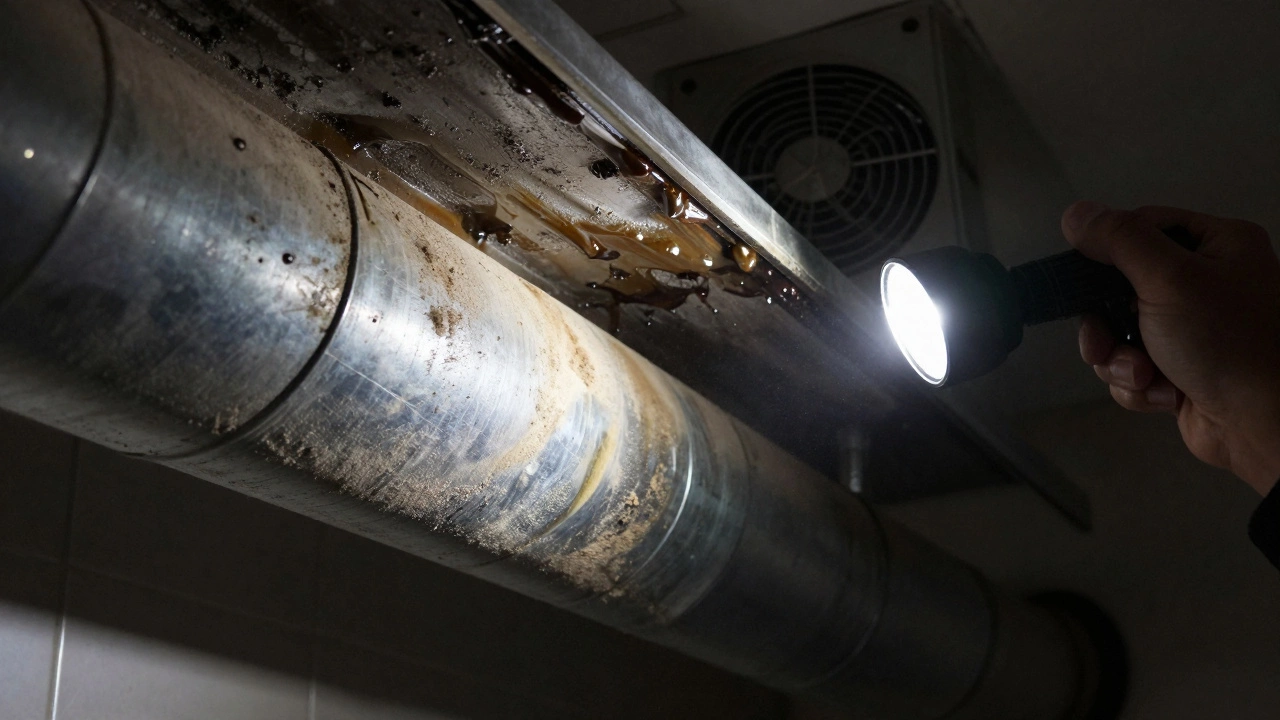
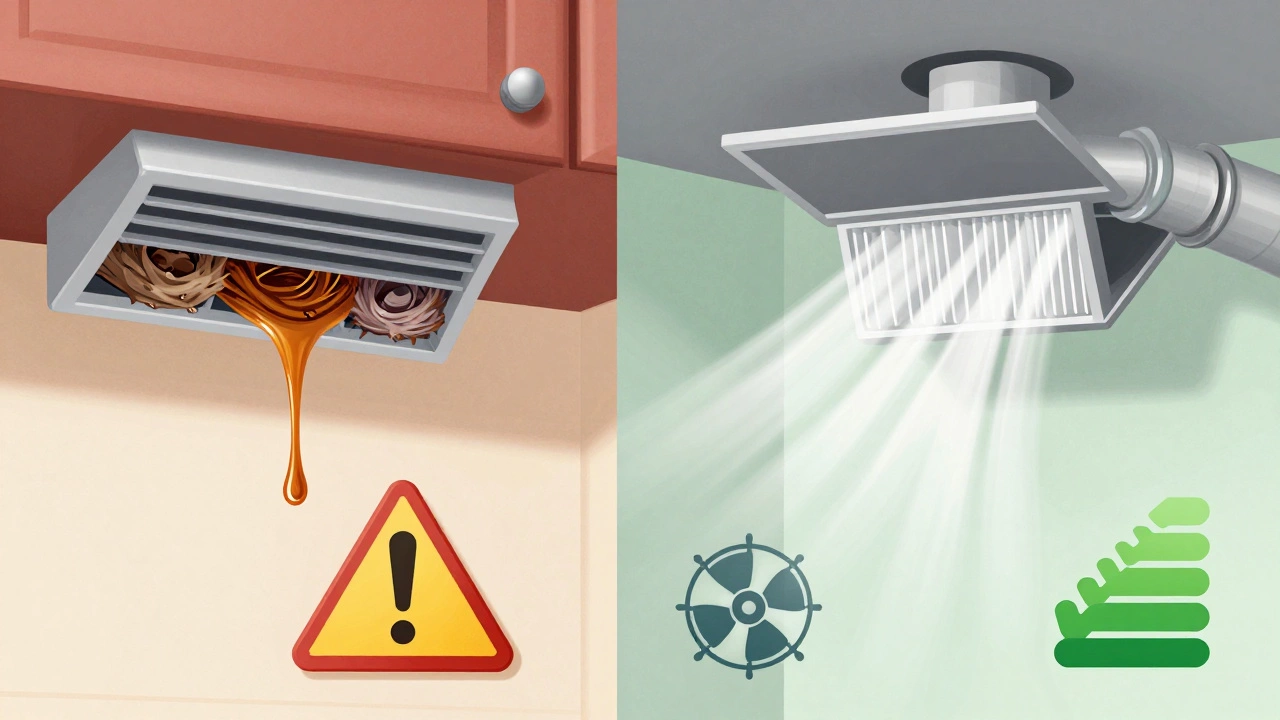
Most extractor fans fail because the duct is clogged, not because the motor is dead. Grease, dust, and even bird nests can build up over time. In Auckland’s humid climate, condensation inside the duct can turn into sticky residue that traps debris.
Turn off the fan and disconnect the duct from the back of the unit. Use a flashlight to look inside. If you see thick, greasy buildup or debris, that’s your problem. You can clean it with a vacuum and a long brush, or remove the duct entirely and wash it with warm soapy water. Let it dry completely before reattaching.
Also check the external vent cap on your roof or wall. Make sure the flapper door opens freely. If it’s stuck shut from rust or dirt, air can’t escape-and the fan will seem weak even if it’s running fine.
Test the speed settings
Many extractor fans have multiple speed settings. If only the high setting works, or if the fan jumps between speeds erratically, the speed controller or capacitor might be failing.
Switch between low, medium, and high. You should hear a clear change in pitch and feel a noticeable difference in airflow. If all settings sound and feel the same, the control board or capacitor is likely faulty. These parts are replaceable, but you’ll need to match the exact model number.
Check for reverse airflow
It’s rare, but sometimes air flows the wrong way-especially if the duct is poorly installed or the vent cap is damaged. If you smell smoke, cooking odors, or damp air coming into your kitchen when the fan is off, the system has a reverse airflow issue.
This usually happens when the external vent doesn’t seal properly. Wind pressure can push air back down the duct. A faulty or missing backdraft damper is the usual culprit. Replacing the vent cap with a new one that has a tight-sealing flapper solves this in most cases.
When to call a professional
You can fix most extractor fan issues yourself. But if you’ve checked all the above and the fan still doesn’t work, it’s time to call someone. Signs you need professional help:
- The fan won’t turn on at all, even after resetting breakers and checking power
- You smell burning plastic or see scorch marks near the motor
- The motor hums but the blades don’t spin (this could mean a seized bearing or broken capacitor)
- You’re uncomfortable working with electrical components
Don’t risk shock or fire. A licensed appliance technician can test the motor’s voltage, check for short circuits, and replace parts safely. In Auckland, many local repair services offer same-day extractor fan fixes for under $150, including parts.
Prevent future problems
Once your fan is working again, keep it that way. Clean the grease filter every month. Wipe down the grille with warm soapy water every three months. Replace the fan if it’s over 10 years old-modern models are quieter, more efficient, and use 40% less energy.
Also, don’t run the fan on low for long periods. Use high for 15-20 minutes after cooking, then turn it off. Running it constantly wears out the motor faster.
Good ventilation isn’t just about removing smells. It’s about protecting your home from moisture damage, mold, and long-term health risks. A working extractor fan is one of the simplest, cheapest ways to keep your kitchen-and your air-healthy.
Why does my extractor fan run but not pull air?
If the fan spins but doesn’t move air, the duct is likely clogged with grease or debris, or the external vent cap is stuck. Check the duct for blockages and ensure the flapper door on the outside opens freely. A dirty filter or sealed vent can stop airflow even if the motor is working fine.
How do I know if my extractor fan motor is dead?
A dead motor usually makes no sound at all when turned on, even if power is reaching the unit. If you hear a humming noise but the blades don’t move, the motor might be seized or the capacitor is blown. You can test this by gently spinning the blades by hand-if they move freely but won’t start on their own, the capacitor is likely the issue.
Can a dirty filter cause my extractor fan to stop working?
Yes. A clogged grease filter restricts airflow so much that the motor has to work harder, which can cause it to overheat or shut off. In extreme cases, the fan may stop spinning entirely. Clean the filter monthly-soak it in hot, soapy water or run it through the dishwasher if it’s dishwasher-safe.
Is it normal for my extractor fan to be noisy?
A low hum is normal, but rattling, squealing, or grinding noises are not. These sounds usually mean loose parts, worn bearings, or a failing motor. If the noise started suddenly, it’s a sign of wear or damage. Don’t ignore it-continued use can lead to complete motor failure.
How long should an extractor fan last?
Most extractor fans last 8 to 12 years with regular cleaning. Cheaper models may only last 5 years, especially if they’re used daily and never maintained. If your fan is over 10 years old and starting to act up, replacement is usually more cost-effective than repair.
Should I replace my extractor fan or just repair it?
If the issue is a dirty filter, clogged duct, or bad capacitor, repair is fine. But if the motor is failing, the control board is damaged, or the unit is over 10 years old, replacement is smarter. New fans are quieter, more energy-efficient, and come with better warranties. A $200-$300 modern fan can save you money on electricity and last 15+ years.