Water Heater Reset Simulator
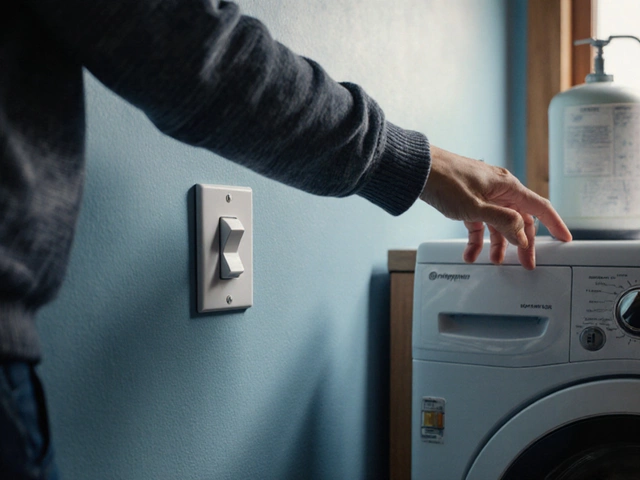
Turn off power/gas and wait for the unit to cool down.
Estimated cooling time based on scenario and type.
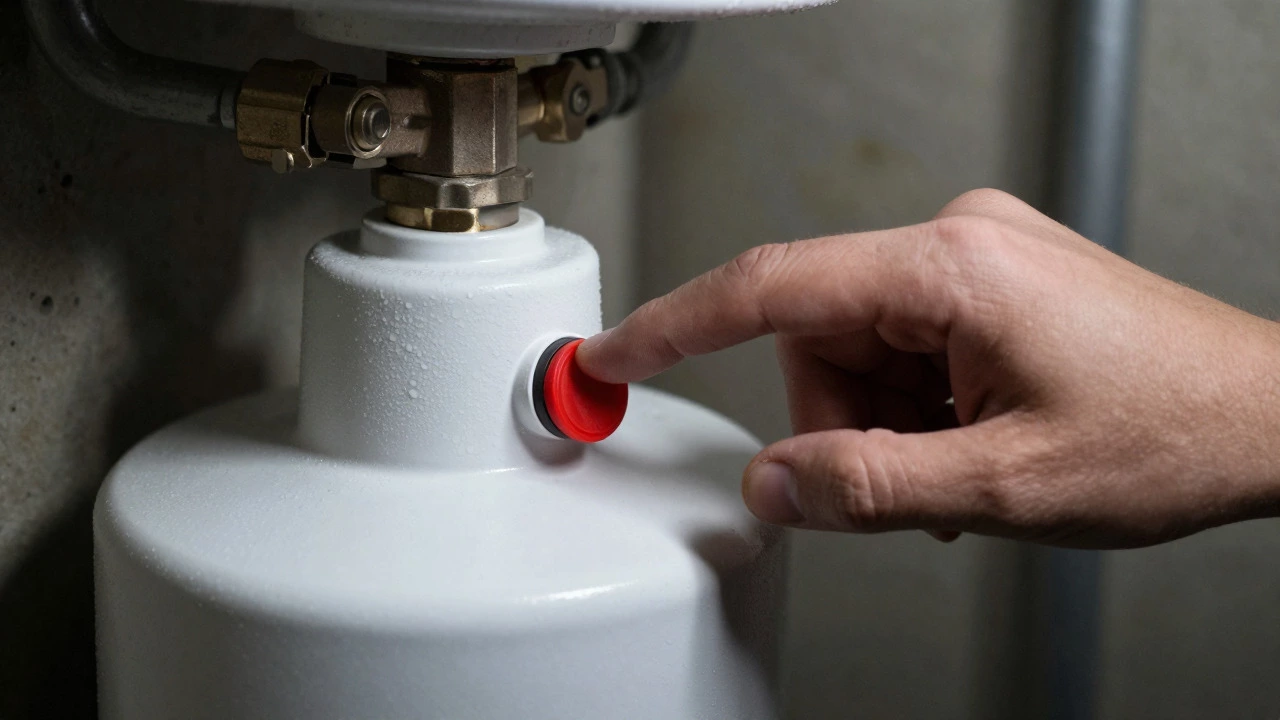
Press and hold the reset button until it clicks and stays down.
Target Hold Time: ...
The fault condition still exists. Do not force repeated resets.
Restore energy source and monitor the unit.
Listen for unusual noises or smells. Check for leaks.
There’s nothing more frustrating than stepping into a shower only to be greeted by ice-cold water. You check the pilot light, it’s out. You relight it. Still no hot water. Then you spot that little red or black button on the side of your tank-the reset button. You press it, wait ten seconds, and hope for the best. But how long should you actually hold it? And what if it pops back up immediately?
The short answer is this: hold the reset button until it clicks and stays down. There is no fixed timer like “10 seconds” or “30 seconds.” The duration depends entirely on whether the underlying issue has been resolved. If the problem persists, holding it longer won’t help-it might even mask a dangerous fault.
What Is the Reset Button Really Doing?
To understand timing, you first need to know what the button controls. On most gas and electric storage water heaters, that button is part of the High-Limit Thermostat a safety device that cuts power or gas flow when water temperature exceeds a safe threshold, typically around 145°F (63°C). It acts as a backup to your main thermostat. When it trips, it breaks the circuit to the burner or heating elements. Pressing the button resets the internal switch, allowing the system to restart.
This isn’t just a convenience feature. It’s a critical safety mechanism designed to prevent scalding or tank failure due to overheating. So when you press it, you’re not just “restarting” the unit-you’re re-arming a safety interlock. That’s why context matters more than time.
When to Hold the Button: Scenarios and Timings
Here’s where practical experience beats generic advice. Different failure modes require different approaches:
- If the button popped up after a power surge or brief overload: Wait 5-10 minutes for components to cool slightly, then press and hold until you feel a firm click. Release slowly. If it stays down, you’re likely good. Total hold time: 3-5 seconds.
- If the button popped up during normal operation with no obvious cause: This suggests the high-limit thermostat may be faulty or the main thermostat is stuck. In this case, don’t rush. Turn off the power or gas supply first. Let the tank sit for 15-20 minutes. Then press and hold the reset button for 10-15 seconds until it clicks. If it holds, monitor closely for the next hour.
- If the button pops back up within seconds of releasing: Stop trying to reset it. This usually means the root cause-like a failed heating element, clogged dip tube, or stuck thermostat-is still active. Forcing repeated resets can damage the control board or create a fire hazard.
A common mistake homeowners make is treating the reset button like a reboot key on a computer. But unlike software, mechanical and electrical faults don’t clear themselves with persistence. If it doesn’t stay down the first or second time, something else is wrong.
Electric vs. Gas Water Heaters: Does It Matter?
Yes, significantly. The reset procedure differs based on your unit type because the safety mechanisms interact differently with their energy sources.
| Factor | Electric Water Heater | Gas Water Heater |
|---|---|---|
| Power/Gas Supply Before Reset | Must turn off breaker at panel | Should turn gas valve to OFF position |
| Typical Hold Duration | 3-5 seconds after cooling | 5-10 seconds; listen for ignition |
| Risk of Immediate Re-Trip | Higher if heating element is shorted | Higher if thermocouple is weak |
| Post-Reset Verification | Check both upper and lower breakers | Confirm pilot flame remains lit |
For electric units, the high-limit thermostat often shares a circuit with the main thermostat. If one heating element fails and draws excessive current, the high-limit will trip. Simply resetting without addressing the bad element will lead to immediate re-tripping. Always isolate power before touching any component near the access panels.
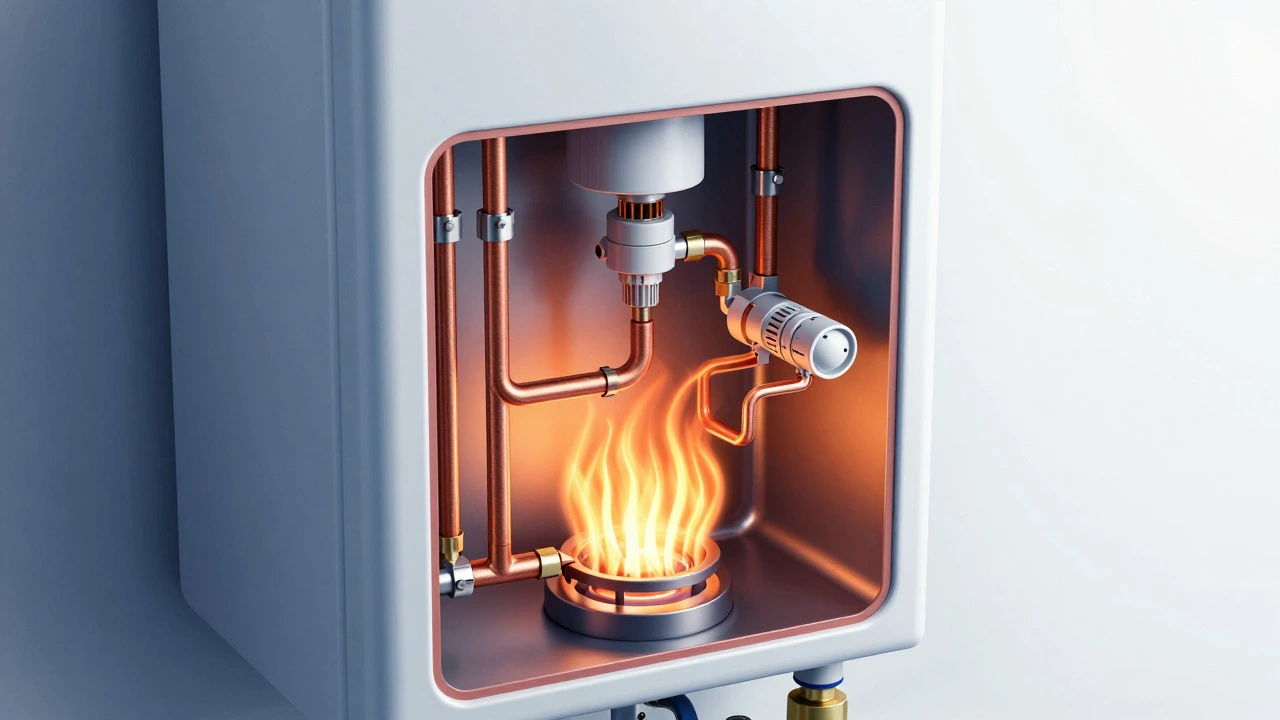
Gas units add another layer: the thermocouple. If the pilot flame is weak or the thermocouple isn’t generating enough millivolts to hold the gas valve open, the system shuts down. The reset button may appear to work briefly, but the flame will go out again within minutes. In these cases, cleaning or replacing the thermocouple is necessary-not just pressing buttons.
Common Pitfalls That Make Resets Fail
Even if you follow the correct hold time, several issues can sabotage your efforts. Here are the top three I see in the field:
- Sediment buildup at the bottom of the tank. Over years, mineral deposits settle and insulate the heating elements or burner from the water. This causes localized overheating, triggering the high-limit thermostat. No amount of resetting fixes this-you need to flush the tank or replace sediment-prone components.
- Faulty main thermostat. If the primary thermostat sticks in the “on” position, it keeps heating past the set point. The high-limit trips as a backup. Resetting the high-limit without fixing the main thermostat means the cycle repeats every few hours.
- Corroded wiring or loose connections. Especially in older units, oxidation on terminal screws can cause intermittent resistance spikes. These mimic overloads and trip the safety device. Tightening connections or replacing corroded terminals resolves this.
Notice a pattern? None of these are solved by holding the button longer. They require diagnosis. That’s why “how long to hold” is the wrong question if the real issue is mechanical or electrical degradation.
When to Call a Professional Instead of Resetting
Some situations call for immediate professional intervention rather than DIY resets. Consider calling a licensed technician if:
- The reset button has tripped more than twice in 24 hours.
- You smell gas near the unit (for gas models)-evacuate and call your utility company first.
- Water leaks from the T&P (temperature and pressure) relief valve after resetting.
- The unit is over 10 years old and has never been serviced.
In Auckland, where humidity accelerates corrosion and seismic activity can stress mounting brackets, regular maintenance is especially important. A yearly inspection can catch failing thermostats, weak thermocouples, and sediment accumulation before they cause costly failures.
Step-by-Step Safe Reset Procedure
Follow these steps carefully. Skipping any can lead to injury or further damage.
- Turn off the energy source. For electric: flip the dedicated breaker(s) at your panel. For gas: rotate the gas valve on the pipe to the OFF position.
- Allow cooling time. Wait at least 10 minutes for electric units, 15 for gas. This prevents thermal shock to components.
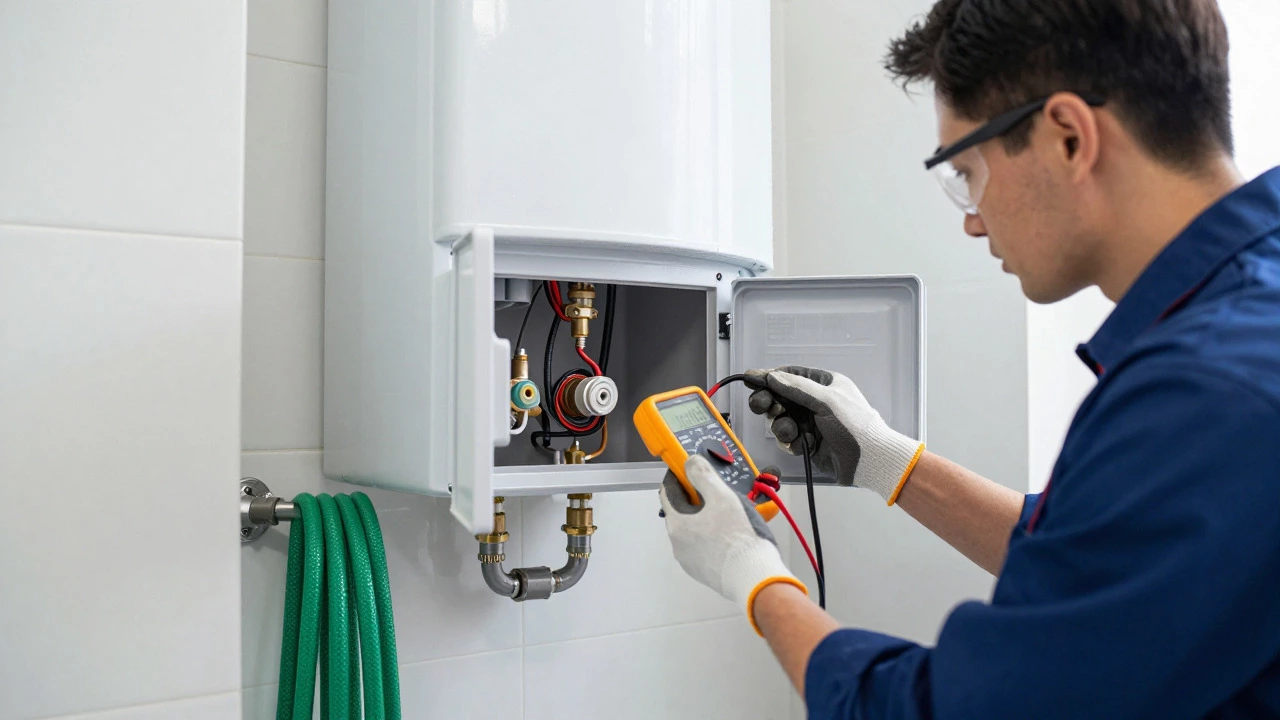
- Locate the reset button. It’s usually behind an access panel near the top of the tank. Remove the panel carefully-wires may be live if you forgot to cut power.
- Press and hold the button. Use a non-conductive tool if needed. Hold until you feel a distinct click. Don’t release abruptly.
- Restore energy source. Flip the breaker back on or turn the gas valve to ON. For gas, relight the pilot according to manufacturer instructions.
- Monitor for 30 minutes. Check that hot water flows normally and the unit doesn’t trip again. Listen for unusual noises or smells.
If everything works, great. If not, stop here and diagnose the root cause. Repeated resets without resolution accelerate wear on the high-limit thermostat itself, which is expensive to replace.
Maintenance Tips to Prevent Future Trips
Prevention is far cheaper than repair. Implement these habits to keep your water heater running smoothly:
- Flush the tank annually. Connect a garden hose to the drain valve and run cold water through until it runs clear. This removes sediment that causes overheating.
- Test the T&P valve monthly. Lift the tab briefly to ensure it releases pressure properly. A stuck valve can lead to dangerous pressure buildup.
- Inspect the anode rod every 2-3 years. If it’s heavily corroded, replace it. A depleted anode rod allows the tank itself to rust, leading to leaks and electrical shorts.
- Keep the area around the unit dry and ventilated. Moisture promotes corrosion on electrical components, especially in coastal areas like Auckland.
These small actions extend the life of your water heater by 5-10 years and reduce the likelihood of emergency shutdowns.
Is it dangerous to reset a water heater multiple times?
Yes, if done without addressing the root cause. Each trip stresses the high-limit thermostat’s internal contacts. Frequent cycling can weld them shut or cause premature failure, leaving you with no hot water and a potentially unsafe condition. Limit resets to two attempts per incident unless you’ve verified the cause is resolved.
Why does my water heater reset button pop up immediately after I release it?
This indicates the fault condition still exists. Common causes include a shorted heating element, a stuck main thermostat, or insufficient pilot flame in gas units. Stop resetting and investigate these components. Continuing to force the reset can damage the control system.
Do all water heaters have a reset button?
Most storage tank water heaters do, but tankless models often use digital displays or error codes instead of physical reset buttons. Condensing units may have integrated safety systems that require technician service for resets. Check your owner’s manual for model-specific procedures.
How often should I inspect my water heater’s thermostat?
Have a professional inspect the main and high-limit thermostats every 3-5 years, or sooner if you notice inconsistent temperatures or frequent trips. Testing requires specialized tools to verify calibration accuracy, so DIY checks are limited to visual inspection for burn marks or corrosion.
Can a bad anode rod cause the reset button to trip?
Indirectly, yes. A depleted anode rod allows the steel tank to corrode, which can create conductive paths that interfere with electrical circuits or cause uneven heating. While rare, tank corrosion is a known contributor to erratic thermostat behavior in aging units.