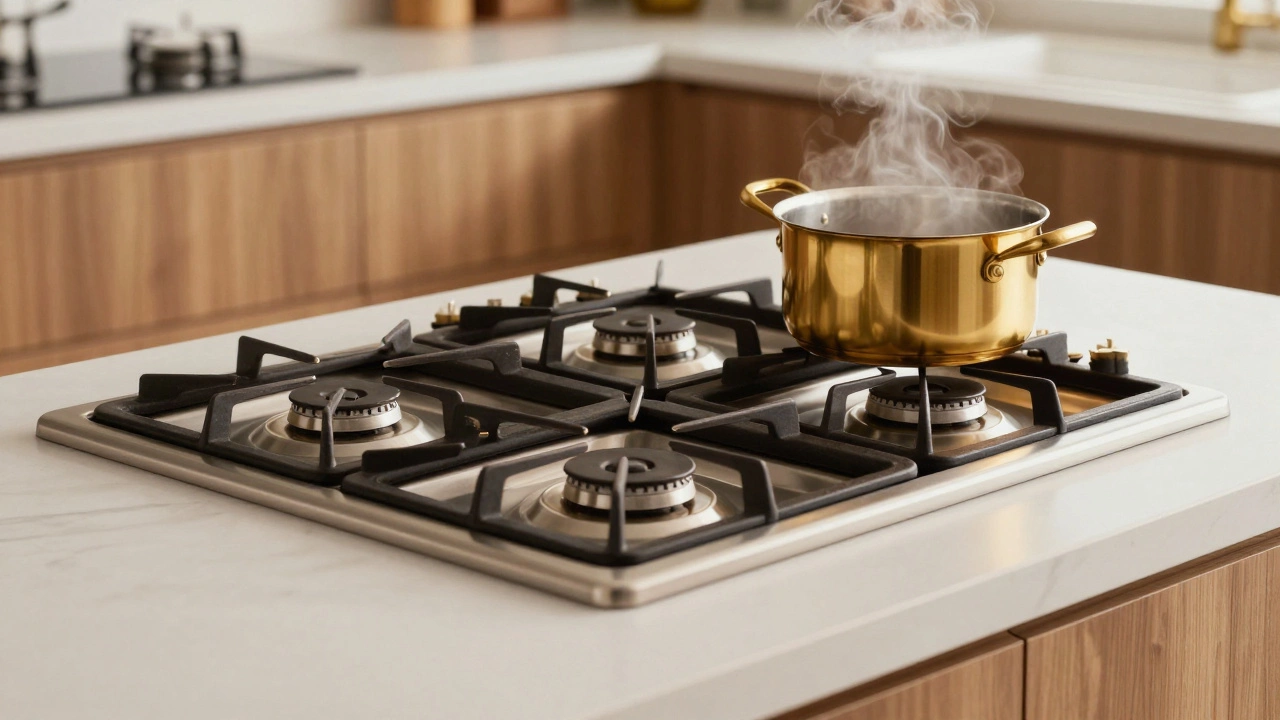
Most people don’t think about their hob until it stops working. Then suddenly, you’re staring at a broken burner, a flickering control panel, or a cracked glass surface - and wondering, how long should hobs last? The answer isn’t simple. It depends on the type, how often you use it, how well you clean it, and whether you’ve ignored warning signs for years.
Let’s cut through the guesswork. A well-maintained gas hob can easily last 15 to 20 years. Electric coil hobs? Around 10 to 15 years. Induction hobs, the newest tech, can push 15 to 20 years too - if you treat them right. But if you dump grease into the burners, never clean the drip pans, or let spills bake on for months? You could be replacing it in five.
What Determines a Hob’s Lifespan?
Not all hobs are created equal. The materials, design, and how they’re built make a huge difference.
Gas hobs use brass or stainless steel burners, ceramic igniters, and metal control knobs. These parts are built tough. But they’re not indestructible. Rust from spilled water, grease buildup clogging burner ports, and worn-out igniters are the top killers. A single cracked burner cap can turn a $50 repair into a $300 replacement if you wait too long.
Electric coil hobs are simpler. The heating elements are exposed coils that sit in metal housings. Over time, those coils oxidize, warp, or crack. The wiring underneath can get brittle. If you’ve ever seen a coil that’s turned black and brittle at the ends? That’s it. Done. Most last 10 years, but heavy daily use - like cooking three meals a day for a family - can shorten that to 7.
Induction hobs are the most advanced. They use electromagnetic fields to heat the pan directly, so the surface stays cooler. That means less wear on the glass. But the electronics inside? That’s the weak spot. Power surges, moisture from steam, or even a dropped pot can fry the control board. A good induction hob with a quality circuit board lasts 15+ years. A cheap one? Maybe 8.
Signs Your Hob Is Reaching the End
You don’t need to wait for it to die completely. Look for these red flags:
- One burner won’t light - even after replacing the igniter or checking gas flow. If it’s not the spark module, it’s likely a worn-out valve or internal corrosion.
- Uneven heating - food cooks on one side but stays raw on the other. That’s usually a failing element or blocked gas port.
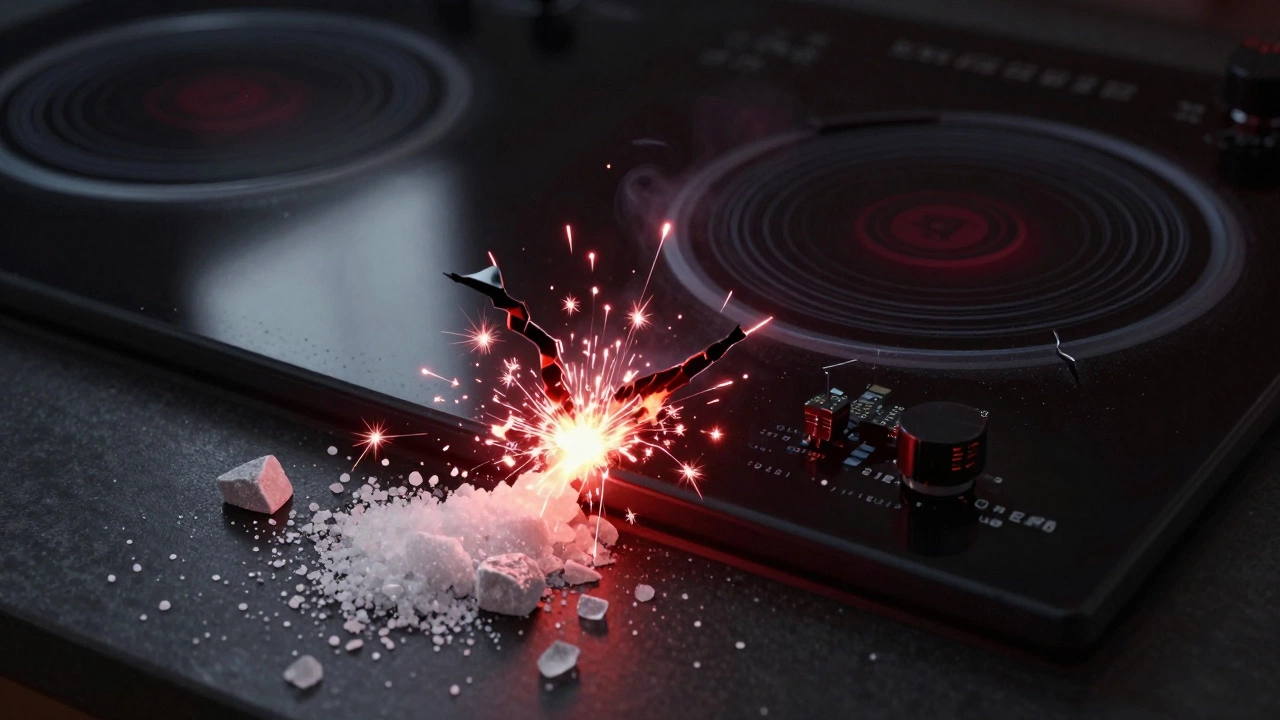
- Sparks or buzzing sounds - especially on electric or induction hobs. That’s not normal. It’s arcing. It’s dangerous. Turn it off.
- Cracked or bubbled glass surface - on induction or ceramic hobs. Even a small crack can let moisture in and short out the electronics.
- Control panel glitches - buttons that don’t respond, displays that flicker, or random shut-offs. That’s usually a failing circuit board. Repairing it costs 60% of a new hob.
Here’s the hard truth: if your hob is over 12 years old and you’re seeing two or more of these issues, replacement is smarter than repair. The cost of parts and labor adds up fast. And older models don’t match today’s efficiency standards.
How to Make Your Hob Last Longer
Extending your hob’s life isn’t about fancy tools. It’s about habits.
- Clean spills immediately - especially sugar, salt, or acidic sauces. Let them harden, and they’ll eat into the surface or corrode metal parts.
- Use the right cookware - flat-bottomed pots on induction. Avoid dragging heavy pans. Scratches on the glass aren’t just ugly - they weaken it.
- Check burner caps and drip pans monthly - remove them, wash with warm soapy water, and dry completely. Clogged burners = uneven heat = more strain on the system.
- Don’t overload circuits - if your hob shares a circuit with other appliances, it can cause voltage drops. That stresses the electronics.
- Install a surge protector - especially for induction hobs. A single lightning strike or power spike can kill the control board.
Simple, right? But most people skip these steps. They think, "It’s just a hob." But a hob is one of the most-used appliances in the house. Treat it like your car - regular checkups keep it running.
When to Repair vs. Replace
Here’s a quick guide:
| Condition | Repair? | Replace? |
|---|---|---|
| Under 5 years old, single burner issue | Yes - parts are cheap and available | No |
| 5-10 years old, multiple issues | Maybe - if repair costs under $200 | Yes - if repair costs over $300 |
| Over 10 years old, any major failure | No | Yes - efficiency drops, parts are obsolete |
| Cracked glass surface | No | Yes - safety risk, replacement cost is lower than repair |
| Control panel malfunction | Only if under warranty | Yes - board replacement costs 70%+ of new unit |
Here’s a real example: A customer called because two burners on her 14-year-old gas hob wouldn’t ignite. The repair quote? $280 for new valves and labor. A new mid-range gas hob? $550. She chose to replace it. Why? Because the new one had better safety shutoffs, a cleaner design, and used 20% less gas. The extra $270 paid for itself in 18 months.
What’s the Average Cost of Replacement?
Prices vary by type and brand:
- Basic gas hob - $400-$700
- Mid-range gas with sealed burners - $800-$1,200
- Electric coil hob - $350-$600
- Induction hob (4-burner) - $900-$1,600
Don’t forget installation. If you’re replacing a built-in hob, you might need new cutouts, gas lines, or electrical upgrades. That adds $150-$400. Always get two quotes. Some installers charge extra for hauling away the old unit - don’t assume it’s included.
What About Used or Refurbished Hobs?
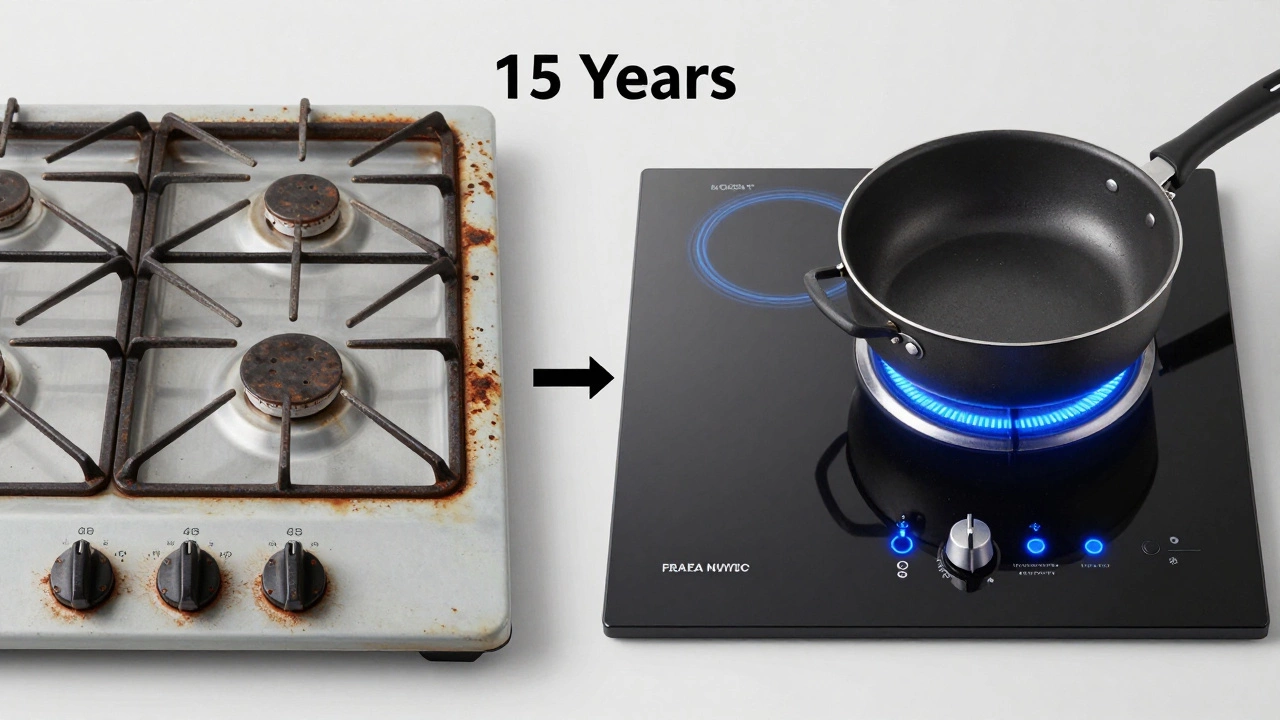
Buying a used hob? Risky. Even if it looks clean, internal parts are worn. A refurbished hob from a certified dealer? That’s different. Reputable companies replace worn burners, test electronics, and offer 1-year warranties. You can save 30-40% off new prices. Just check the warranty terms. If it’s only 90 days? Walk away.
What’s Next After Replacement?
Once you install a new hob, mark your calendar. Set a reminder for annual maintenance - even if it’s working fine. Clean the burners. Check the gas lines (for gas hobs). Test the safety sensors. That’s it. You’ll get another 15 years out of it.
And if you’re still using an old hob? Don’t wait for it to fail. Start saving now. A $500 hob isn’t a luxury - it’s a necessity. And a hob that works reliably? That’s peace of mind.
How long does a gas hob last on average?
A well-maintained gas hob typically lasts 15 to 20 years. Burners, valves, and igniters are built to last, but neglect - like letting grease build up or ignoring small leaks - can cut that in half. Regular cleaning and annual checks help maximize lifespan.
Can you repair a cracked hob surface?
No. A cracked glass surface on an induction or ceramic hob is a safety hazard. Moisture can seep in and short-circuit the electronics, which can lead to electric shock or fire. Replacement of the entire glass panel is required, and in most cases, it’s cheaper to replace the whole unit.
Is it worth repairing a 10-year-old hob?
It depends. If the repair costs less than $250 and fixes one issue (like a single faulty burner), yes. But if multiple parts are failing, or the control panel is glitchy, replacement is smarter. Older hobs are less efficient and parts are harder to find. New models save energy and have better safety features.
Do induction hobs last longer than gas hobs?
In terms of durability, both can last 15-20 years with proper care. But induction hobs have fewer moving parts, so they’re less prone to mechanical wear. The downside? Their electronic control boards are more sensitive to power surges and moisture. Gas hobs are simpler to repair, but require more frequent cleaning.
What’s the most common reason hobs fail?
The most common cause is neglect. Spills left to bake on, grease clogging burners, water seeping into controls, and ignoring small sparks or smells. These issues don’t cause instant failure - they slowly degrade components until something breaks. Regular maintenance prevents 80% of failures.
Don’t let your hob become a ticking time bomb. Know the signs. Clean it. Monitor it. Replace it before it leaves you without a working kitchen. Your next meal shouldn’t depend on luck.