Glass Hob Repair & Replacement Cost Estimator
Why this advice?
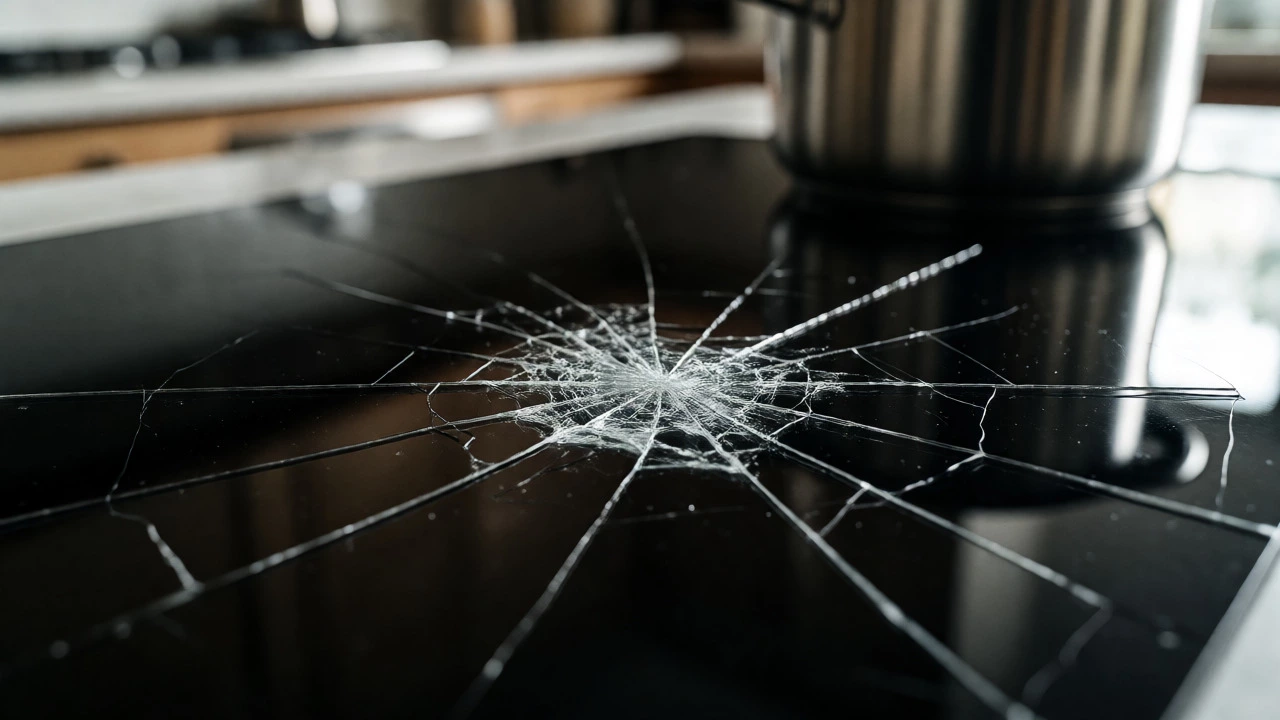
You’re making dinner, and suddenly-crack. A pot slips, or maybe you just set something heavy down too hard. Now there’s a spiderweb fracture across your sleek glass surface. The first thought? "Is my expensive appliance ruined?" The second? "Can I fix this myself, or do I need to call someone?"
The short answer is yes, you can repair a glass hob, but it’s rarely as simple as slapping on some glue. It depends entirely on the type of damage, the age of your unit, and whether the break has compromised the heating elements underneath. Before you panic, let’s look at what’s actually happening inside that ceramic glass.
Understanding Your Glass Hob: More Than Just Glass
First off, it’s not actually glass. What you have is ceramic glass, specifically a brand called Schott Ceran or similar variants like EuroKera. This material is a crystalline ceramic that can withstand temperatures up to 700°C (1300°F) while remaining smooth enough to clean with a razor blade. Unlike window glass, which shatters into shards, ceramic glass tends to crack or chip because it’s designed to be thermally shock-resistant, not impact-proof.
When you see a crack, you aren’t just looking at a cosmetic issue. That glass acts as a seal for the electrical components below. If moisture gets through a deep crack, it can short out the heating element or the control board. So, while a tiny scratch is fine, a spreading crack is a ticking time bomb for your electronics.
Cracks vs. Chips: Which One Can You Fix?
Not all damage is created equal. Here is how to tell if your hob is salvageable without replacing the whole top.
| Type of Damage | Description | Repairability | Risk Level |
|---|---|---|---|
| Surface Scratch | Light abrasion from pots or cleaning pads; no depth. | Polish only | Low |
| Chip | Small missing piece of glass, usually near an edge or corner. | Fillable with epoxy | Medium |
| Hairline Crack | Thin line visible under light; hasn't spread yet. | Monitor or Seal | High |
| Deep Fracture | Visible gap; crack runs across a burner zone. | Glass Replacement | Critical |
If you have a small chip, you might get away with a DIY fix using a specialized high-temperature epoxy resin. These kits are available online and in hardware stores here in Auckland. They fill the void and prevent water ingress. However, if you have a long crack running across a burner, sealing it won’t restore structural integrity. Every time you turn that zone on, heat expands the glass, potentially widening the crack until it splits completely.
The DIY Route: When to Try It Yourself
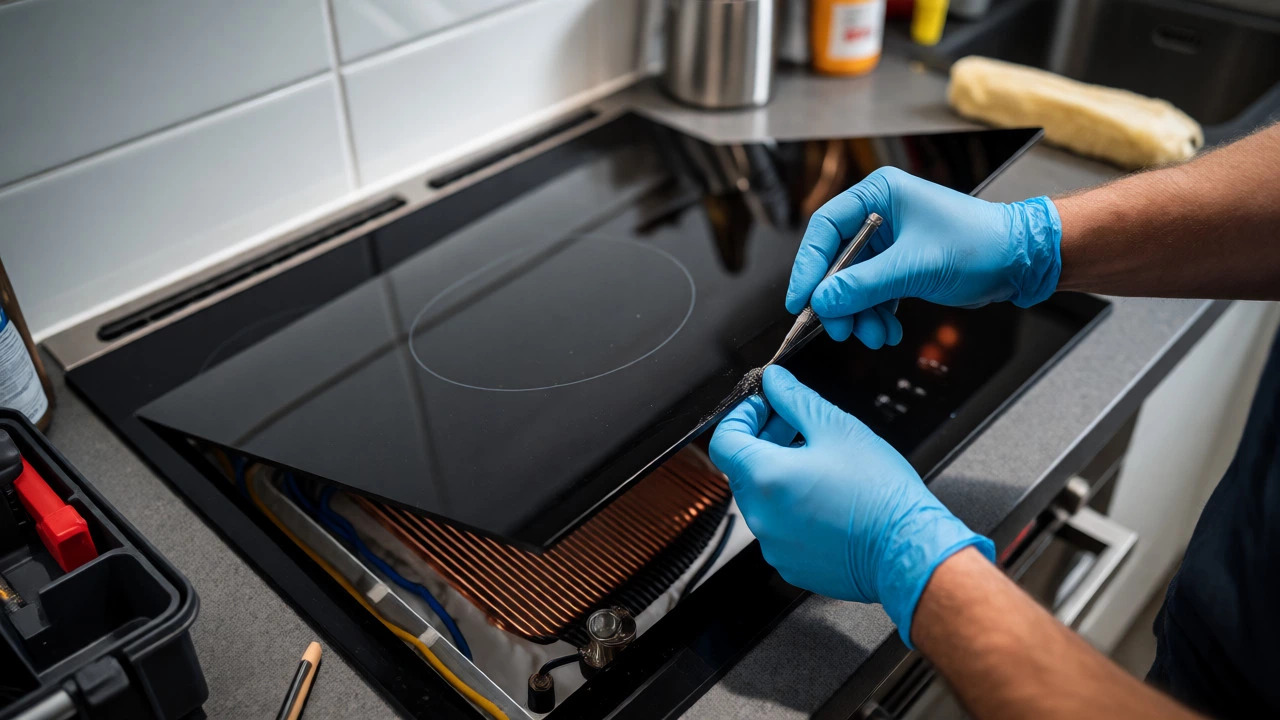
Should you grab a screwdriver and start prying things open? Only if you are comfortable working with electricity. Replacing the glass itself is technically possible for a handy homeowner, but it requires removing the entire cooktop assembly from the countertop. You’ll need to disconnect the wiring harness, remove the mounting brackets, and carefully lift the old glass out.
Here is the catch: sourcing the exact glass panel is often harder than doing the work. Manufacturers like Breville, Fisher & Paykel, or Miele don’t always sell spare parts directly to consumers. You might end up waiting weeks for a part that costs almost as much as a new mid-range hob. Plus, if you misalign the new glass by even a millimeter, it might not sit flush against the seals, leading to future cracks.
Pro Tip: Before buying anything, check the model number tag located under the hob. Take a photo of it. Search for "[Model Number] ceramic glass replacement." If the price of the glass + shipping exceeds 50% of the cost of a new unit, stop. Buy a new one.
Professional Repair: Is It Worth It?
In New Zealand, labor rates for appliance technicians generally range from $80 to $150 per hour. A standard glass hob replacement job typically takes 1-2 hours. Add the cost of the part ($150-$400 depending on brand), and you’re looking at a total bill between $300 and $600.
Does that sound steep? Consider this: a decent new 4-zone induction or radiant hob costs between $600 and $1,200. If your current hob is less than five years old and still works perfectly otherwise, paying $400 to save it makes financial sense. If it’s ten years old and the controls are already glitchy, you’re throwing money at a dying horse.
Technicians also have access to industrial-grade adhesives and proper clamping tools to ensure the new glass bonds correctly to the frame. They handle the disposal of the broken glass safely, which is no small feat given how sharp ceramic shards can be.
Preventing Future Cracks
Once you’ve repaired or replaced your hob, you want to keep it intact. Most cracks happen due to thermal shock or physical impact. Here are three rules that will double the lifespan of your glass surface:
- No Cold Water on Hot Glass: Never splash cold water onto a hot cooking zone. The rapid contraction causes stress fractures. Let it cool naturally.
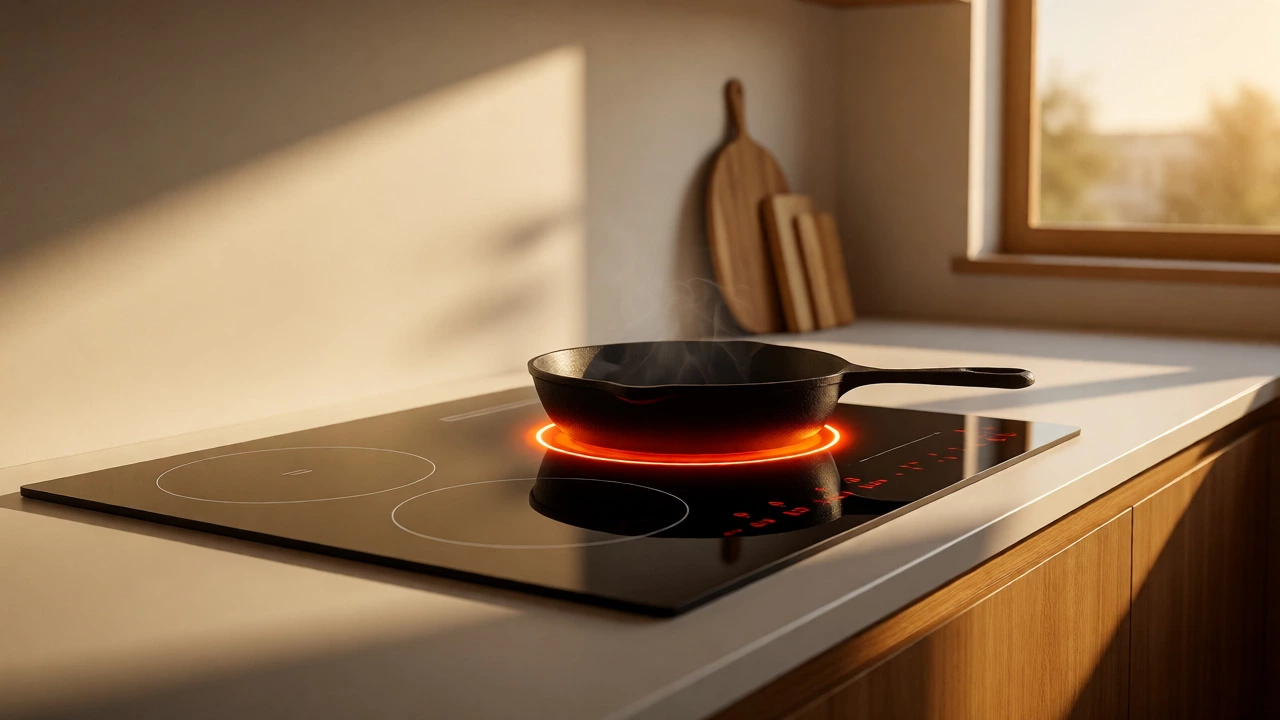
- Lift, Don’t Drag: Cast iron skillets are great for cooking but terrible for dragging across ceramic glass. Lift pots when moving them. Check the bottom of your pans for rough edges or grit before placing them down.
- Use Razor Blades Correctly: When cleaning burnt-on food, use a dedicated ceramic hob scraper. Hold it at a 30-degree angle. Using a metal scouring pad can create micro-scratches that weaken the surface over time.
What About Induction Hobs?
If you have an induction hob, the repair logic is slightly different. Induction units rely on magnetic fields rather than direct heat contact, so the glass doesn’t get as hot as traditional radiant hobs. However, they are more sensitive to impact because the coil beneath is tightly packed.
A crack in an induction hob is often more critical because the cooling fans are right underneath. If debris falls through the crack, it can jam the fan, causing the system to overheat and shut down. Always prioritize professional inspection for induction units, as diagnosing internal coil damage requires multimeter testing.
Key Takeaways
- Small chips can be filled with high-temp epoxy; deep cracks usually require glass replacement.
- Check the cost of the spare part before starting any repair. If it’s >50% of a new unit’s price, replace the whole hob.
- DIY is possible but risky due to electrical connections and precise alignment requirements.
- Professional repair costs $300-$600 in NZ, which is worth it for newer appliances.
- Prevent cracks by avoiding thermal shock and dragging heavy pots.
Will a cracked glass hob explode?
No, it won't explode like a pressure cooker. Ceramic glass is tempered and reinforced. However, a crack can spread rapidly when heated, causing the glass to split into large pieces. While it won't shatter into dangerous flying shards, the loose pieces can move around and expose live electrical components, creating a shock hazard.
Can I use superglue to fix a chipped hob?
Standard cyanoacrylate (superglue) is not recommended for high-heat areas. It becomes brittle and yellow under UV light and heat. Instead, use a two-part high-temperature epoxy resin specifically designed for ceramics and glass. These resins remain flexible and transparent after curing, handling the thermal expansion cycles of a hob.
How long does a glass hob last?
With proper care, a glass hob can last 10 to 15 years. The lifespan is primarily determined by the quality of the electronic control board and the heating elements, not the glass itself. The glass only fails if physically damaged or subjected to extreme thermal shock repeatedly.
Is it safe to cook on a cracked hob?
It is risky. If the crack is superficial and sealed, you might manage for a few weeks. But if water or grease seeps into the crack, it can reach the electrical terminals below, causing a short circuit or earth leakage trip. Turn off the affected zone immediately and consult a technician.
Why did my glass hob crack spontaneously?
Spontaneous cracking is rare but happens due to pre-existing micro-defects in the manufacturing process or severe thermal shock (e.g., pouring ice-cold liquid onto a red-hot zone). Sometimes, uneven weight distribution from a very heavy cast-iron pot left on a cold zone for days can also cause stress fractures over time.