Shower Hot Water Troubleshooter
Is your shower cold but your sink hot? This specific symptom usually points to a localized issue in the shower line rather than your main water heater. Use this tool to narrow down the cause.
Recommended Action:
You step into the shower, expecting warmth after a long day, but get blasted with freezing cold. You turn on the bathroom sink tap, and instantly, steaming hot water flows out. This specific scenario-where one fixture gets heat and another doesn't-is actually good news. It means your water heater is working fine. The problem isn't the source; it's the path.
This disconnect points to a localized issue within your plumbing system, specifically between the main supply line and your showerhead. In most homes, especially in Auckland where mixed plumbing systems are common, this boils down to three main culprits: a stuck diverter valve, a faulty thermostatic mixing valve, or a blockage unique to the shower line. Let’s break down exactly what’s happening so you can fix it without calling a plumber immediately.
The Diverter Valve Is Likely Stuck
If you have a bathtub-shower combo, the most probable cause is the diverter valve. This small mechanical switch directs water either to the tub spout or up to the showerhead. Over time, mineral deposits from hard water can seize the internal mechanism.
When the diverter fails, it often defaults to the "tub" position. Even if you pull the knob or flip the lever to "shower," the hot water might still be bypassing the shower arm entirely, or worse, the valve might be blocking the hot feed while allowing cold through due to pressure differences. Here is how to test this:
- Check the flow direction: Turn on the shower. If water comes out of the tub spout instead of the showerhead, the diverter is mechanically stuck.
- Listen for pressure changes: If you hear a hissing sound from the wall when the shower is on, water is escaping behind the tiles because the diverter isn't sealing properly.
- Try manual manipulation: Sometimes, wiggling the diverter handle back and forth vigorously can dislodge minor calcium buildup. Do not force it too hard, as old brass components can snap.
If cleaning doesn’t work, replacing the diverter cartridge is a straightforward DIY job for many standard taps, costing under $30 NZD for parts. However, if your shower is separate from the tub, skip this section-the issue lies elsewhere.
Faulty Thermostatic Mixing Valve (TMV)
Modern showers, particularly those installed after 2010 in New Zealand, often use a Thermostatic Mixing Valve (TMV). Unlike simple taps that mix hot and cold manually, a TMV automatically blends water to a set temperature (usually 45°C) to prevent scalding.
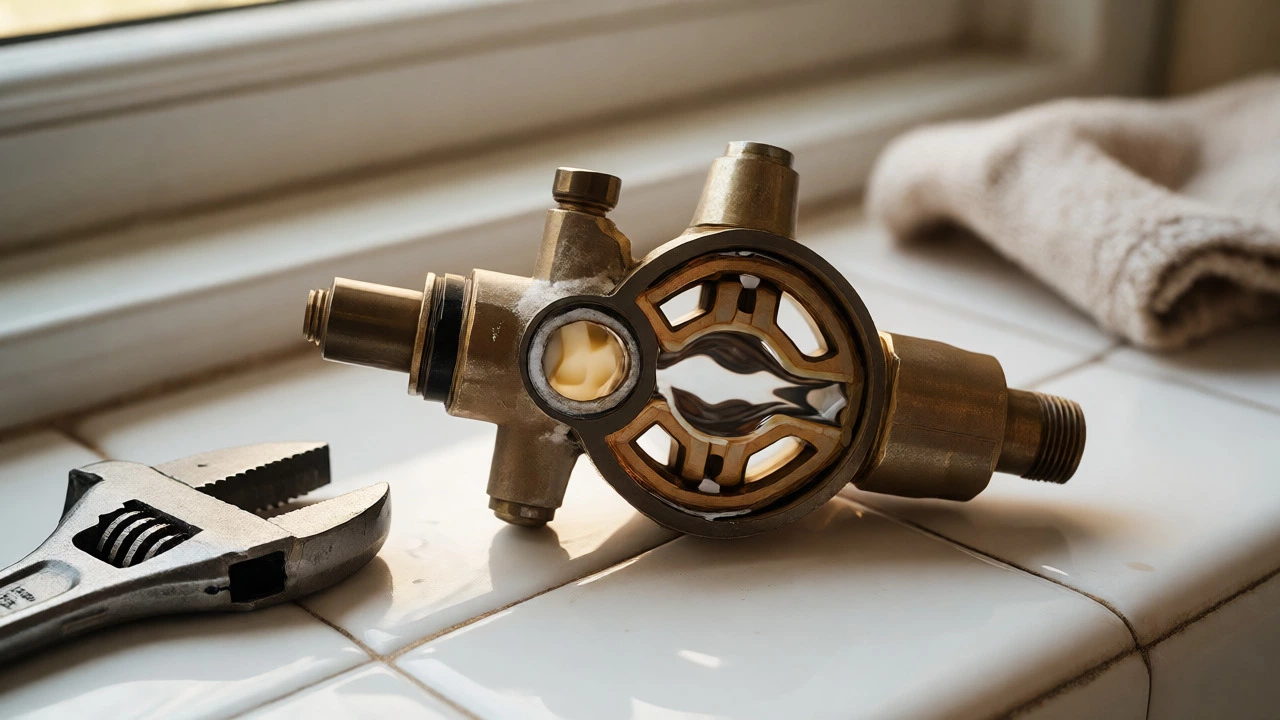
A broken TMV is a classic reason why your sink works but the shower doesn't. The sink likely uses a simple mixer tap, which always delivers whatever hot water arrives. The shower, however, relies on the TMV to regulate the mix. If the internal wax element or spring inside the TMV fails, it may default to "cold only" as a safety feature. This is designed to stop you from getting burned by uncontrolled hot water.
| Symptom | Working TMV | Faulty TMV (Cold Only Mode) |
|---|---|---|
| Temperature Control | Adjustable via dial/knob | Stuck at cold or fluctuating wildly |
| Response Time | Heats up in 10-20 seconds | Never heats up regardless of setting |
| Other Taps | Unaffected | Sink/Bath still get hot water |
| Visible Leak | No leaks | Drips from shower head even when off |
To confirm this is the issue, check if the temperature control knob feels loose or spins freely without resistance. A healthy TMV should offer some tactile feedback. Replacing a TMV is more complex than changing a washer. It involves shutting off the mains, removing the trim, and swapping the cartridge. If you aren't comfortable with pipe fittings, this is a job for a licensed plumber, as incorrect installation can violate local building codes regarding anti-scald protection.
Blocked Shower Head or Filter Screen
Sometimes, the solution is embarrassingly simple. Hard water leaves limescale and sediment buildup over years. While your sink aerator might be clean, the tiny holes in your showerhead or the inlet filter screen could be completely clogged with debris.
Here is the logic: Cold water lines often have higher pressure than hot water lines in residential systems. If a partial blockage exists in the hot side of the shower mixer, the stronger cold water pressure pushes past the weak hot flow, resulting in lukewarm or cold output. In severe cases, the hot channel is fully blocked.
Quick Fix Checklist:
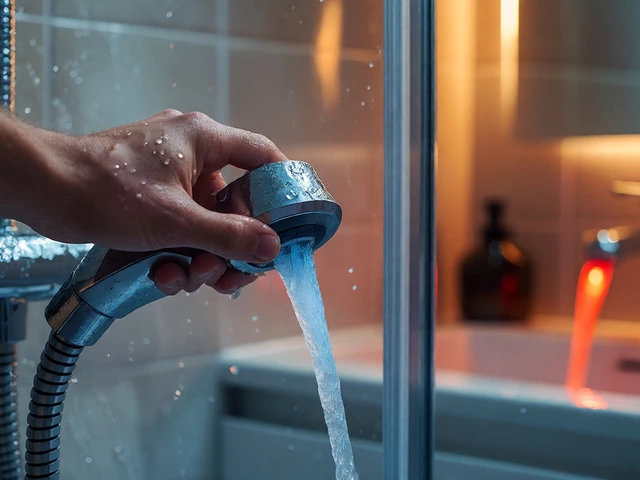
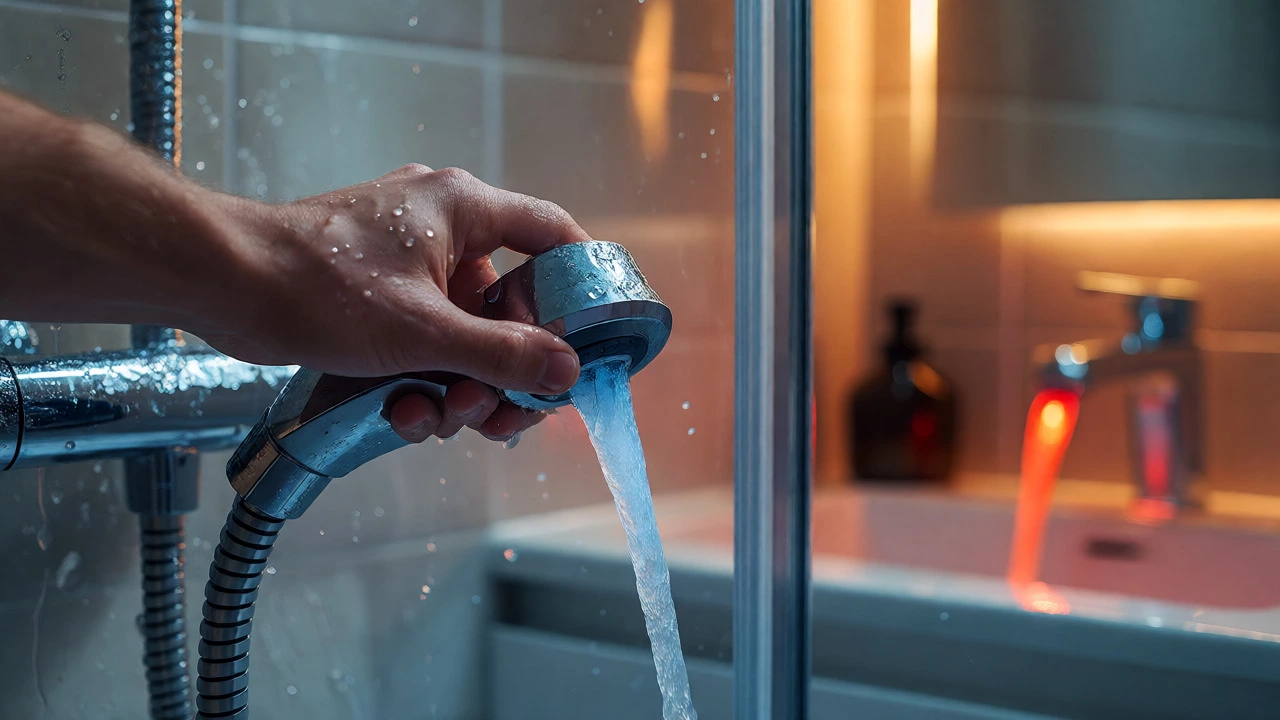
- Remove the showerhead: Unscrew it using an adjustable wrench and a cloth to protect the finish.
- Inspect the inlet filter: Look for a small mesh screen inside the connection. If it’s gray or brown with grit, clean it with a toothbrush and white vinegar.
- Soak the showerhead: Submerge the head in a bag of white vinegar tied to the shower arm for one hour. This dissolves calcium deposits.
- Test before reassembly: Run the hot water directly from the shower arm (without the head attached). If strong hot water sprays out, the showerhead was the culprit.
Cross-Connection or Check Valve Failure
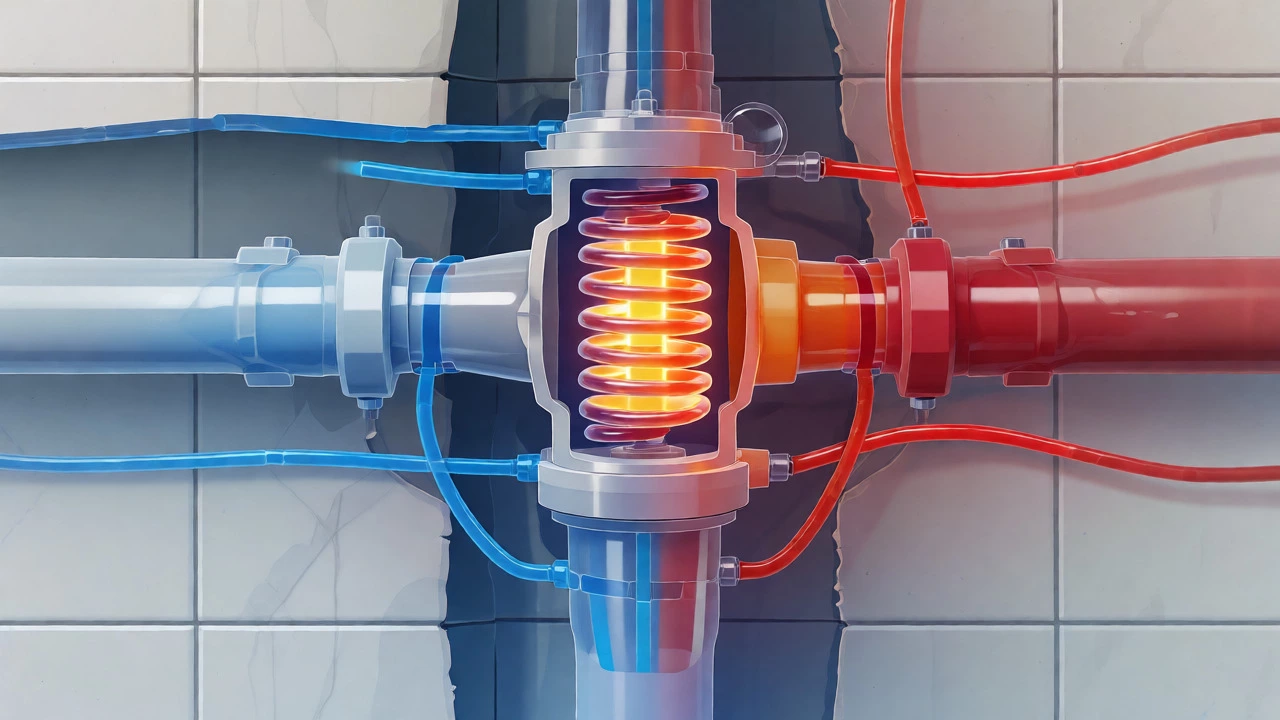
This is less common but tricky to diagnose. A check valve ensures water flows in one direction. If a check valve on the hot line near the shower fails, high-pressure cold water can backflow into the hot line, cooling it down before it reaches the mixer.
You might notice this if the water takes an unusually long time to warm up, or if turning on a cold tap elsewhere in the house causes the shower temperature to drop instantly. This usually requires professional diagnosis because it involves testing pressure differentials across multiple fixtures. If your home has an older copper piping system, corrosion can also create pinhole leaks that preferentially affect the hot line due to thermal expansion stress.
When to Call a Professional
You can handle diverter replacements and showerhead cleaning yourself. However, call a licensed plumber in Auckland if:
- You suspect a failed TMV and aren't confident in plumbing repairs.
- There is water damage or dampness around the shower enclosure, suggesting a hidden leak.
- The problem persists after cleaning filters and checking diverters.
- You live in a multi-unit apartment where shared risers might be involved.
Remember, working with hot water pipes carries a burn risk. Always shut off the main water supply before opening any valves. And if you smell gas (if you have a gas water heater nearby), evacuate and call emergency services immediately.
Why does my bath fill with hot water but the shower is cold?
This almost always indicates a faulty diverter valve. The diverter is responsible for switching the flow from the low-position tub spout to the high-position showerhead. When it fails, it typically allows water to exit the tub spout (which is easier to access) rather than forcing it up to the shower, or it blocks the hot feed to the shower circuit entirely.
Can a clogged shower head cause no hot water?
Yes, partially. Severe limescale buildup can restrict flow significantly. Because cold water often runs at higher pressure than hot water in domestic systems, the cold water can overwhelm the restricted hot flow, making the output feel cold. Cleaning the shower head and its inlet filter is the first troubleshooting step you should take.
Is it dangerous if my shower is only cold?
It is generally safe, but inconvenient. However, if the issue is a failed Thermostatic Mixing Valve (TMV), it might suddenly switch to very hot water if the cold supply drops. Modern TMVs have a fail-safe to cut hot water if cold fails, but older units might not. If you suspect a TMV failure, avoid adjusting the temperature knob aggressively until repaired.
How much does it cost to fix a shower mixing valve?
In New Zealand, replacing a standard diverter cartridge might cost $50-$100 NZD if you do it yourself. Hiring a plumber to replace a Thermostatic Mixing Valve typically ranges from $250 to $450 NZD, depending on the brand of the valve and accessibility of the unit. Parts alone for a quality TMV like Rada or Bristan can cost $100-$200.
Does the age of my house matter?
Yes. Homes built before 1990 often lack Thermostatic Mixing Valves, relying on simple mixer taps. These are prone to washer wear and diverter jams. Post-2010 builds are required to have TMVs for safety, meaning a sudden loss of hot water in the shower is more likely a valve component failure rather than a simple washer issue.