Ever open your washing machine after a cycle and find clothes soaked, water pooled on the floor, or the drum just spinning uselessly? You’re not alone. Washing machines are built to last, but they’re not indestructible. In Auckland, where households run loads almost daily - sometimes twice a day - wear and tear adds up fast. Most machines last 8 to 12 years, but the parts that fail? They usually break way before that.
Drain Pump: The Most Common Culprit
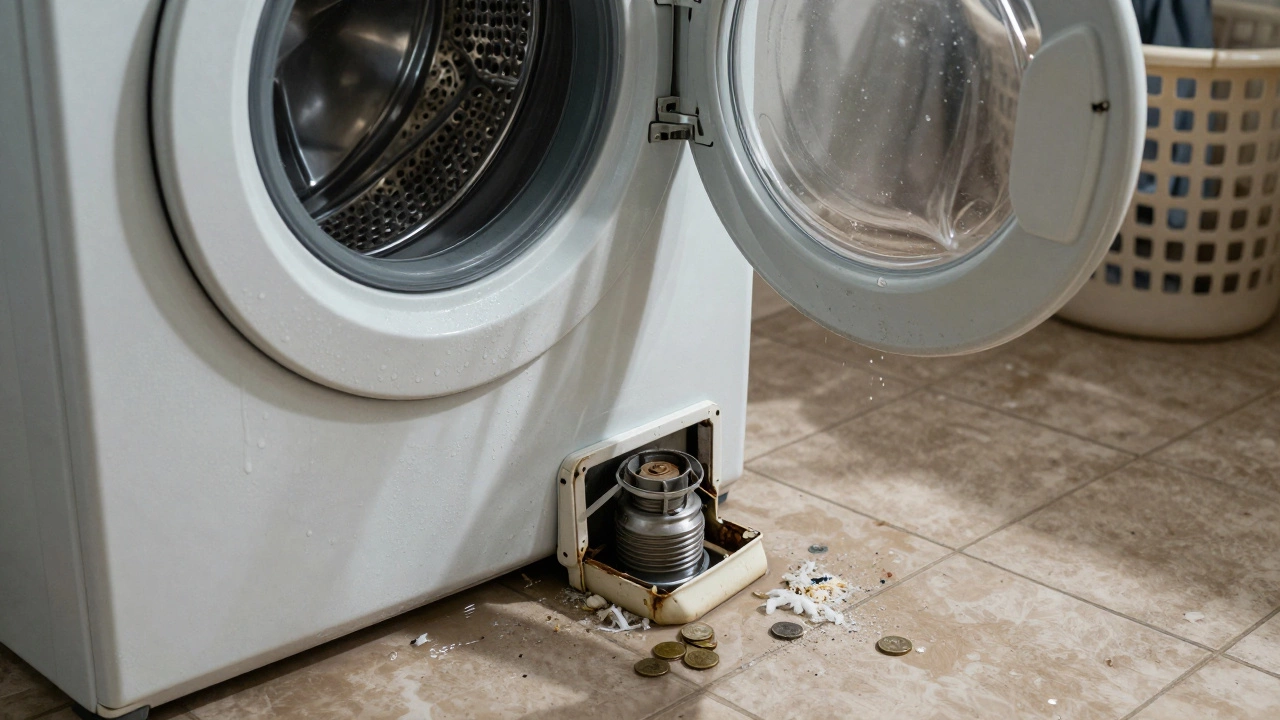
The drain pump is the number one part that goes out. It’s a small motor that pushes water out of the tub and into your home’s drainage system. When it fails, water doesn’t leave the drum. You’ll hear a humming noise, maybe a clicking, but the machine won’t drain. Sometimes, lint, socks, or even coins get stuck in the pump’s impeller and jam it. That’s not always a full replacement job - sometimes cleaning it out fixes things. But if the motor windings are burnt or the bearings are seized, you’ll need a new one. Replacement pumps cost between $80 and $150, depending on the model. If your machine is over 7 years old and the pump is dead, it’s usually not worth repairing unless you’re handy.
Door Lock Mechanism: When the Machine Won’t Start
If the machine won’t start at all, or it starts then stops with an error code like “LD” or “DL,” the door lock is probably the issue. Modern washing machines have a safety lock that prevents the door from opening while spinning. Over time, the solenoid inside the lock wears out. Salt from hard water, moisture, and repeated slamming can cause corrosion. You might notice the door feels stiff, or the machine beeps but won’t begin the cycle. Replacing the lock assembly isn’t hard, but it requires pulling the top panel off. Parts cost $50 to $120. If you’re not comfortable with that, call a technician - but don’t ignore it. A faulty lock can cause flooding if the door opens mid-spin.
Drive Belt: The Silent Killer
Think of the drive belt like the engine belt in a car. It connects the motor to the drum. When it snaps or stretches, the drum doesn’t spin - even though the motor runs. You’ll hear the motor humming, but the clothes stay still. Or worse, the drum spins slowly and unevenly. Belts usually last 5 to 8 years. If your machine is older and you hear squealing or see a loose, frayed belt, replace it. Belts cost $20 to $40. Replacing it takes about an hour. You’ll need to lay the machine on its back and access the back panel. Many people try to “stretch” the belt back on, but that’s a temporary fix at best. A stretched belt puts extra strain on the motor and can burn it out.
Water Inlet Valve: No Fill? No Wash
If your machine fills with water slowly or not at all, the inlet valve is likely clogged or failing. This valve opens to let cold and hot water into the tub. Over time, mineral deposits from hard water build up inside the valve’s screens. In Auckland, where water hardness varies by suburb, this is a frequent problem. You might notice the machine starts a cycle but never fills. Or it fills with cold water when you selected hot. Cleaning the inlet filters (usually behind the front panel near the water hoses) helps. But if the valve’s internal solenoids are corroded, you need a new one. Replacement valves run $60 to $100. Always turn off the water supply before replacing it. A leaking valve can flood your laundry room in minutes.
Motor Brushes: The Hidden Wear Item
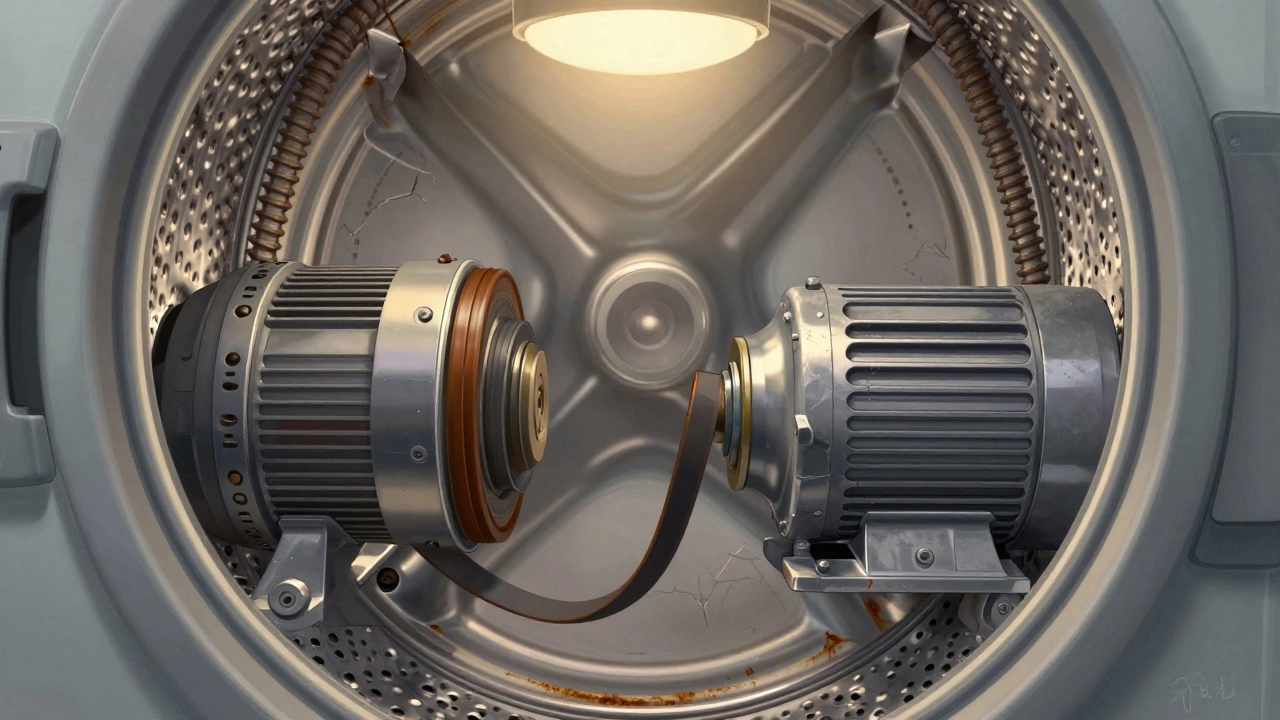
Most modern washing machines use brushless DC motors - but older models (pre-2015) rely on brushed motors. The brushes inside these motors wear down like brake pads. When they get too short, the motor won’t spin or it runs intermittently. Symptoms? The machine makes grinding noises, or it spins weakly. You might get error codes like “E11” or “E22.” Replacing brushes isn’t always possible - many motors are sealed units. But on some brands like Whirlpool or LG, you can buy replacement brushes separately. They cost $15 to $30. If you’re handy, you can open the motor housing and swap them. But if the motor itself is damaged, you’re looking at $250 to $400 for a replacement. That’s often more than half the cost of a new machine.
Shock Absorbers and Suspension Springs: The Noisy Ones
Ever hear your machine banging like a drum during spin? That’s usually the shock absorbers or suspension springs. These parts keep the drum stable. Over time, they leak fluid, rust, or snap. You’ll notice the machine shaking violently, especially on high spin. It might even move across the floor. In homes with tile or concrete floors, the vibration can crack the surface. Replacing shocks is straightforward - they’re usually on the bottom of the tub. Each one costs $30 to $60. Springs are trickier. If one breaks, the drum tilts, which can damage the drum bearings. Always replace both shocks and springs together, even if only one looks bad. A worn suspension system puts stress on every other part.
Drum Bearings: The Expensive End
If your machine is making a loud grinding or rumbling noise during spin, especially one that gets louder over time, the drum bearings are likely shot. These are sealed units inside the rear of the drum. When they fail, water leaks in, rust forms, and the metal balls inside grind down. You’ll also notice the drum wobbling or feeling loose when you turn it by hand. Replacing bearings means taking the entire drum out, which is a 3-hour job. Parts cost $100 to $180. Labor? Another $150 to $250. If your machine is older than 8 years, this is often the point where repair isn’t worth it. You’re paying nearly half the price of a new machine just to fix one part.
Control Board: The Brain That Fails
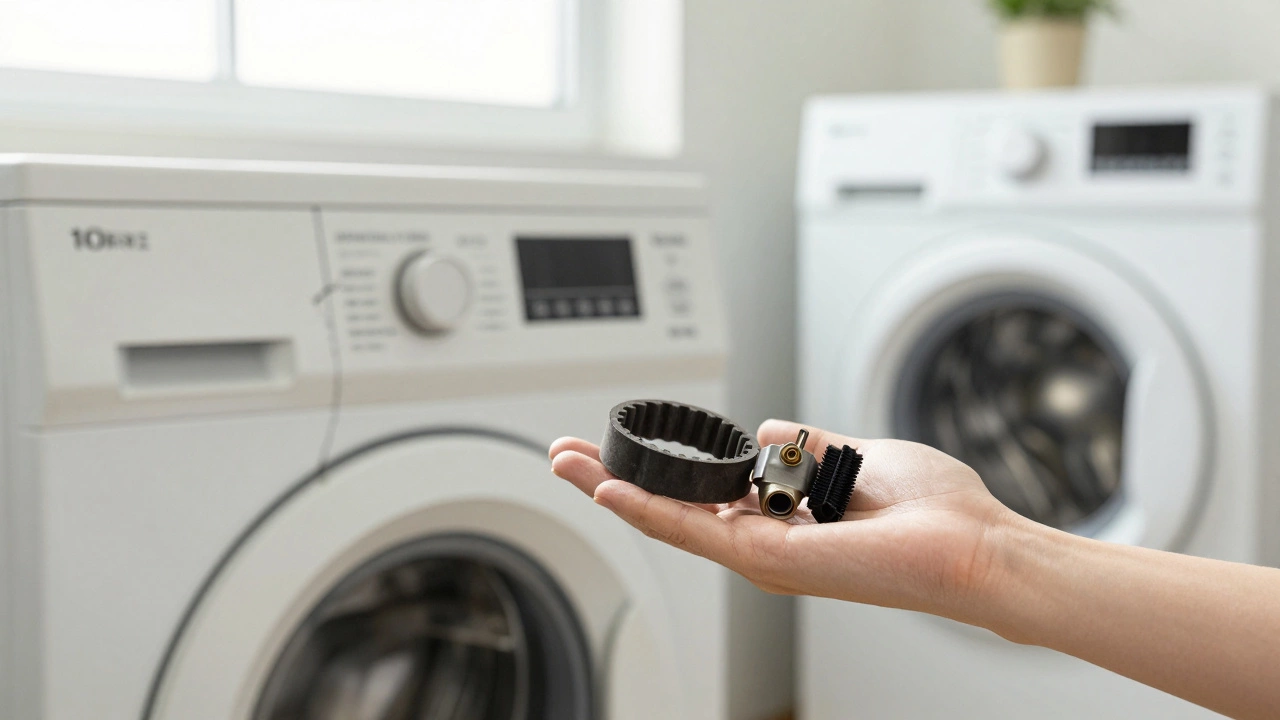
Control boards are the least understood but most misunderstood part. People assume if the machine won’t start, the board is broken. But more often, it’s a sensor, a fuse, or a loose wire. The board itself rarely fails unless there’s water damage, a power surge, or a faulty component upstream. Signs of a bad board? Random error codes, buttons that don’t respond, or the machine turning on and off by itself. If you’ve checked the pump, belt, and sensors - and everything else is fine - then the board might be the issue. Replacement boards cost $150 to $300. Some models have a reset button. Others need a firmware update. Don’t replace the board without testing other components first. A $30 fuse might be the real problem.
What You Can Do to Prevent Breakdowns
Prevention beats repair every time. Here’s what actually works:
- Use HE detergent - regular detergent creates too much suds and stresses the pump and seals.
- Clean the lint trap after every 3 to 5 loads. It’s usually behind a small door near the bottom front.
- Run a cleaning cycle with vinegar or a washing machine cleaner every month. It clears grease and mineral buildup.
- Don’t overload the machine. More than 80% of the rated capacity strains the motor and suspension.
- Leave the door open after washing. Moisture trapped inside breeds mold and corrodes seals.
- Check the water hoses every 6 months. Replace them every 5 years, even if they look fine.
When to Repair - and When to Replace
Here’s a simple rule: if the repair cost is more than half the price of a new machine, walk away. A new mid-range washing machine in New Zealand costs $700 to $1,200. So if your repair quote is over $600, it’s time to shop for a new one. Also, if your machine is over 10 years old, parts are harder to find. Manufacturers stop making them after 8 to 10 years. You might end up waiting 3 weeks for a part that never comes.
But if your machine is under 7 years old, and the issue is the pump, belt, or door lock - fix it. Those are cheap, common fixes. And if you’re the type who does your own repairs? A $40 belt or $60 inlet valve can extend your machine’s life by years.
Why does my washing machine smell like mildew?
Mildew smell usually comes from trapped moisture and detergent buildup in the drum, door seal, or detergent drawer. Run a hot wash with two cups of white vinegar or a dedicated washing machine cleaner. Leave the door open after each use. Clean the rubber gasket with a cloth and vinegar every week. If the smell returns fast, your drain pump might be clogged or the drum bearings are failing - both let water sit where it shouldn’t.
Can a power surge damage a washing machine?
Yes. Modern washing machines have electronic control boards that are sensitive to voltage spikes. A nearby lightning strike or a faulty appliance on the same circuit can fry the board. If your machine stopped working after a storm or a flickering light, the board is likely damaged. Install a surge protector for your laundry room outlets - they cost under $30 and are worth it.
Why won’t my washing machine spin?
If the drum won’t spin, check the drive belt first. Then make sure the door lock is engaged. If those are fine, the motor brushes may be worn out, or the drum bearings have seized. A machine that hums but doesn’t spin usually has a motor or belt issue. If it doesn’t make any noise at all, it could be the control board or a blown thermal fuse.
Is it worth repairing a 10-year-old washing machine?
Usually not. Parts for machines older than 8 years are harder to find. Labor costs often exceed half the price of a new machine. If you’re facing a $300 repair on a machine that cost $800 new 10 years ago, it’s better to upgrade. New models use 30% less water and energy, and many come with 10-year warranties on the motor.
What’s the average lifespan of a washing machine?
Most washing machines last 8 to 12 years with regular use. Heavy use - like doing 4 to 5 loads a week - can shorten that to 6 to 8 years. Machines in homes with hard water or poor ventilation (like basements) also wear out faster. Brands like LG, Samsung, and Whirlpool tend to last longer than budget models. The key is maintenance: clean the filter, don’t overload, and run a monthly cleaning cycle.