Stove Lifespan Calculator
How Long Will Your Stove Last?
Find out your electric stove's expected lifespan based on usage habits and maintenance.
Estimated Lifespan
Most people assume their electric stove will last forever-until one day, the burner won’t heat, the oven won’t reach temperature, or the control panel starts flashing errors. If you’ve been wondering how long an electric stove should last, the answer isn’t simple. It depends on how you use it, how well you clean it, and what brand you bought. But here’s the truth: electric stove lifespan typically falls between 13 and 15 years. That’s the average you’ll see in real homes, not the 20-year promise on some brochures.
What Actually Determines How Long Your Stove Lasts?
It’s not just age. A stove in a busy household with five kids and nightly dinners will wear out faster than one in a quiet apartment used only for baking on weekends. The biggest killers of electric stoves are heat, moisture, and neglect.
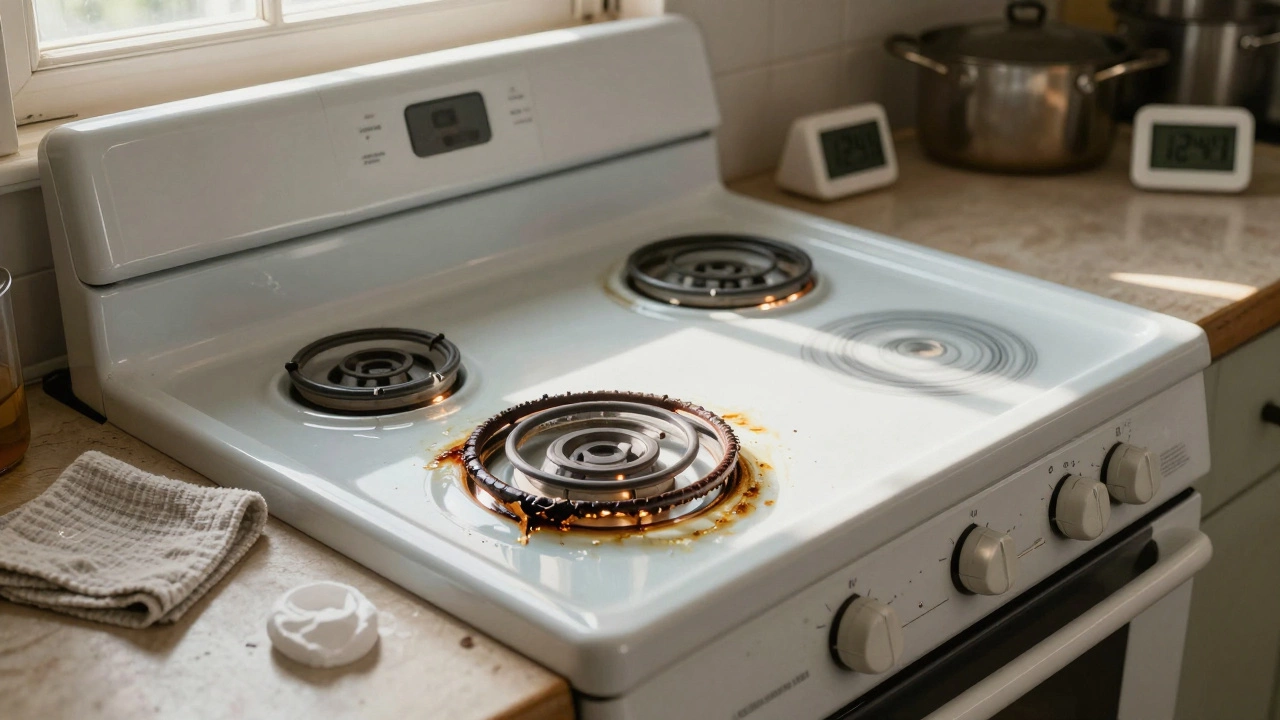
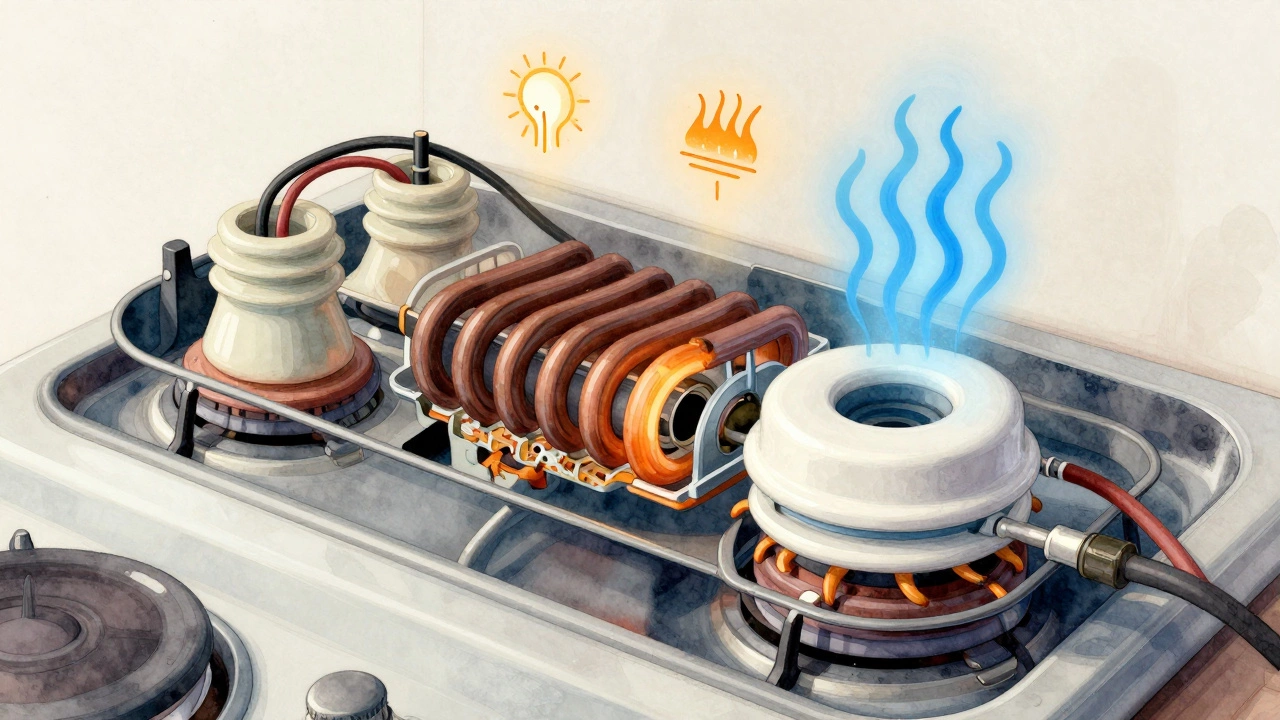
Every time you boil over a pot and don’t clean the spill right away, you’re slowly cooking the heating elements from underneath. Grease and food debris bake onto the coil elements, forcing them to work harder. Over time, that extra strain causes the wires to thin out and break. The same thing happens inside the oven-grease builds up on the heating element at the back, and the thermostat starts lying about the temperature because it’s covered in grime.
Brand matters too. Stoves from brands like GE, Whirlpool, and Frigidaire tend to last longer because they use thicker gauge wiring and more durable ceramic insulators. Cheaper models, especially those sold at discount stores, often cut corners on the heating element mounts and control boards. I’ve seen brand-new $400 stoves fail in under five years because the circuit board couldn’t handle even minor power surges.
Signs Your Electric Stove Is Past Its Prime
You don’t need to wait for it to die completely to know it’s time to replace it. Here are the top five warning signs:
- One or more burners won’t heat-even after replacing the element and checking the outlet. If it’s not the element, it’s likely the infinite switch or wiring harness.
- The oven takes forever to preheat-if it’s taking 30 minutes to hit 350°F when it used to take 12, the bake element is weak or the thermostat is faulty.
- Uneven baking-food burns on one side and stays raw on the other. This isn’t your recipe. It’s the oven’s internal heating pattern breaking down.
- Sparking or buzzing from the control panel-if you hear crackling or see tiny blue flashes when you turn a knob, that’s not normal. It’s arcing in the wiring or a failing relay.
- The display is glitchy-digits fading, error codes popping up randomly, or the clock resetting. Modern stoves rely on a single control board. When it dies, repair costs often hit 70% of a new unit’s price.
One of my neighbors replaced her 18-year-old stove because the oven light kept blowing. She thought it was just a bulb. Turns out, the voltage regulator on the control board was sending too much power to everything. That’s the kind of slow failure that sneaks up on you.
Can You Extend the Life of Your Electric Stove?
Yes-but only if you act early. Most people wait until something breaks completely before they do anything. That’s a mistake.
Here’s what actually works:
- Clean spills the same day. Use a damp cloth and baking soda paste on the stovetop. Don’t let acidic spills (tomato sauce, vinegar) sit-they corrode the metal under the glass.
- Check the elements every six months. Look for dark spots, cracks, or bubbling on the coil. If you see any, replace them before they fail. A new element costs $25-$50. A new stove costs $800+.
- Don’t overload the oven. Crowding the racks blocks airflow. The oven has to work twice as hard, and the heating element wears out faster.
- Use surge protectors. Power spikes from storms or appliances cycling on/off can fry the control board. A $30 surge protector can save you $1,000.
- Replace the oven door gasket if it’s cracked. A bad seal lets heat escape, making the oven run longer and hotter than needed. New gaskets cost under $20 and take 15 minutes to install.
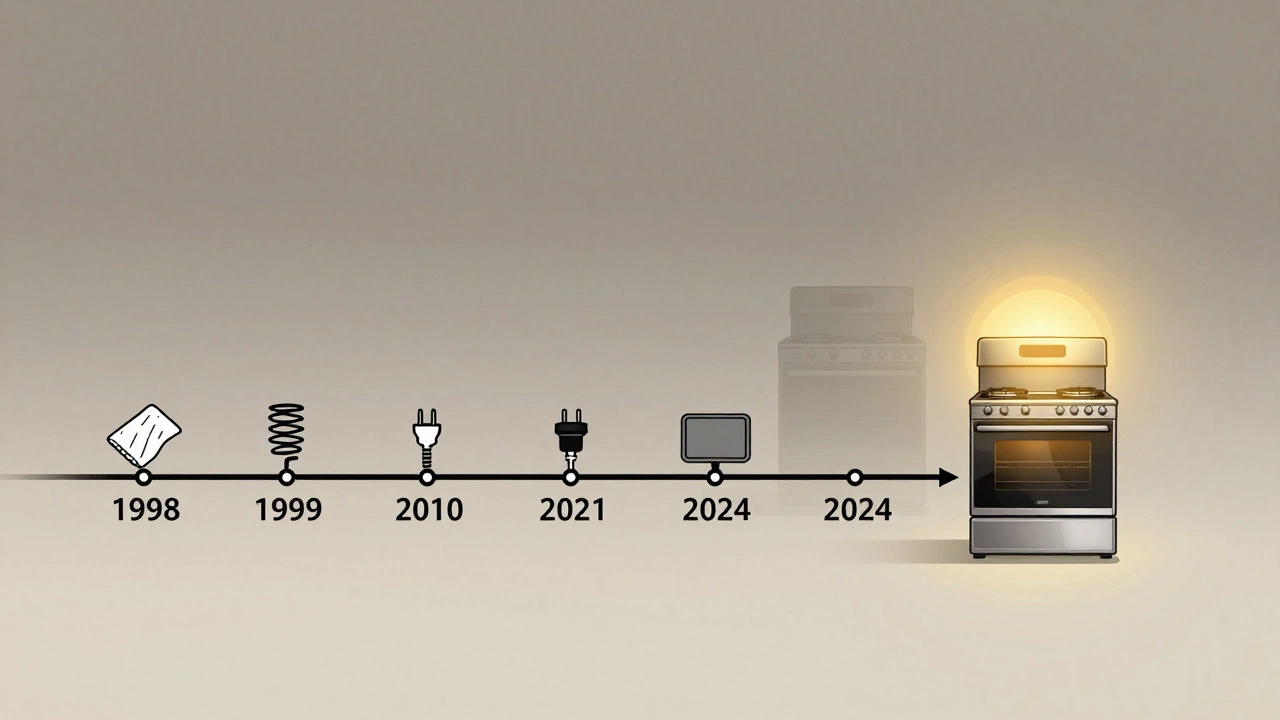
One homeowner in Ponsonby cleaned her stove every week, replaced two elements over 12 years, and kept her 1998 model running until 2024. That’s 26 years. Not common, but possible with care.
When Is Repair Worth It?
There’s a rule of thumb I use: if the repair costs more than half the price of a new stove, walk away.
Let’s say your stove is 10 years old and the control board fails. A new control board might cost $180, plus $120 for labor. That’s $300. A decent new electric stove? Around $700. So $300 is less than half. Repair makes sense.
But if your stove is 15 years old and the same part fails? Now you’re spending $300 on a machine that’s already lived 2/3 of its life. The next failure could be the oven element, then the igniter, then the wiring. Each repair gets more expensive, and parts get harder to find.
Also, newer stoves are more efficient. A 2025 model uses about 15% less electricity than one from 2010. Over five years, that adds up to $100-$150 in savings. Factor that in, and replacement often pays for itself.
What to Look for in a New Electric Stove
If you’re replacing, don’t just buy the cheapest one. Look for these features:
- Self-cleaning oven-it’s a hassle, but it prevents grease buildup that kills heating elements.
- Thicker coil elements-check product specs for "heavy-duty" or "industrial-grade" elements. They last longer.
- Stainless steel or ceramic glass top-easier to clean than enamel, and less prone to cracking.
- Warranty of at least 2 years on parts and labor-brands like Bosch and Samsung offer this. Cheaper brands rarely do.
- Smart features (optional)-Wi-Fi connectivity or app control won’t make your stove last longer, but they help you monitor usage and get alerts if something’s overheating.
I’ve seen people buy a $500 stove, use it for three years, then spend $200 on a repair-only to have another part fail six months later. That’s not saving money. That’s throwing it away twice.
What Happens When Your Stove Dies?
If your stove stops working completely, don’t just unplug it and order a new one. Check if it’s worth recycling or donating.
Many local councils in Auckland offer free appliance recycling. The metal, glass, and wiring inside your old stove can be reclaimed. Some charities take working stoves for low-income families-if yours still heats, even if the display is broken, it might find a second life.
And if you’re replacing it, consider switching to induction. It’s faster, more efficient, and lasts longer than traditional electric coils. Induction stoves don’t have exposed elements that burn out. The glass top stays cool, and the magnets under the surface heat the pan directly. They’re pricier upfront, but they last 20+ years and cut energy use by 30%.
Electric stoves aren’t built to last forever. But they’re also not disposable. With a little care, you can get 15 years out of one. Without care, you might get five. The difference isn’t luck-it’s what you do every day.
How long does an electric stove usually last?
Most electric stoves last between 13 and 15 years with normal use. With excellent care-regular cleaning, timely repairs, and surge protection-some can last 20 years or more. Cheaper models or those in high-traffic kitchens may only last 8 to 10 years.
Is it worth repairing a 10-year-old electric stove?
It depends on the repair cost. If the fix is under half the price of a new stove and the stove is still in good condition otherwise, yes. For example, replacing a faulty heating element or control board on a 10-year-old stove is often worth it. But if the repair costs more than $400 on a $700 stove, it’s usually better to replace it.
Why is my electric oven taking longer to heat up?
A slow-heating oven usually means the bake element is weakening or the thermostat is inaccurate. Grease buildup on the element can insulate it, making it less efficient. Clean the element gently with a soft brush, or test it with a multimeter. If it shows low resistance or no continuity, it needs replacing.
Can I replace just the heating element on my electric stove?
Yes, and it’s one of the easiest repairs. Most coil elements cost between $25 and $50. Turn off the power, unplug the stove, remove the old element by unscrewing the mounting brackets, and swap in the new one. It takes 20 minutes. Many online tutorials show exactly how to do it for your model.
Should I buy a new electric stove or switch to induction?
If you’re replacing your stove anyway, induction is worth considering. It heats faster, uses less energy, and has no exposed elements to burn out. Induction stoves typically last 20+ years and are safer around kids. The upfront cost is higher-$1,000-$1,800-but you’ll save on electricity bills and avoid frequent repairs.