Dishwasher Repair vs. Replace Calculator
DECISION METRIC
--%
of new unit cost
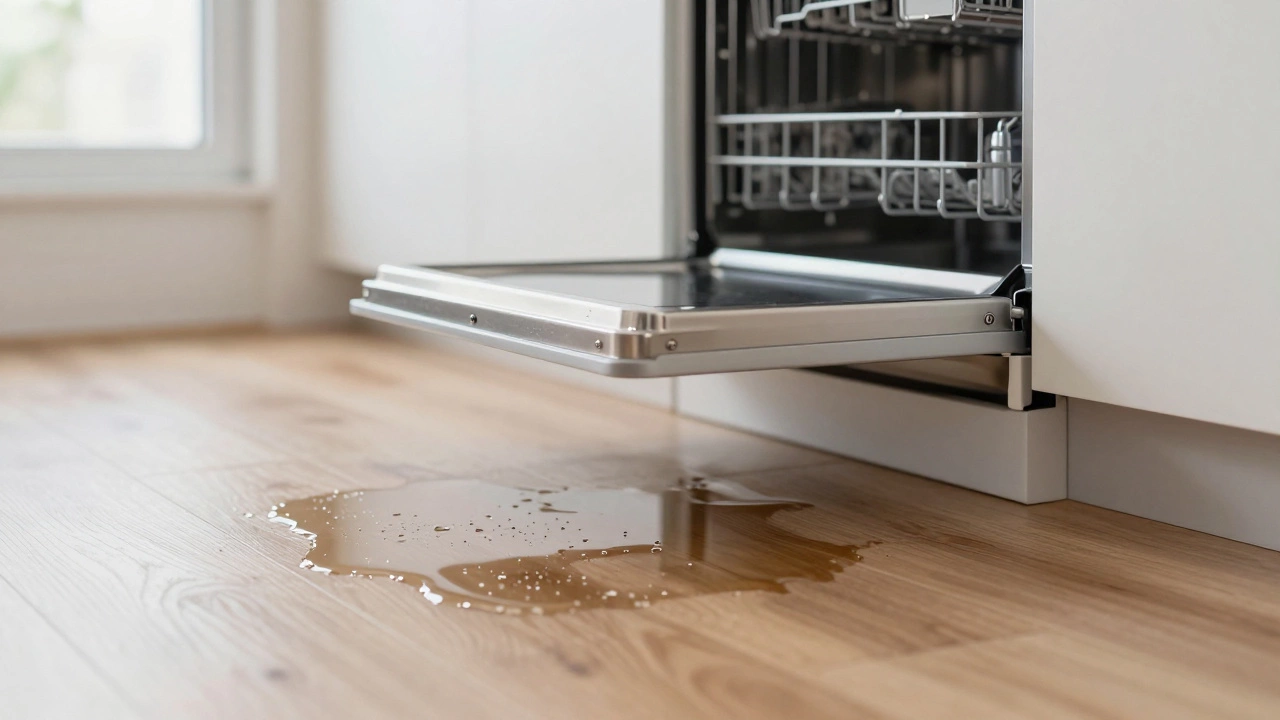
You stare at the pool of water on your kitchen floor, or maybe just the error code blinking on your panel, and ask yourself: is this machine worth saving? The short answer is yes. Most modern dishwashers can be repaired, especially if they are less than seven years old. However, "can" it be repaired doesn't always mean "should" it be repaired. The decision hinges on three things: the cost of parts, the labor involved, and the remaining lifespan of the unit.
We live in an era where appliances are built to last longer than they used to, but not forever. When a Dishwasher is a household appliance that cleans dishes, glassware, cutlery, and cooking utensils automatically using water and detergent breaks down, it’s rarely a total loss immediately. In many cases, a single component failure-like a clogged filter or a worn-out door seal-is all that stands between you and a fully functional machine again. Let’s break down exactly what makes a repair worthwhile and when you should walk away.
The Age Factor: Is Your Unit Still Viable?
The first thing any technician will ask is how old the machine is. This isn’t just about nostalgia; it’s about reliability. The average lifespan of a quality dishwasher is between 7 and 10 years. If your unit is under five years old, repair is almost always the right call. Manufacturers like Bosch, Miele, and Samsung build machines with serviceable parts during this window. You’re likely dealing with a minor issue that won’t happen again for years.
If your dishwasher is between five and eight years old, you’re in the gray zone. It might have one more major cycle left in its engine (the motor) or pump. Here, you look at the specific problem. If it’s a simple fix, go ahead. If it requires a major internal overhaul, you might be kicking the can down the road. Once a dishwasher crosses the ten-year mark, the metal components often start to corrode, and plastic parts become brittle. At this stage, repairing one part often leads to another failing shortly after. It’s like fixing the brakes on a car that needs new tires, suspension, and an engine rebuild.
Common Failures That Are Cheap to Fix
Not all breakdowns are created equal. Some issues are so common and inexpensive to resolve that replacing the entire appliance would be financial suicide. Here are the top culprits that usually result in a successful repair:
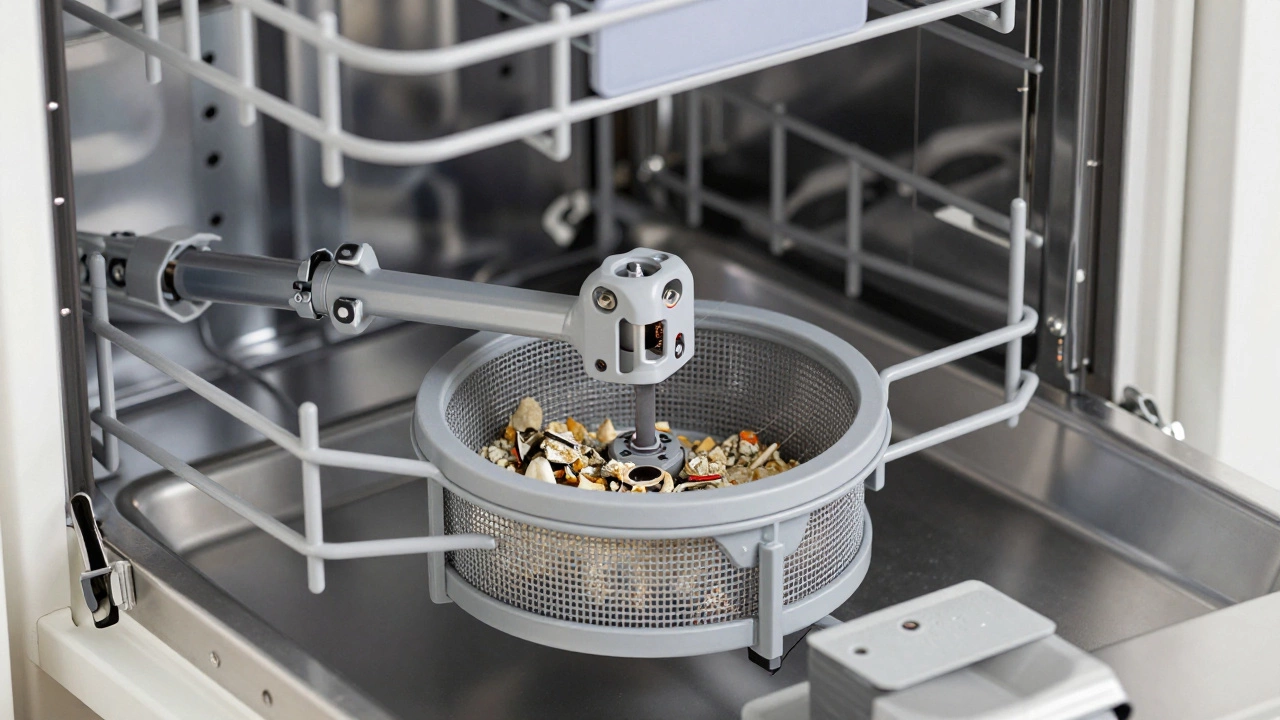
- Clogged Filters and Spray Arms: This is the #1 reason people think their dishwasher is broken. Food debris gets stuck in the Filter is a mesh screen located at the bottom of the dishwasher tub that traps food particles, preventing water from circulating properly. Cleaning this takes five minutes and costs nothing. Similarly, spray arms can get blocked by small bits of bone or plastic. Clearing them restores performance instantly.
- Door Seals and Gaskets: Over time, the rubber seal around the door hardens and cracks, leading to leaks. Replacing a gasket is a straightforward job that costs relatively little in parts. Unless the door itself is warped, this repair extends the life of the machine significantly.
- Kick Plates and Control Panels: Sometimes the electronics fail before the mechanical parts. If the control board is faulty, technicians can often swap it out. While boards are pricier than filters, they are still cheaper than a new unit. Just ensure the rest of the machine is in good shape before committing to this repair.
- Heating Elements: If your dishes come out wet or cold, the heating element might be broken. These are accessible and affordable. Replacing the element fixes the drying issue without needing a new machine.
The Expensive Breakdowns: When Repair Gets Tricky
There are certain failures that signal the end of the line for most dishwashers. These involve core mechanical components that are expensive to replace and difficult to access. If you’re facing one of these, pause and calculate carefully.
| Issue | Estimated Repair Cost (Parts + Labor) | Recommendation |
|---|---|---|
| Clogged Filter/Spray Arm | $0 - $50 | Always Repair |
| Door Seal/Gasket | $100 - $200 | Repair if under 7 years |
| Heating Element | $150 - $300 | Repair if under 8 years |
| Circulation Pump/Motor | $400 - $600+ | Replace Appliance |
| Control Board/Electronics | $300 - $500 | Repair only if high-end model |
The Circulation Pump is the motor-driven component that forces water through the spray arms and over the dishes is the heart of the dishwasher. If this fails, the repair bill often exceeds $500 because the technician has to remove the entire tub assembly to access it. For a standard mid-range dishwasher that costs $600-$800 new, spending half that amount on a repair makes no sense. Even if the pump lasts another two years, you’ve spent money on a dying machine.
Similarly, if the outer tub rusts or cracks, there is no repair. Water damage to the cabinet structure compromises the integrity of the whole unit. You must replace it.
The 50% Rule: A Simple Decision Framework
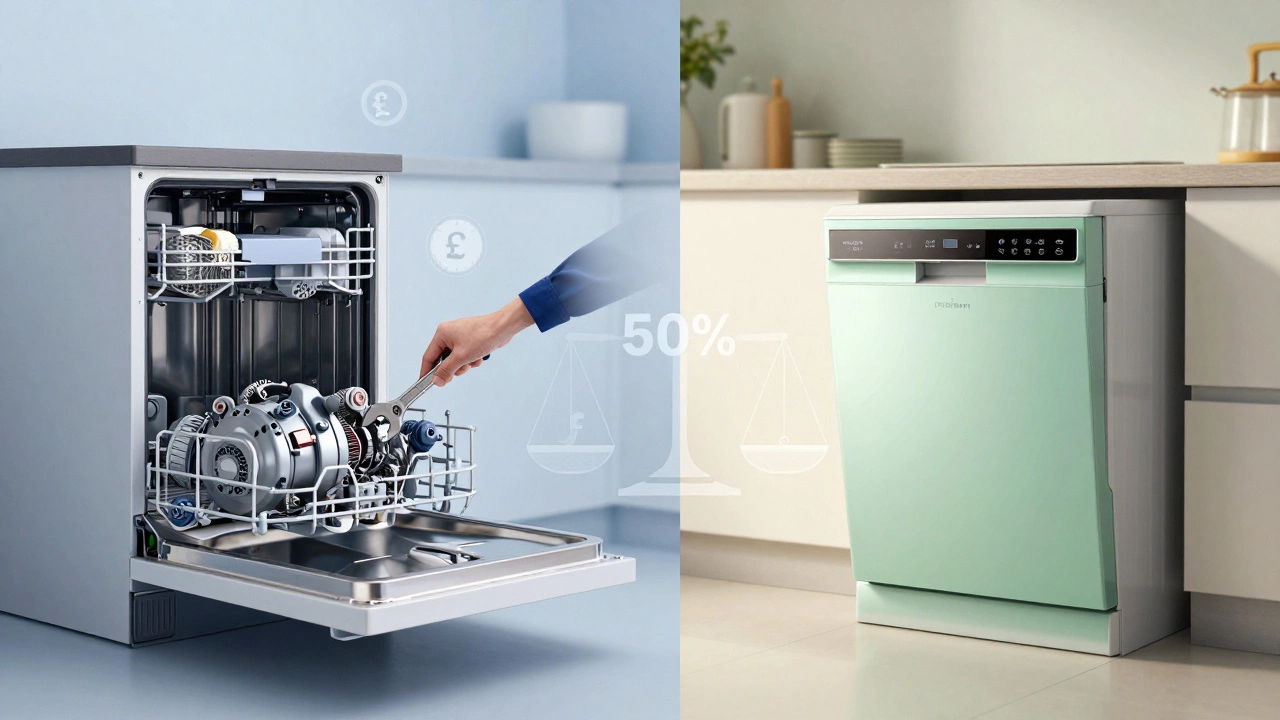
If you’re still unsure, use the 50% rule. This is a widely accepted heuristic in the appliance industry. If the cost of the repair (including parts and labor) is more than 50% of the price of a comparable new dishwasher, you should buy a new one.
Let’s say your current dishwasher was purchased for $700. A new equivalent model today costs $750. If a technician quotes you $400 to fix the drain pump, that’s more than 50% of the new price. You’d be better off buying new. Plus, a new machine comes with a warranty, better energy efficiency, and quieter operation. Older models often use more water and electricity, costing you more in utility bills over time.
However, if the repair quote is $150, that’s well under 50%. You save money, keep your familiar routine, and extend the life of your appliance. This rule works best for standard models. High-end luxury brands like Miele or Asko can skew this math because their replacement costs are significantly higher ($1,500+). In those cases, even a $600 repair might be worth it because you’re preserving a premium asset.
DIY vs. Professional Repair
Before calling a pro, assess if you can handle it yourself. Many dishwasher issues are user-serviceable. Checking the filter, inspecting the inlet hose for kinks, and ensuring the door latch engages properly are tasks anyone can do. There are countless video tutorials online that show you how to replace a heating element or a door switch.
If you decide to DIY, remember to disconnect the power and shut off the water supply before opening any panels. Safety first. If the repair involves accessing the electrical components inside the control panel or removing the main tub, it’s safer to hire a licensed technician. Mishandling electrical connections can lead to shocks or fire hazards. Also, professional repairs often come with a warranty on the work done, which gives you peace of mind if the issue persists.
Environmental Impact: Repair or Replace?
In an ideal world, we’d always repair. Manufacturing a new dishwasher consumes significant resources, including steel, plastic, and rare earth metals for motors. Sending a working machine to a landfill contributes to electronic waste. From an environmental standpoint, repairing a unit that has several years of life left is the greener choice.
But consider the efficiency angle. Modern dishwashers are far more efficient than those from fifteen years ago. They use less water (often as low as 3 gallons per cycle compared to 6-8 gallons in older models) and less energy. If your old machine is inefficient, replacing it with a new Energy Star-rated model might actually reduce your carbon footprint over time, despite the manufacturing impact of the new unit. It’s a trade-off between immediate waste reduction and long-term resource conservation.
Signs Your Dishwasher Is Beyond Repair
Sometimes, the signs are obvious. If you see any of the following, skip the repair quote and start shopping for a new one:
- Rust inside the tub: This indicates the stainless steel lining has compromised. Rust spreads and can contaminate your dishes.
- Frequent breakdowns: If you’ve already replaced the pump, the heater, and the seal in the last two years, the machine is falling apart. It’s a sinking ship.
- Loud grinding noises: This usually means the impeller or motor bearings are shot. It’s a catastrophic mechanical failure.
- Water leaking from the bottom cabinet: If the leak isn’t from a loose hose or seal, it’s likely a cracked tub. Unrepairable.
Don’t ignore these red flags. Trying to patch up a fundamentally broken machine wastes your time and money.
Making the Final Call
So, can dishwashers usually be repaired? Yes, absolutely. Most failures are minor and fixable. But "usually" doesn’t mean "always." Look at the age, the specific part failed, and the cost relative to a new unit. Use the 50% rule as your guide. If the repair is cheap and the machine is young, fix it. If the repair is expensive and the machine is old, replace it. Either way, you’ll make a decision based on logic, not emotion, and keep your kitchen running smoothly.
How much does it typically cost to repair a dishwasher?
The cost varies widely depending on the issue. Minor repairs like cleaning filters or replacing seals can cost $0 to $200. Major repairs involving pumps or control boards can range from $300 to $600. Always get a detailed quote before authorizing work.
Is it worth repairing a 10-year-old dishwasher?
Generally, no. At 10 years old, a dishwasher is near the end of its expected lifespan. Unless it’s a high-end luxury model, the likelihood of other parts failing soon is high. Replacing it with a newer, more efficient model is usually the smarter financial and practical move.
What are the most common dishwasher problems?
The most common issues are clogged filters, broken door latches, faulty heating elements, and leaking door seals. These are often inexpensive to fix and can restore full functionality to the appliance.
Can I fix a leaking dishwasher myself?
Sometimes. If the leak is from a loose inlet hose or a dirty filter, you can fix it yourself. However, if the leak is coming from the bottom of the tub or the internal pump area, it likely requires professional diagnosis and repair due to the complexity of disassembling the unit.
Why is my dishwasher not draining?
A non-draining dishwasher is usually caused by a clogged filter, a kinked drain hose, or a faulty drain pump. Start by checking the filter and the hose connection under the sink. If those are clear, the pump may need replacement.